Childhood Memories Reveal Why Everyday Gratitude Still Matters
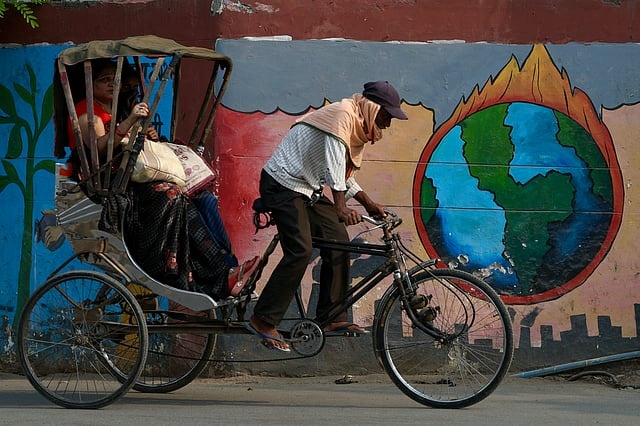
A childhood journey becomes a lifelong lesson in gratitude.
Everyday Gratitude rarely arrives when life feels busiest. Instead, it often appears years later through memories that once seemed ordinary. A familiar road, a repeated routine, or someone who quietly showed up each day suddenly becomes impossible to forget.
I still remember sitting in the back of a cycle rickshaw on my way to school. I was around eight years old, and that routine continued for nearly two years. Every morning felt the same. The same route. The same quiet presence. A few coins exchanged and another day began.
Only much later did I begin to think about the person carrying that routine forward and what those mornings may have meant for him.
Childhood Memory Changes Perspective
There are names from childhood that remain surprisingly clear. The housemaid, the cook, and the rickshaw puller still exist in memory with unusual sharpness. Yet I cannot remember whether I ever truly thanked them in a way that matched their contribution.
For more read: Khalid Maqbool Siddiqui Defends MQM Pakistan at Karachi Dialogue
That thought does not arrive as guilt. Instead, it arrives as awareness.
As children, we rarely question how daily life functions. Meals appear. Clothes are prepared. Bags are packed. Transport arrives. Everything feels permanent and effortless. Consequently, we move through life without noticing the invisible labor that makes comfort possible.
Over time, people fade from attention not because they matter less, but because speed leaves little room for reflection.
Everyday Gratitude Beyond Transactions
That pattern follows us into adulthood.
The driver who takes us home after a long day. The delivery rider waiting outside in difficult weather. The security guard opening the gate each morning. The staff member quietly helping while our attention stays elsewhere.
We notice the role but often miss the person.
This is not always unkindness. More often, it is momentum. We begin believing that once payment is made, the interaction is complete.
Yet something remains unfinished.
A genuine thank you is not only etiquette. It creates a brief pause where we acknowledge effort, presence, and humanity.
Leadership Begins With Noticing
Everyday Gratitude is also connected to leadership.
Leadership is not limited to authority or decisions. At its simplest level, leadership is the ability to notice what others overlook.
A thoughtful leader notices the cleaner before meetings begin. A good manager remembers the person opening doors each morning. A simple greeting or acknowledgment may seem small, yet it restores dignity where invisibility often grows.
In that sense, attention becomes action.
Recognition does not always require rewards. Sometimes people simply want to know they were seen.
Parents Teach Everyday Gratitude
Then there is the place where gratitude becomes hardest to express.
Our parents.
They provide so consistently that their effort starts to feel natural. Meals appear. Problems get solved. Stability quietly surrounds us.
Only later do we begin to see the hidden cost behind that ease. Worries carried privately. Sacrifices made without announcement. Personal needs delayed out of care.
Over time, love begins to feel expected.
Perhaps that is exactly when gratitude matters most.
Everyday Gratitude Means Paying Attention
The question may not be whether we say thank you.
The real question is whether we are paying attention.
I still think about those mornings in the cycle rickshaw. A quiet man pedaling before the city fully woke up while my day moved forward because of his effort.
Life still works that way.
People continue carrying parts of our days while we move on without noticing.
Maybe Everyday Gratitude begins with seeing what was always there.