

BY Manzoor Alam BalaKoti.
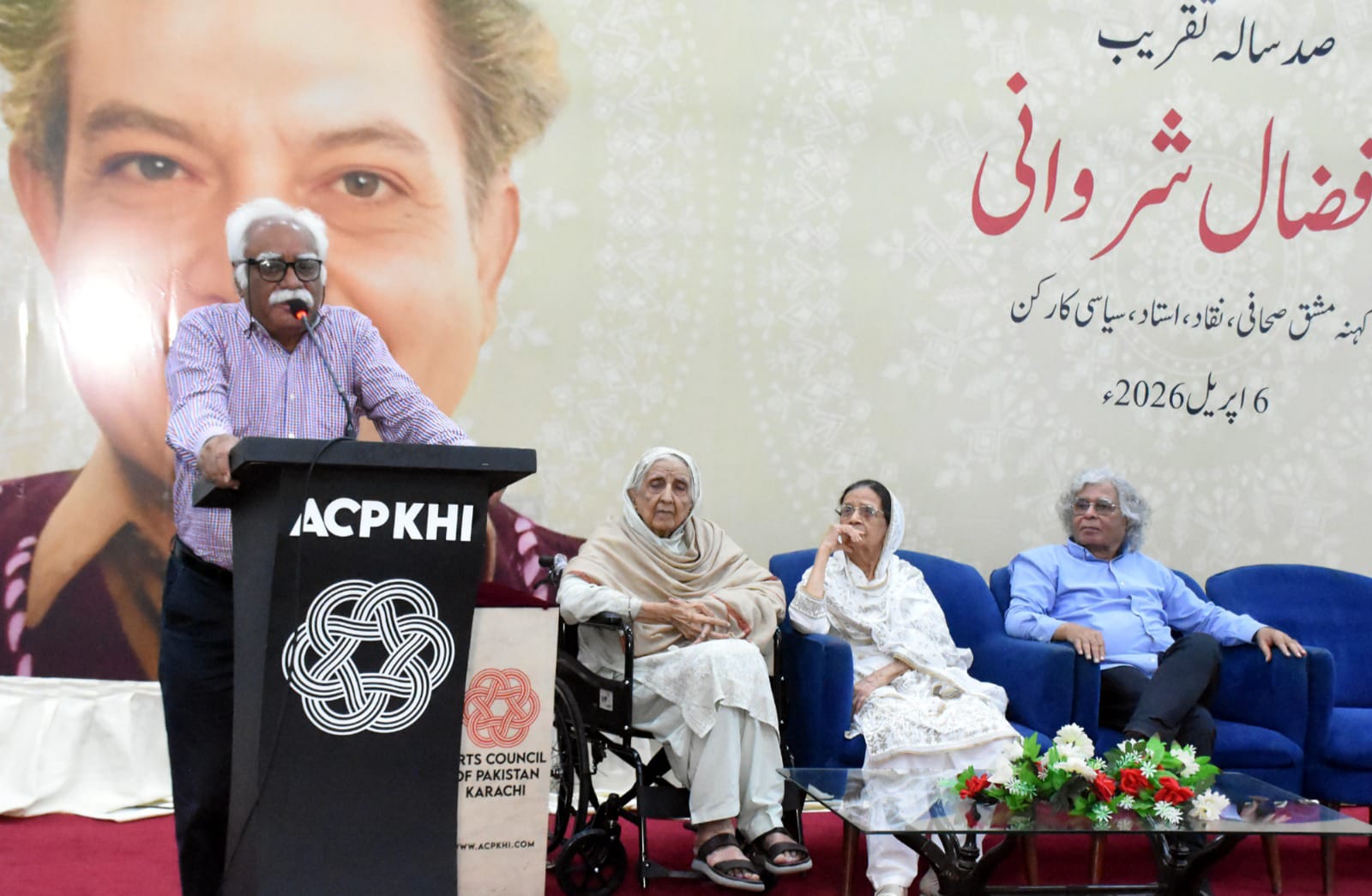
Karachi: Arts Council of Pakistan Karachi Organized a ceremony in honor of journalist and critic Afzal Sherwani at Haseena Moin Hall. The ceremony was presided over by Shaista Zaidi, while renowned journalist Ghazi Salahuddin, noted poetess Fatima Hasan, Tauseef Ahmed Khan, Nazir Mahmood, Shahab Karamat, Waris, and Muhammad Ali Siddiqui expressed their views. Shamim Khan and Afzal Sherwani’s daughter, Anita Afzal, shared their thoughts through video messages. The event was moderated by his son, Imran Sherwani, and a large number of literary and social personalities attended. A cake was also cut on the occasion of Afzal Sherwani’s ceremony. In her presidential address, Shaista Zaidi said that in the past, people were taught how to discuss various topics in debates.
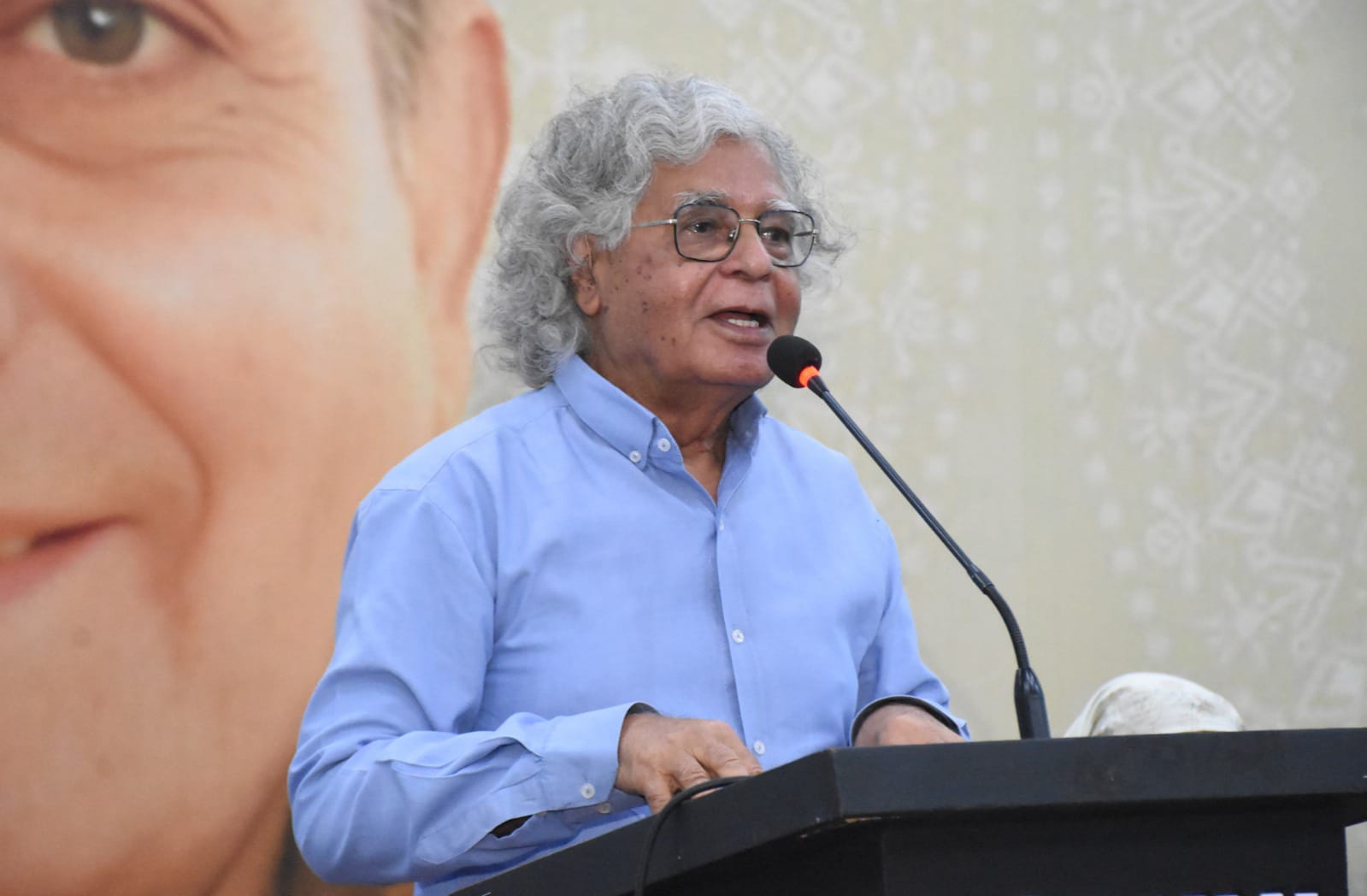
She recalled that “a speech does not emerge from an empty mind,” and emphasized that civilization is based on three principles: speaking, listening, and tolerance, as it is culture that makes a human truly human. Ghazi Salahuddin said that remembering Afzal Sherwani revives many memories of the past. He noted that Sherwani was a prominent Urdu debater of his time and actively participated in literary gatherings. He had a deep passion for reading and writing and always engaged in serious discussions on literary and intellectual topics. His political views were clear and strong, and despite facing difficulties in different phases of life, he remained steadfast in his intellectual and ideological commitments. Tauseef Ahmed Khan stated that Afzal Sherwani made immense contributions toward promoting progressive thought. His efforts in literary and intellectual fields were remarkable, and he consistently worked for social and literary development. Anita Afzal said that her father had a unique and multifaceted personality. He was not only a knowledgeable individual but also someone who encouraged others. He always motivated young writers and guided them. She added that her father had a deep love for literature and dedicated a major part of his life to intellectual and literary activities. Remembering him brings back memories of his affection, kindness, and love for knowledge. He was a valuable personality not only for the family but also for literary circles. Poetess Fatima Hasan said that her relationship with Afzal Sherwani was like that with a kind elder friend. He was a sincere and humble person, known for his simplicity and honesty. She added that Sherwani was principled and always wrote truthfully, presenting what he believed to be right. He had written a thoughtful and appreciated article on one of her books. Nazir Mahmood said that his father and Afzal Sherwani were active together in leftist politics. He described Sherwani’s critical insight as deep and analytical, noting that he always presented his opinions with reasoning. He guided younger generations and had equal command over Urdu and English, which added depth to his speech and writings. He emphasized the need to compile and preserve Sherwani’s writings as a valuable asset. Shamim Khan said that Afzal Sherwani was not just a journalist but also a thinker and a fine poet. His personality reflected a blend of knowledge, literature, and creativity. He also wrote beautiful songs for singing, which Shamim Khan performed with great enthusiasm. Waris said that Afzal Sherwani was a personality who inspired people to stay active and engaged. He energized gatherings in such a way that people not only discussed seriously but also became practically involved. He played an important role in promoting literary and intellectual activities and worked significantly for the Progressive Writers Association. Shahab Karamat said that Afzal Sherwani taught him a great deal about Urdu language and literature. His companionship provided insight into linguistic nuances as well as the ethics of writing. He added that Sherwani’s intellectual and literary guidance would always remain a valuable asset. At the end of the ceremony, Afzal Sherwani’s wife thanked all the speakers and participants.
Advertisements