Iran-Israel War Escalates as Missile Strike Kills Four in Haifa; IAEA Confirms Blasts Near Bushehr Nuclear Plant
Web Desk April 6, 2026Four people were killed in Israel’s port city of Haifa after an Iranian missile strike hit a residential building late Sunday, as the ongoing war between Iran and Israel continues to intensify.
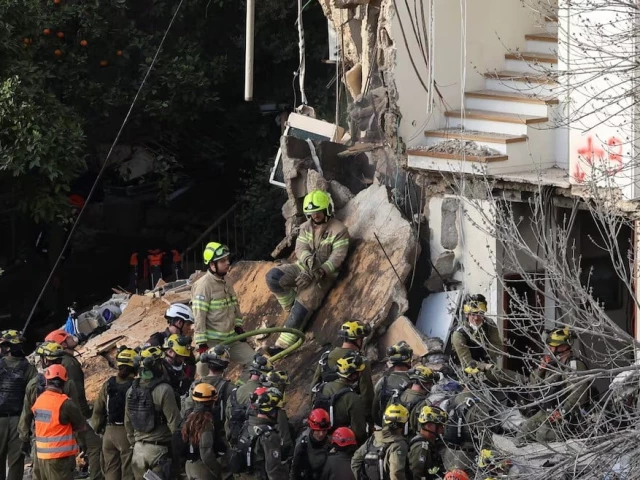
Four people were killed in Israel’s port city of Haifa after an Iranian missile strike hit a residential building late Sunday, as the ongoing war between Iran and Israel continues to intensify.
PM Shehbaz Pushes for Nationwide Adoption of Electric Vehicles Amid Rising Fuel Costs
According to Israeli authorities, the victims’ bodies were recovered from beneath the rubble following hours of search and rescue operations. The latest attack underscores the growing civilian toll as hostilities enter their sixth week.
Meanwhile, the International Atomic Energy Agency (IAEA) confirmed that recent military strikes had occurred near Iran’s Bushehr Nuclear Power Plant, though the facility itself was not damaged.
The UN nuclear watchdog said its assessment was based on satellite imagery and detailed knowledge of the site, noting that one strike landed just 75 metres from the plant’s perimeter.
Iran sharply criticised the IAEA’s response, with Atomic Energy chief Mohammad Eslami warning that repeated attacks near nuclear facilities could trigger a radioactive disaster with “irreparable consequences” for the region. He said the Bushehr plant had been targeted multiple times, including a recent incident that killed a security staff member.
Ceasefire efforts amid rising tensions
Diplomatic efforts to end the conflict are intensifying, with a Pakistan-mediated proposal under discussion between United States and Iran. The framework outlines an immediate ceasefire followed by negotiations for a broader agreement within 15 to 20 days.
However, Iranian officials have rejected reopening the strategic Strait of Hormuz under a temporary ceasefire, insisting on guarantees for a permanent end to hostilities.
US President Donald Trump has issued a deadline for Iran to reach a deal, warning of further strikes targeting critical infrastructure such as power plants and bridges if Tehran fails to comply.
Regional fallout and global risks
The conflict has expanded across the region, with continued missile exchanges and airstrikes affecting multiple countries. Analysts warn that attacks near nuclear sites and energy infrastructure could have severe environmental and economic consequences.
Russia has described the situation as extremely dangerous, with the Kremlin stating that the entire Middle East is effectively “on fire” due to escalating military actions.
The war has already claimed thousands of lives and disrupted global energy markets, particularly due to threats to shipping through the Strait of Hormuz — a key route for the world’s oil supply.
As tensions rise and ceasefire talks remain uncertain, fears are growing of a prolonged conflict with far-reaching geopolitical and humanitarian implications.