AI Farming: Farmers Use Artificial Intelligence but Still Question Its Advice
AI Farming is becoming more common across agriculture, but many farmers still hesitate to rely on artificial intelligence for important business decisions.
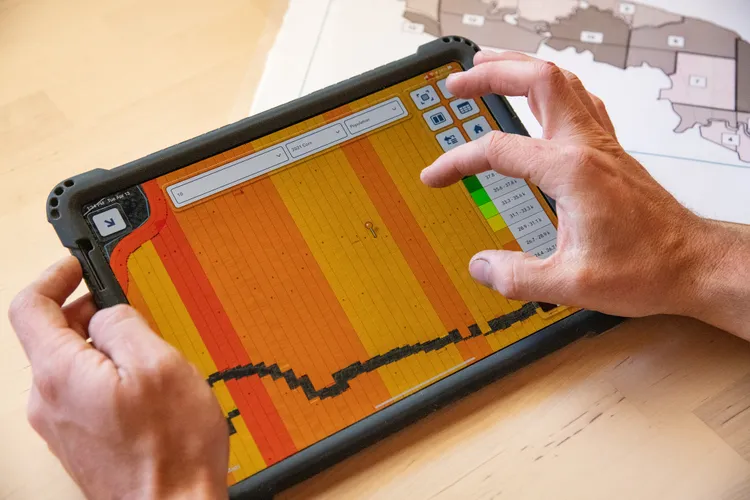
Farmers increasingly use AI tools while remaining cautious about trusting recommendations.
AI Farming is becoming more common across agriculture, but many farmers still hesitate to rely on artificial intelligence for important business decisions.
A new survey by agricultural marketing firm MorganMyers and market research company Ag Access found that almost half of farmers and ranchers regularly use AI tools such as ChatGPT and Gemini. Around 48% of respondents said they use AI weekly or more often.
Despite growing adoption, trust remains low. Only 24% of farmers said they fully or somewhat trust AI-generated recommendations for their farming operations. At the same time, 45% said they feel uncomfortable allowing AI to influence major decisions.
Hajj Award: Sirajia Group Celebrates Saudi Labaytum Award Recognition in Karachi
The survey, based on responses from 166 producers, showed that accuracy is the biggest concern. Farmers also raised questions about data ownership, privacy, model bias and the possibility that technology could replace human experience.
Many respondents said stronger evidence would improve confidence. Around 62% said real-world farm results would increase trust in AI systems. Another 30% wanted the option to override AI recommendations, while 27% asked for clearer and more transparent data sources.
Greg Ehm, Senior Vice President of Agriculture at MorganMyers, said farmers continue to compare AI advice with years of practical experience and field knowledge.
He said farmers and ranchers are not rejecting AI. Instead, they are testing the technology and identifying areas where it can improve efficiency and support better decision-making.
Select Technologies IPO book-building opens at PSX today
The survey found higher AI adoption among dairy producers, large-scale farms and farmers under the age of 35. About 64% of dairy producers were active users of AI, while 55% of row crop farmers reported little or no use.
Another 2025 study by Syngenta reached similar conclusions. Larger farms adopted AI and digital farming tools more quickly, but many farmers remained concerned about data use and reliability. Several respondents described AI in agriculture as distant and difficult to relate to.
However, digital farming tools appeared more familiar. Technologies including GPS-guided machinery, cloud-based farm management systems, drones, weather applications and monitoring services are already widely used across the United States.
Researchers also noted that AI technologies such as precision farming, robotic automation and machine learning may help improve agricultural productivity and crop yields.
MorganMyers found that 49% of farmers mainly use AI for personal research and drafting tasks. Another 40% use it for crop planning and planting decisions. More than 30% apply AI to livestock nutrition and business management.
Medical Equipment Rotary Club Athens-Goudi Donates €75,000 to Kalymnos Hospital
Agricultural retailers showed even lower confidence in AI. Among fewer than 40 retailers surveyed, 60% reported low or no trust in AI recommendations and only 38% said they use AI tools regularly.
The report also showed that farmers use general AI platforms more often than AI features built directly into agricultural technology products. Around 39% used integrated AI tools weekly or daily, compared with 48% who used broader AI platforms.
MorganMyers concluded that AI will gain wider acceptance in agriculture if companies prove results through real-world outcomes, support human expertise and improve everyday farming workflows.