Cybercrime: NCCIA Exposes Five Major Online Crime Networks in Karachi
Authorities uncover illegal gambling, financial fraud, dark web data sales, drug distribution in educational institutions and an online child exploitation network.
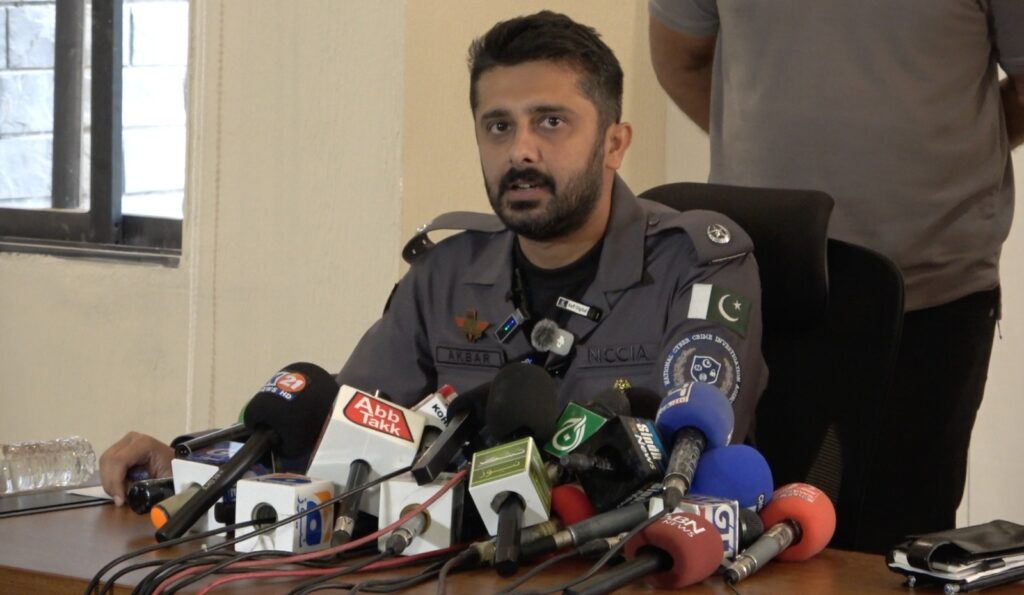
NCCIA exposes major cybercrime networks during operations in Karachi.

KARACHI: The National Cyber Crime Investigation Agency (NCCIA) has exposed five major online crime networks during a series of operations in Karachi. The investigations uncovered illegal gambling, online fraud, data trafficking, drug distribution and the exploitation of underage girls.
NCCIA Additional Director Shehzad Akbar shared details during a press conference. He revealed the scale of the criminal networks and described the agency’s recent actions against them.
One major operation targeted what officials described as Pakistan’s largest online gambling and betting network. The agency arrested suspects allegedly involved in running the operation.
Akbar warned that online gambling and gaming schemes cause serious financial losses. Many children lose their money through these platforms. Consequently, several families fall into debt, while some people even sell their homes to cover their losses.
Condolences: Business and Media Leaders Mourn the Passing of Mahmood Ahmed Khan’s Sister
Another investigation exposed online fraud centres operating along Karachi’s Shahrah-e-Faisal. According to officials, these networks have shifted their operations from large offices to residential houses, bungalows and small rooms. However, they continue to run fraud schemes through smaller setups.
The third case involved a suspect known as the “Tattoo Man”. Officials said the suspect’s network collected personal data and sold it to international agents. Investigators also found evidence of data sales through the dark web and other online channels.
The fourth investigation uncovered alleged drug distribution networks operating in Karachi’s universities and educational institutions. Akbar said authorities had found evidence of drug consumption among students and the movement of dealers across several campuses.
Dealers reportedly used WhatsApp groups and channels to share drug menus and receive orders. They then delivered drugs in foil packaging and food boxes, following methods similar to food delivery services.
According to the NCCIA, investigators found evidence linking the network to Indus University, the University of Karachi and Urdu Science College, among other institutions. Authorities also arrested suspects allegedly involved in drug distribution.
Furthermore, Akbar disclosed a possible international connection in a gang-rape case. Investigators reportedly traced links to a network operating across international borders.
The fifth case involved an alarming online child exploitation network. According to Akbar, suspects allegedly used online tasks to lure underage girls into pornography-related activities.
The NCCIA recovered one girl from the network. Subsequently, authorities secured the safety of 12 more girls. Officials said suspects used different methods to persuade and exploit the children.
Meanwhile, the press conference also revealed a major financial fraud investigation. Akbar said authorities had arrested the CEO of Draft Tag and heads of four other companies.
Investigators reportedly traced transactions worth Rs18 billion across three bank accounts. The banks named in the investigation include Faysal Bank, United Bank Limited (UBL) and Habib Metropolitan Bank.
Officials also named the relevant bank managers in the FIR. In addition, they reported freezing accounts containing approximately Rs1 billion.
The NCCIA said its investigations had exposed several serious forms of online crime. The agency’s findings highlight growing concerns over digital fraud, financial exploitation and the online safety of children.