Mustafa Kamal Says DRAP Digitalisation Covers 86,000 Medicines, Introduces Track and Trace System
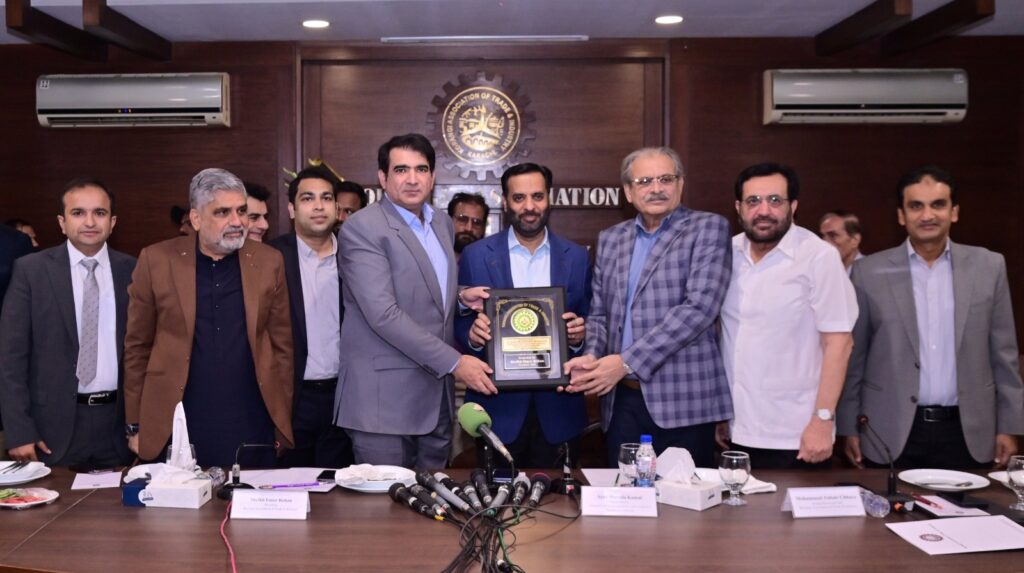
KATI President Sheikh Umer Rehan and Deputy Patron-in-Chief Zubair Chhaya present a commemorative shield to Federal Health Minister Mustafa Kamal. MQM leader Anis Qaimkhani, Zahid Saeed, Saleem-uz-Zaman, Farukh Qandhari and Nasir Sheikh are also present.
Federal Health Minister Mustafa Kamal has said the Drug Regulatory Authority of Pakistan (DRAP) has completed a major digitalisation drive. More than 86,000 medicines have been integrated into its Track and Trace System.
The system allows consumers to scan medicine barcodes through their mobile phones. They can then check product authenticity and access price information.
Kamal also said pharmaceutical companies could register their medicines and products online. A process that previously took years can now be completed within 21 days, he added.
He shared these details while addressing industrialists during a visit to the Korangi Association of Trade and Industry (KATI).
KATI President Sheikh Umer Rehan, Deputy Patron-in-Chief Zubair Chhaya, MQM leader Anis Qaimkhani and KITE Chairman Zahid Saeed attended the event. Other participants included KITE CEO Saleem-uz-Zaman, Senior Vice President Farukh Qandhari and Vice President Nasir Sheikh.
Former KATI presidents and chairmen, including Gulzar Feroz, Farhan-ur-Rehman, Johar Qandhari, S.M. Yahya and Sheikh Fazal Jalil, also attended. MPA Daniyal Siddiqui, Najam Mirza and several industrialists joined the gathering.
DRAP Processes More Than 5,000 Cases Digitally
The federal minister said DRAP had shifted its certification procedures to a digital system eight months earlier. Since then, the authority had processed more than 5,000 cases.
He said Prime Minister Shehbaz Sharif had recognised the initiative and awarded DRAP for its digitalisation efforts.
Sindh Governor Meets University of Karachi Alumni Houston Delegation
Kamal said he had performed his responsibilities with sincerity and commitment. He added that the pharmaceutical industry’s response reflected the impact of the reforms.
Recalling his tenure as Karachi’s City Nazim, he said he had spent Rs300 billion on the city’s infrastructure. He noted that people continued to remember those development projects.
Minister Highlights Challenges in Medicine Pricing
Kamal said medicine pricing required careful consideration. Pharmaceutical companies were seeking higher prices, but the federal cabinet had also considered the impact on consumers.
He outlined two competing concerns. Higher prices could increase the financial burden on ordinary citizens. However, keeping prices unchanged could create shortages of medicines for serious illnesses.
Kamal warned that shortages could force patients to buy medicines from the black market. In some cases, he said, sellers charged up to three times the actual price.
The minister suggested withdrawing the government’s direct role in price regulation. He proposed allowing market forces to determine medicine prices, as they do for other products.
Kamal Supports Administrative Reforms for Karachi
The federal minister also said Karachi was not receiving its rightful share of resources. He welcomed growing recognition of the concerns he and others had raised for years.
Kamal said the creation of administrative units could help address the city’s problems. He expressed support for the proposal.
KATI President Urges Monthly Visits by Federal Ministers
KATI President Sheikh Umer Rehan recalled his longstanding association with Mustafa Kamal. He said Kamal’s first official visit after becoming Karachi’s City Nazim was to KATI.
Rehan said the minister maintained regular contact with the association. He also credited Kamal with facilitating the construction of Road 8000.
The KATI president proposed that federal ministers visit Karachi at least once a month. Following the example of the FBR chairman, they should meet stakeholders and address concerns in their respective sectors, he said.
Rehan also raised concerns about Pakistan’s high production costs. He said the government’s increase in interest rates had added to the pressure on businesses.
He noted that Korangi Industrial Area hosted a significant share of Pakistan’s pharmaceutical industry. The sector, he said, played an important role in the country’s manufacturing and exports.
Pharmaceutical Sector Records Export Growth
Rehan cited industry figures showing pharmaceutical exports reached $457 million in FY2024–25. This represented an increase of around 34% over the previous financial year.
The sector generated Rs523 billion in revenue during the same period. Pakistan also had 662 pharmaceutical companies, according to the figures he shared.
Despite this growth, the country remained heavily dependent on imported raw materials and active pharmaceutical ingredients (APIs).
Rehan welcomed the digitalisation of DRAP. He said the reforms had reduced difficulties for pharmaceutical companies.
He added that the business community expected Kamal to raise Karachi’s concerns at the federal level and help secure solutions.
Zubair Chhaya Calls for Greater Federal Attention to Karachi
KATI Deputy Patron-in-Chief Zubair Chhaya said Karachi contributed 54% of the country’s total revenue but remained neglected by the federal government.
He urged the prime minister and federal ministers to spend at least three days a week in Karachi. This, he said, would help them understand the city’s problems and engage directly with stakeholders.
Chhaya warned that industrial activity was gradually slowing down. Despite serious challenges, Karachi continued to support the national economy.
He said greater government attention could help the city address its problems and contribute more effectively to national economic recovery.
“A prosperous Karachi means a prosperous Pakistan,” Chhaya said.
Zahid Saeed Proposes National Health Coordination Body
KITE Chairman Zahid Saeed said the Ministry of Health had previously faced complaints of inefficiency, corruption and disagreements with the pharmaceutical industry.
He said the ministry had introduced major reforms since Mustafa Kamal took charge. According to Saeed, DRAP shifted its Track and Trace System to a digital platform after consulting pharmaceutical companies.
Saeed also said that, from October 9, medicines available in the market would carry barcodes. These would allow consumers to access detailed product information.
He stressed that health required coordination beyond provincial boundaries. Saeed proposed establishing a national institution on the pattern of the National Command and Operation Centre (NCOC).
The proposed body could monitor disease outbreaks across Pakistan and improve coordination between relevant authorities, he said.
Saleem-uz-Zaman Raises Concerns Over Medicine Prices and Hospital Waste
KATI Standing Committee Chairman Saleem-uz-Zaman described medicine pricing as a major concern for pharmaceutical companies.
He also expressed concern over multinational pharmaceutical companies leaving Pakistan. Although local manufacturers had made progress, he said multinational companies remained important for technology transfer.
Saleem-uz-Zaman further highlighted weaknesses in hospital waste management. He called for immediate attention and effective measures to address the issue.
The meeting covered DRAP reforms, medicine pricing, pharmaceutical exports and industrial challenges. Participants also urged the federal government to give Karachi greater attention and strengthen support for the city’s business community.