Trump Could Consider Major Iran Strikes After Midterms as Qatar Pushes for Deal
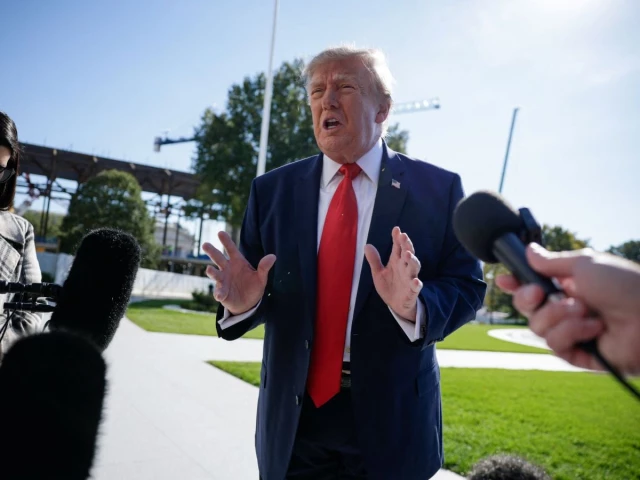
Iran Strikes remain a concern as Qatar seeks to revive US-Iran negotiations before the American midterm elections.
US President Donald Trump could become more inclined to approve a major military operation against Iran if Republicans perform poorly in next week’s midterm elections, according to an Axios report citing a US official.
“If he feels embarrassed or disenfranchised, he will do something bold,” the official told Axios. The report said mediators were conveying a similar warning to Iranian officials and urging Tehran to reach an agreement while diplomatic options remained available.
A White House official rejected the suggestion that election results would influence Trump’s decisions on Iran. The official told Axios that the midterms would not factor into the president’s approach.
The report comes as regional mediators work to restart negotiations between Washington and Tehran amid the threat of renewed military action.
Qatar Leads Efforts to Restart US-Iran Talks
Qatari mediators reportedly spent more than 12 hours in Tehran on Friday, maintaining contact with the White House as they sought to revive direct negotiations.
A diplomatic source described the discussions as showing positive progress. Further talks were expected to continue in Doha on Saturday.
Maryam Nawaz Seeks French Support to Strengthen Pakistan’s GSP+ Trade Status
According to Axios, Washington wants Iran to make nuclear concessions before negotiations resume. Tehran, meanwhile, wants the United States to lift its naval blockade, release frozen Iranian funds and allow oil sales.
Qatar is also urging Iran to permit United Nations inspectors to visit nuclear facilities damaged during the conflict. In return, the proposal could offer limited sanctions relief.
The broader mediation effort has involved regional countries, including Pakistan, Saudi Arabia, Egypt and Türkiye, according to Axios.
Differences Within Trump’s Team
The Axios report also described differing views within the Trump administration over the next steps.
Defence Secretary Pete Hegseth and Secretary of State Marco Rubio were described as sceptical of a diplomatic agreement and supportive of further weakening Iran’s leadership.
Vice President JD Vance and US envoys Steve Witkoff and Jared Kushner were reported to favour renewed negotiations.
Trump has publicly acknowledged that discussions with Iran are taking place through intermediaries. However, he has also warned that Washington could pursue other options if diplomacy fails.
Araghchi Says Red Lines Are a Thing of the Past
Iranian Foreign Minister Abbas Araghchi responded to remarks by German Chancellor Friedrich Merz by saying that “red lines” were a thing of the past.
Araghchi warned that Iran’s armed forces would deliver a severe response to any attack on the country. He also dismissed the reported €100 billion economic cost of the conflict to Europe as insignificant compared with the damage Iran could inflict on those threatening its people.
Merz was reported by Clash Report as saying that the increase in costs over the previous eight months had resulted from higher energy prices caused by the conflict. He also said Europe had an economic interest in bringing the fighting to an end quickly.
Araghchi separately criticised Merz’s reported support for US-Israeli attacks on Iran, accusing him of allowing Europe’s interests to be served through military action against the country.
Tanker Hit by Explosive Devices in Strait of Hormuz
Maritime security concerns have intensified following an attack on a crude oil tanker transiting the Strait of Hormuz.
The United Kingdom Maritime Trade Operations (UKMTO) said a tanker was struck by explosive devices while completing an outbound passage. The incident occurred northeast of Oman’s Khasab.
Reuters, citing maritime security sources, reported that a small boat attached two limpet mines to the vessel’s hull. The resulting blast caused an engine-room fire and temporarily disabled the tanker.
UKMTO said the crew was safe, the fire had been extinguished and there was no environmental impact. The vessel continued towards its next port of call.
Three maritime security sources identified the tanker as the Panama-flagged Louise 1. Responsibility for the attack was not immediately established.
Iran Claims Another Tanker Hit a Sea Mine
Iran’s Islamic Revolutionary Guard Corps (IRGC) Navy separately claimed that a fourth oil tanker had struck a mine and caught fire while attempting to use what Tehran described as an unauthorised route through the Strait of Hormuz.
The IRGC said the supertanker was carrying more than two million barrels of crude oil. It alleged that the vessel ignored repeated radio warnings against using the southern passage.
According to the Iranian statement, the mine caused a powerful explosion and set the tanker ablaze.
The claim has not been independently verified. Iran’s description of the route as unauthorised also reflects its position on navigation through the strategic waterway.
Oman Evacuates Injured Crew Member
Oman has also reported evacuating an injured crew member from an Indian boat targeted in the Strait of Hormuz.
The Royal Air Force of Oman carried out the medical evacuation in coordination with relevant authorities. The injured person was transferred from Khasab Hospital in Musandam to Khawla Hospital in Muscat for specialised treatment.
Earlier, the Royal Navy of Oman evacuated 25 crew members from a commercial vessel that caught fire after an attack near the coast of Musandam.
The incidents have added to concerns over the safety of commercial shipping in the Strait of Hormuz, a critical route for global energy supplies.
The renewed diplomatic efforts and maritime incidents underline the risks of further escalation. The outcome of the proposed negotiations could shape the next phase of the conflict and security across the wider region.