Yasir Hussain Responds to Akif Ilyas’ Criticism
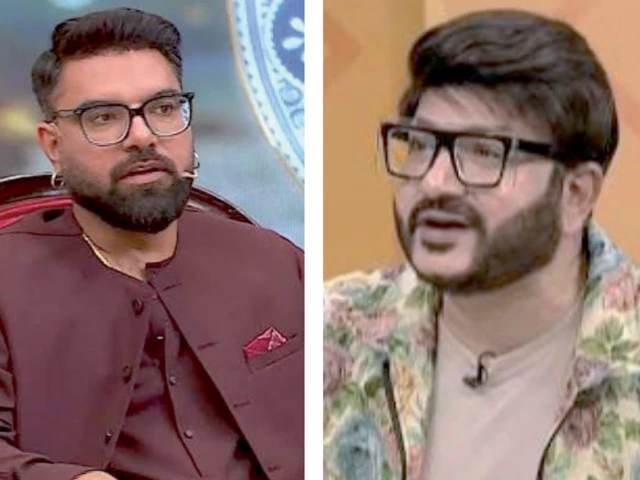
Yasir Hussain responds to Akif Ilyas’ comments about his comedy and early career.
Pakistani actor and comedian Yasir Hussain has responded to comments by celebrity makeup artist Akif Ilyas, who recently spoke about their past association and criticised Hussain’s style of comedy.
Ilyas discussed Hussain during an appearance on Nadia Khan’s show, recalling their professional relationship during the actor’s early career.
According to Ilyas, Hussain contacted him at the beginning of his career and asked for help building his portfolio. He alleged that Hussain later made fun of his appearance, style and friendships during a live awards ceremony.
Ilyas also raised broader concerns about comedy in Pakistan. He said younger comedians could learn from legendary performers such as the late Moin Akhtar. He argued that comedy should not depend on humiliating or targeting other people.
Yasir Hussain Acknowledges Early Support
Hussain responded after a clip of Ilyas’ comments circulated on social media.
Zach Bryan Wears ‘Free Palestine’ Shirt at Gillette Stadium
Rather than dismissing their earlier relationship, Hussain acknowledged Ilyas’ contribution to his career. He said the makeup artist had known him for many years and played an important role when he was starting out.
Hussain said Ilyas conducted his first photoshoot and did not charge him for the work.
He also praised Ilyas as a talented artist with skills in both makeup and photography.
“I have mentioned in almost every interview how much he helped me at the beginning of my career,” Hussain said.
The actor added that several other senior artists also supported him during the early stages of his career.
Hussain Takes Conciliatory Approach
Addressing Ilyas’ recent remarks, Hussain said he respected his right to express an opinion.
“Whatever he said in that interview may have been influenced by something he heard or experienced, I don’t know. But that is his personal opinion, and I respect it,” Hussain said.
Hussain did not appear to seek a public confrontation with Ilyas. Instead, he ended his response with a conciliatory message.
“I love you, Akif bhai,” he said.
The exchange has sparked discussion among Pakistani entertainment followers, with social media users debating Ilyas’ criticism, Hussain’s response and the changing nature of comedy in the country’s entertainment industry.