

India’s 7.8% Growth Sparks Debate Over GDP Data and Jobs
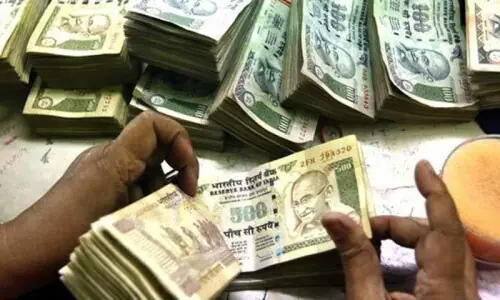
India’s strong GDP growth has sparked debate over economic data, jobs and private investment.
India’s unexpectedly strong economic growth has triggered a debate over the accuracy of its latest GDP figures and the wider performance of the economy.
Government data showed that India’s economy grew 7.8 per cent in the April-June quarter compared with the same period last year. The figure exceeded the 7.1 per cent forecast in a Reuters poll of analysts.
Investment activity and manufacturing strength supported growth. Meanwhile, consumer demand also remained firm during the quarter.
However, questions emerged after former senior finance ministry official Subhash Chandra Garg challenged the basis used to calculate the latest expansion.
Former Reserve Bank of India governor Raghuram Rajan also raised broader concerns. He questioned why strong GDP growth has not produced stronger job creation, domestic investment and foreign portfolio inflows.
Economists Question India’s GDP Calculation
Garg argued that the latest growth figure may appear stronger because the government reduced the GDP estimate for the previous year.
That earlier figure provides the base for calculating annual growth. Therefore, changes to the base can affect the headline growth rate.
Pakistan’s Trade Deficit Widens 18% to $7.1 Billion in Two Months
Rajan addressed the issue separately in a television interview. However, he later clarified that he had neither questioned nor endorsed the latest GDP figures.
Instead, Rajan said his concern focused on a wider economic trend. Over time, he argued, strong GDP growth has not translated into enough private investment, foreign investment or decent jobs.
Some private economists have also questioned the GDP deflator.
The deflator removes the impact of inflation from nominal GDP to calculate real economic growth. In this case, critics argue that the measure may have understated inflation compared with other price indicators.
Government Defends Revised GDP Methodology
India’s statistics ministry responded to the criticism by holding a news conference.
A senior statistics official defended changes introduced in the GDP calculation. According to the government, the revised methodology followed extensive consultations.
The government introduced a new GDP series in February. The revision also changed the base year and updated the data sources used to measure economic activity.
Under the new series, nominal GDP for April-June 2025 stood at about 80 trillion Indian rupees, compared with 86.05 trillion rupees under the previous series.
If the latest data had used the old base, nominal growth would have been around 2.6 per cent, instead of the reported 10.3 per cent.
The government rejected a direct comparison between the two figures. It argued that the methodology, data sources and coverage had changed substantially.
New Series Uses Broader Data
The February revision did more than update the GDP base year.
It also refined the sources used to measure economic activity. In addition, officials changed the goods and services included in the calculation.
The government said quarterly revisions have moved in both directions over the past three years. At the same time, annual revisions have remained relatively small.
Price adjustments have also become a major part of the debate.
India’s April-June GDP deflator stood at 2.3 per cent. That figure was significantly below retail inflation of more than 4 per cent and wholesale inflation above 9 per cent.
Officials defended the difference by pointing to the new methodology.
The revised series uses a process known as double deflation. It separately adjusts output values and input costs for price changes.
Moreover, the statistics ministry said the new system uses a more detailed Producer Price Index. The number of deflators increased to more than 300 for inputs and outputs, compared with about 180 under the earlier system.
High-Frequency Data Shows Economic Strength
Several other indicators support the government’s argument that the Indian economy remains strong.
Auto sales increased by 21 per cent in August. Meanwhile, bank credit growth reached a decade-high level of 19 per cent.
Net direct tax revenue also rose by more than 23 per cent year-on-year between April and August.
These indicators suggest continued strength in consumer activity, credit demand and government revenue.
However, not every indicator points in the same direction.
India’s Purchasing Managers’ Index, a survey-based measure of business activity, has weakened to multi-year lows.
The contrasting indicators have therefore added to the debate over the pace and quality of economic growth.
Economists Divided Over Inflation Measure
Economists remain divided over whether the low GDP deflator accurately reflects economic conditions.
Mumbai-based ICICI Securities Primary Dealership said the lower deflator can be explained by rising input costs. In its assessment, input-price pressures have increased faster than output prices.
Societe Generale economists took a more cautious view.
They argued that the unusually low deflator raises questions about the strength of activity in India’s real economy.
Ultimately, the debate goes beyond one quarterly growth figure. India’s government has defended its statistical methodology, while critics want clearer evidence that headline growth is translating into jobs and sustained private investment.
For now, the 7.8 per cent figure presents a picture of a rapidly expanding economy. At the same time, the continuing debate shows that the quality, measurement and distribution of that growth remain important questions for policymakers.