
GSP+ Extension Beyond 2028 a National Priority, Says Mian Zahid Hussain

Mian Zahid Hussain calls for continued GSP+ access and stronger export competitiveness.
Pakistan must make the continuation of its GSP+ status with the European Union beyond 2028 a national economic priority, said Mian Zahid Hussain, President of the Pakistan Businessmen and Intellectuals Forum and All Karachi Industrial Alliance.
Hussain said GSP+ has remained an important trade advantage for Pakistan since January 2014. The scheme provides zero or preferential tariffs for thousands of Pakistani products entering European markets.
However, he stressed that Pakistan must meet international standards on human rights, labour, environmental protection, climate responsibility and good governance to retain the facility.
Pakistan’s Exports Face Growing Pressure
Pakistan’s goods exports fell by 5.93 per cent to $30.139 billion in FY2025-26, compared with $32.040 billion a year earlier, according to figures cited by Hussain.
Imports, meanwhile, rose by 8.14 per cent to $69.761 billion. The increase widened the trade deficit to about $39.62 billion.
Exports to European countries remained relatively stable during the period. Pakistan exported goods worth around $9.089 billion to European markets in FY2025-26, compared with $9.106 billion in the previous fiscal year.
Yasir Ahmed Joins Sparks Business Club Visionary Council Board
Exports to Spain, however, increased by 5.18 per cent to $1.562 billion.
Hussain said the importance of GSP+ extends beyond headline export figures. According to the European Commission, Pakistan remains the largest beneficiary of the scheme.
Around €7.5 billion worth of Pakistani exports were eligible for GSP+ preferences in 2024. Pakistani exporters received about €732 million in tariff exemptions during that year.
Seafood Sector Needs European Standards
Hussain said Pakistan has not fully used the potential of GSP+ in several sectors.
He pointed to seafood as a major example. Pakistan’s access to the European market suffered heavily after European authorities imposed restrictions in 2007 over sanitary and phytosanitary concerns.
Those concerns included hygiene, traceability and handling standards. Restrictions eased in 2013, but only a limited number of processing facilities regained access.
Pakistan’s seafood exports reached around $489.2 million in FY2024-25. Exports to the European Union accounted for only about $13 million.
Hussain said Pakistan needs major improvements across the seafood supply chain. These include Karachi Fish Harbour, fishing boats, clean water supplies, hygiene systems, cold-chain facilities and auction halls.
Better traceability would also help Pakistani seafood exporters meet European requirements.
The experience shows that tariff preferences alone cannot unlock the full value of GSP+, he said. Non-tariff barriers and SPS requirements also require serious attention.
Pakistan Must Diversify European Markets
Pakistan’s exports to the EU remain concentrated in a few major markets.
Italy received Pakistani exports worth around $1.135 billion in FY2024, making it Pakistan’s fourth-largest EU export market. Germany, the Netherlands and Spain also accounted for significant shares.
Hussain urged exporters to explore Central, Eastern and Northern European markets.
Greater market diversification could help Pakistan use more of its GSP+ potential. It could also reduce the country’s dependence on a small number of European destinations.
India-EU Trade Deal Raises Competitive Pressure
Hussain also highlighted the India-EU Free Trade Agreement as a major challenge for Pakistani exporters.
The agreement, concluded in January 2026, could give Indian exporters improved tariff access to European markets.
Sectors such as textiles, footwear, chemicals, fisheries and pharmaceuticals could face stronger competition.
Pakistan must therefore treat GSP+ as an opportunity for transformation rather than a permanent advantage, Hussain said.
He called for lower energy and logistics costs, higher productivity and greater value addition. Pakistani exporters also need new products, stronger labour standards and better environmental practices.
Building internationally recognised Pakistani brands should form another part of the strategy.
Government’s Economic Diplomacy Welcomed
Hussain praised Prime Minister Shehbaz Sharif’s economic and diplomatic engagement with the European Union.
He said the prime minister had repeatedly highlighted the importance of GSP+ during engagements with European leaders in 2026.
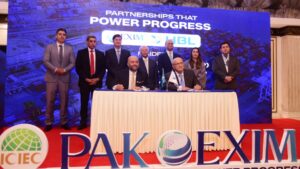
Hussain also welcomed the Pakistan-EU Business Forum and new business partnerships. He said government efforts to secure Pakistan’s place in the future GSP+ framework showed the importance attached to the issue.
He also appreciated Field Marshal Syed Asim Munir’s role in Pakistan’s broader diplomatic efforts, regional peace and confidence-building with international partners.
According to Hussain, economic diplomacy needs support from wider diplomatic, security and regional stability efforts.
Pakistan Faces New GSP+ Requirements
Hussain said the EU’s 2026 GSP+ review recognised Pakistan’s legislative progress concerning the 27 international conventions covered under the existing framework.
The review also identified areas where implementation needs further improvement.
Pakistan welcomed the recognition of its progress but expressed concerns about the assessment, he said.
The country now faces a more demanding phase. Under the EU’s new GSP regulations, existing beneficiaries will continue receiving current preferences until December 31, 2028.
From January 1, 2029, beneficiary countries will need to fulfil requirements linked to 32 international conventions instead of 27.
Trade Strategy Must Focus on Competitiveness
Hussain said Pakistan should pursue two objectives at the same time.
First, the country must continue strong economic diplomacy to secure GSP+ beyond 2028. Second, it must improve its domestic export capacity.
He called for greater investment in productivity, sustainability, innovation and value-added manufacturing.
Lower production costs will also be essential for competing with regional exporters.
Hussain said quality, productivity, sustainability, innovation, branding and cost competitiveness would determine Pakistan’s future economic strength.
He added that coordinated national efforts could help Pakistan convert the GSP+ challenge into a broader opportunity for export growth and market diversification.