
Iran Sees Pakistan-Saudi-Turkiye Defence Pact as Shift in Regional Security Thinking
Tehran says the new alliance reflects growing efforts by regional countries to strengthen security through their own cooperation rather than relying on outside powers.
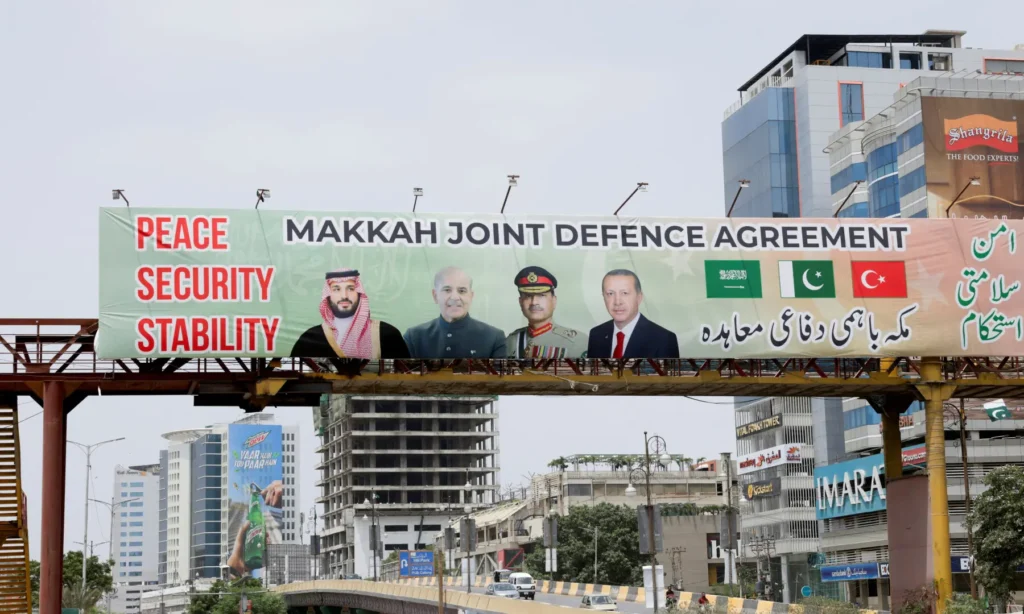
Iran reacts to the new defence agreement between Pakistan, Saudi Arabia and Turkiye.
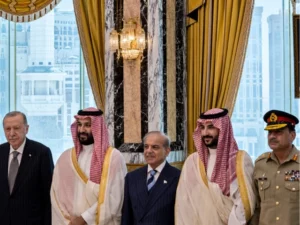
TEHRAN: Iran has described the new Pakistan-Saudi-Turkiye defence pact as a sign that countries in the region are reassessing their approach to security and their reliance on the United States.
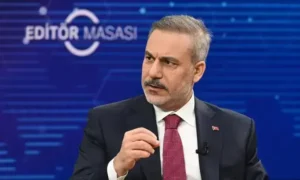
Iranian Foreign Ministry spokesman Esmaeil Baqaei made the remarks during a weekly press briefing on Monday while discussing the agreement signed in Makkah last week.
The pact seeks to strengthen collective deterrence among its members. It also provides for an attack against one signatory to be treated as an attack against all three countries.
Baqaei said recent developments had changed the way regional states viewed security arrangements.
Iran Says Pact Should Not Be Seen as Threat
Baqaei said Iran had no reason to believe the agreement was directed against it.
He pointed to Iran’s religious, historical and cultural ties with Pakistan, Turkiye and Saudi Arabia.
The Iranian spokesman said regional countries were increasingly looking for security arrangements based on their own capabilities rather than depending on external powers.
He argued that regional security initiatives should reflect the political and historical realities of the Middle East and include the countries of the region.
Baqaei said such arrangements could contribute to stability and help prevent further conflict.
Tehran Open to Regional Security Cooperation
Asked whether Iran could eventually join the defence arrangement, Baqaei said Tehran had consistently supported security mechanisms based on cooperation among regional countries.
He said Iran opposed foreign interference in regional security structures.
Baqaei added that existing Iranian proposals for regional security cooperation could be updated in response to changing circumstances.
“We are in close contact with neighbouring countries and regional countries,” he said, according to Iranian state media.
He added that countries should learn from developments over the past two to three years and identify the best ways to strengthen collective security.
Pakistan-Iran Relations Highlighted
The Iranian spokesman also addressed planned Pakistani invitations to Iranian officials.
Pakistan has invited Iranian Parliament Speaker Mohammad Bagher Ghalibaf and Foreign Minister Abbas Araghchi to visit the country.
Baqaei said the visits would take place when the timing was appropriate. He stressed that bilateral relations would remain the main focus.
He described the relationship between Pakistan and Iran as highly important.
According to Iranian state media, Baqaei said bilateral ties had become even more significant during the past seven or eight months.
Dar Says Pact Is Defensive
Pakistan’s Deputy Prime Minister and Foreign Minister Ishaq Dar said on Sunday that the Makkah agreement remains open to other regional countries that are willing to uphold its principles.
Dar described the pact as the result of years of discussions and coordination.
He also stressed that the agreement was defensive and was not directed against any particular country.
According to Dar, its purpose is to strengthen efforts for peace, stability and prosperity across the region.
He also clarified that the agreement does not replace or cancel existing bilateral or multilateral arrangements involving the signatories.
Ukraine Drone Strike on Tatarstan Kills at Least 13, Russian Officials Say
Dar Holds Regional Calls Over Agreement
Meanwhile, Dar discussed the defence pact with several foreign officials.
Kuwait’s Foreign Minister Sheikh Jarrah Jaber Al-Ahmad Al-Sabah congratulated Dar on the agreement during a telephone conversation late Sunday, according to Pakistan’s Foreign Office.
The two officials also discussed regional developments, including occupied East Jerusalem, as well as bilateral relations and investment cooperation.
Dar separately discussed the agreement with Democratic Republic of Congo President Félix-Antoine Tshisekedi and former Guinea-Bissau president General Umaro Sissoco Embaló.
The Foreign Office said Dar explained the pact’s significance for strategic cooperation and regional peace and security.
He also discussed Pakistan’s relations with the Democratic Republic of Congo with Tshisekedi.
A day earlier, Dar spoke with Canadian Foreign Minister Anita Anand about regional developments and the newly signed Makkah agreement.
Pakistan said the discussions focused on the three countries’ shared commitment to regional peace, stability and security.
The Iranian response comes as Pakistan, Saudi Arabia and Turkiye seek to deepen defence cooperation while presenting their new arrangement as a mechanism for regional security rather than an alliance directed against a specific country.