Trump Warns Iran of ‘Major Military Punishment’ as US Strikes Enter 13th Consecutive Day
Fresh US airstrikes, Iranian retaliation and Houthi attacks on Red Sea shipping deepen fears of a wider regional conflict and renewed pressure on global oil markets.
US military operations and regional tensions continue to escalate across the Middle East.
US strikes on Iran entered their 13th consecutive day early Friday as President Donald Trump warned Tehran and its Houthi allies of “major military punishment” following attacks on two Saudi oil tankers in the Red Sea.
The latest escalation has intensified concerns that the conflict could spread beyond the Strait of Hormuz to the Bab el-Mandeb, another vital global shipping route. The growing threat to energy supplies pushed global oil prices sharply higher, with Brent crude briefly climbing above $100 a barrel for the first time since May before easing slightly in early trading.
The Houthis, who control large parts of northern and western Yemen, recently announced a naval blockade targeting Saudi Arabia. The group said it was responding to regional tensions by threatening vessels linked to Saudi oil exports through the Red Sea.
US Tariffs widen as Trump imposes new duties on 60 trading partners over forced labour concerns
The disruption has already forced several oil tankers to alter their routes, avoiding the Bab el-Mandeb strait and instead travelling through longer and more expensive shipping lanes around Africa. Ship-tracking data also showed tanker traffic through the Strait of Hormuz fell to its lowest level since early May.
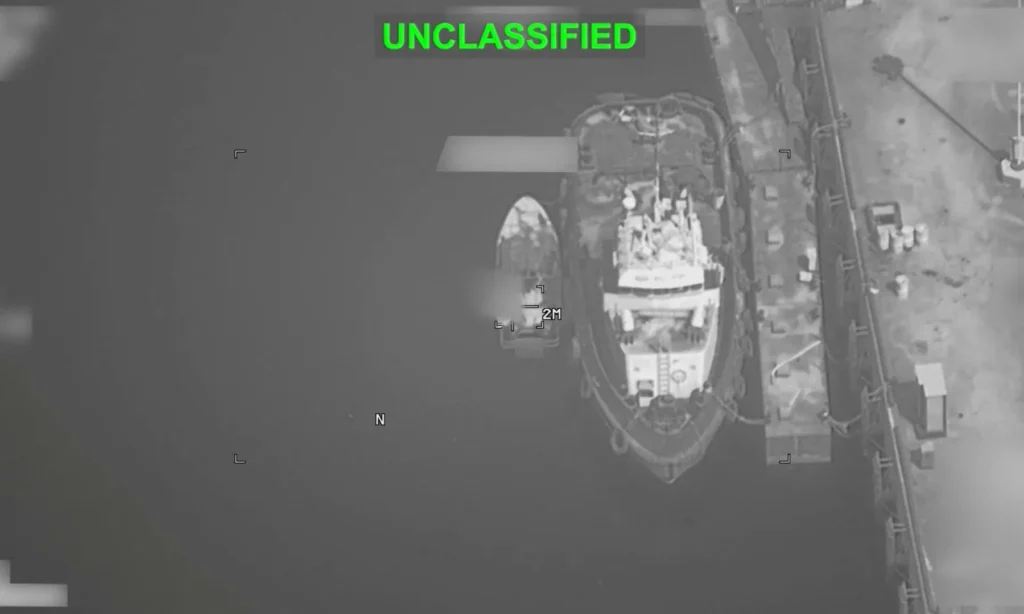
The US military confirmed that its latest operation lasted more than two hours. US Central Command (CENTCOM) said its forces targeted Iranian military command centres, drone storage facilities, communication systems, coastal surveillance sites and maritime assets to reduce threats against commercial shipping and civilian vessels.
Iranian state media reported missile strikes on Qeshm Island near the Strait of Hormuz, while officials said attacks in Ahvaz killed four people and injured five others. Separate reports said drone strikes in Khorramabad left at least two people wounded.
In response, Iran’s military announced fresh drone attacks targeting US military facilities in Bahrain and Jordan. Iranian officials claimed strikes hit fuel storage facilities, maintenance centres and troop accommodation at Sheikh Isa Air Base in Bahrain, along with aircraft hangars and infrastructure at Jordan’s Al-Azraq Air Base.
Iran also said it targeted US military installations in Jordan and Kuwait a day earlier, describing the attacks as retaliation for strikes on its infrastructure. However, neither Washington nor Kuwait reported casualties from the claimed attacks.
Iranian military spokesperson Brigadier General Mohammad Akraminia said Tehran would continue retaliatory operations as long as US attacks on Iranian territory persisted.
Trump blamed Iran for the Houthi attacks on Saudi oil tankers, arguing the rebel group acts as a proxy for Tehran. He warned that any further attacks would trigger significant military consequences for both Iran and the Houthis.
In remarks reported by Axios, Trump said he was considering expanding military operations against Iran, adding that Tehran had not “received enough pain yet.”
The US president also suggested that frozen Iranian assets could be used to compensate for damages caused to commercial shipping, although he did not explain how such a move would be implemented.
Iranian Foreign Minister Abbas Araqchi condemned the proposal, warning that confiscating another country’s assets to cover unrelated future claims would set a dangerous international precedent and increase global instability.
The conflict is also creating political pressure in Washington as rising oil prices fuel inflation ahead of November’s congressional elections. On Thursday, the Republican-controlled House of Representatives approved legislation directing Trump to halt military operations against Iran, although similar congressional efforts in recent months have failed to end the campaign. The Senate later rejected a separate measure calling for similar action.