Petrol Prices: Pakistan Raises Fuel Rates After Adopting Daily Pricing Mechanism
The federal government increases petrol and diesel prices as global oil markets surge following escalating tensions between the United States and Iran.
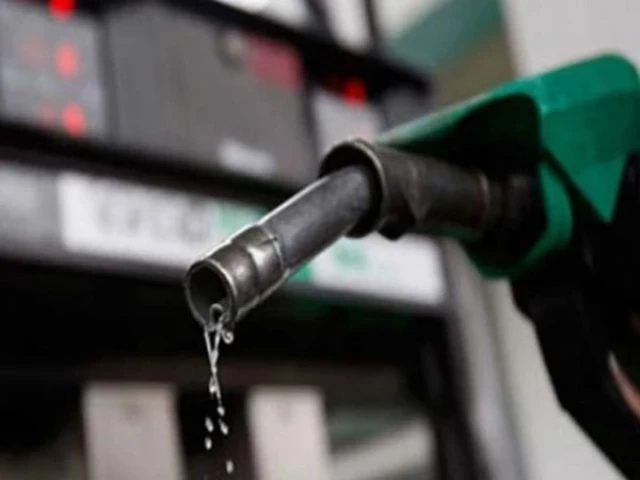
Pakistan increases petrol and diesel prices following the introduction of daily fuel pricing.
Petrol Prices in Pakistan increased on Friday after the federal government introduced a new daily fuel pricing mechanism, citing rising international oil prices driven by escalating tensions between the United States and Iran.
According to the Petroleum Division, the government increased the price of petrol by Rs5.44 per litre, raising it from Rs310.71 to Rs316.15 per litre.
The price of high-speed diesel (HSD) saw a much larger increase of Rs31.05 per litre, taking the new rate to Rs354.35 per litre.
The revised prices took effect from midnight on Friday.
Rotary District 3271: British Deputy Head of Mission Tom Burge Honoured at Rotary Ceremony
Earlier in the day, Petroleum Minister Ali Pervaiz Malik, accompanied by Information Minister Ataullah Tarar, announced a new mechanism under which petroleum prices will now be reviewed daily instead of weekly.
The government said the change aims to improve transparency in fuel pricing while protecting the national economy from financial risks caused by rapid fluctuations in global oil markets.
Speaking at a press conference, Malik said international crude oil prices had risen sharply following renewed geopolitical tensions in the Middle East.
He acknowledged that the increase would place an additional burden on consumers but described the move as necessary to safeguard the country’s economic stability.
Pakistan had shifted from fortnightly to weekly fuel price revisions earlier this year after conflict intensified between the United States and Iran. The newly introduced system now allows authorities to adjust petroleum prices every day in response to global market movements.
Global Oil Prices Continue to Climb
International oil prices climbed sharply on Friday as fighting between the United States and Iran intensified across the Gulf region, raising concerns about possible disruptions to global energy supplies.
Investors also expressed concern over the potential closure of the Red Sea and restrictions on shipping through the Strait of Hormuz, one of the world’s most important oil transit routes.
Brent crude rose 4.73% to $88.21 per barrel, while US West Texas Intermediate (WTI) crude gained 4.81% to $82.75 per barrel.
Both benchmark crude prices were on course to record weekly gains of around 16%, with Brent heading for a third consecutive weekly increase and WTI extending its upward trend for a second straight week.
The Middle East remains one of the world’s largest diesel-exporting regions. Supply concerns have intensified after attacks on energy infrastructure and disruptions to shipping routes pushed global fuel prices higher.
Before the conflict escalated, approximately 20% of global oil supplies passed through the Strait of Hormuz, making the waterway a critical route for international energy markets.
The latest exchange of strikes between the United States and Iran has heightened fears of prolonged supply disruptions, increasing pressure on countries that rely heavily on imported petroleum products, including Pakistan.