Khartoum Recovery Millions Return Home but Sudan’s Capital Still Struggles to Rebuild
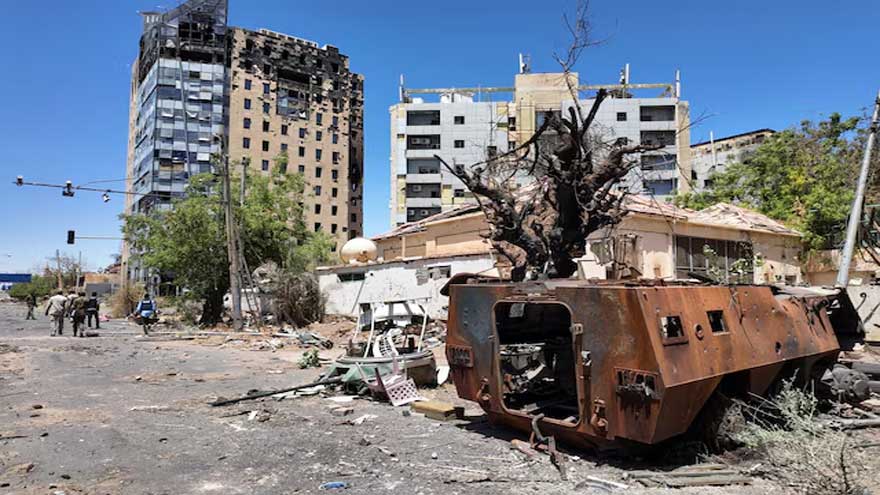
Residents return to Khartoum as Sudan's capital continues its slow recovery from war.
Khartoum Recovery efforts continue to face major challenges despite the return of more than two million residents to Sudan’s capital since the army recaptured the city from the Rapid Support Forces (RSF) last year.
Khamenei Burial Iran Lays Supreme Leader to Rest as Mojtaba Remains Out of Public View
The return of displaced families marks an important step towards normality. However, widespread power outages, damaged buildings and economic difficulties continue to affect daily life across much of the capital.
Millions Return After Months of Displacement
More than two million of the five million people who fled Khartoum during the conflict have now returned, according to local authorities. Meanwhile, the government has instructed civil servants to resume work in the capital after relocating many state institutions to Port Sudan during the war.
Students have also been told to return to classrooms after months of online learning and temporary examination arrangements in other cities and abroad.
For many families, the decision to return was driven by necessity. In particular, some Sudanese refugees left neighbouring Egypt following tighter restrictions and increased pressure on refugee communities.
Nisreen Altayeb, a schoolteacher who fled to Egypt with her family, said concerns about security and living conditions influenced their decision to return to Sudan. However, she has yet to receive her government salary since coming back.
Basic Services Remain Limited
Despite signs of progress, large parts of Khartoum remain without reliable electricity and essential services. In contrast, neighbouring Omdurman has experienced a faster recovery because the army maintained partial control there during the conflict.
Authorities say repeated drone attacks on power stations and military facilities have slowed reconstruction efforts. As a result, electricity generation in the capital remains far below pre-war levels.
Khartoum state government spokesman Altayeb Saadeldin said the city currently operates at about one-third of its former electricity capacity. Consequently, officials provide residents with limited power supplies for several hours each day.
Universities and Schools Face Reconstruction Challenges
Educational institutions are also struggling to recover from the effects of the war. For example, parts of the University of Khartoum suffered extensive damage during the fighting.
Students returning for in-person classes have found lecture halls, laboratories and dormitories in need of repairs. Nevertheless, university officials say rehabilitation work is continuing ahead of the next academic term.
Student Megdad Kammal said both the university and the city require significant rebuilding before normal operations can fully resume.
Businesses Seek More Support
Small business owners are gradually reopening shops across the capital. At the same time, many say the lack of reliable services is making recovery difficult.
Authorities have encouraged businesses to return, particularly in Souq al-Arabi, one of Khartoum’s most important commercial districts. However, traders argue that ongoing economic challenges are limiting their ability to restart operations.
Print shop owner Mohamed Abdelbasit said many businesses continue to face low income and rising costs. Therefore, he called on authorities to delay tax collection and provide greater support for shopkeepers.
Government officials say they are offering flexibility where possible. Nevertheless, they stress that the administration also requires revenue to maintain essential services, including public safety and sanitation systems.
Overall, Khartoum’s recovery remains a work in progress. While millions have returned home and some institutions have resumed operations, rebuilding the capital’s infrastructure, economy and public services is likely to take years.