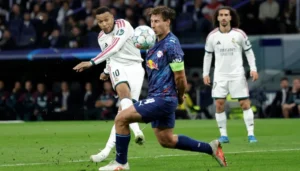
England Tactics: Why Ghana’s Defensive Plan Stopped Tuchel’s Team
England’s goalless draw with Ghana offered an early reality check for Thomas Tuchel’s World Cup project, exposing the limits of a system designed to punish teams that press high rather than sit deep.

England struggled to break down Ghana’s disciplined defensive setup.
England’s goalless draw with Ghana offered an early reality check for Thomas Tuchel’s World Cup project, exposing the limits of a system designed to punish teams that press high rather than sit deep.
Ghana delivered a disciplined and organised performance, following Carlos Queiroz’s game plan with intensity and denying England the spaces they had exploited so effectively in their opening win over Croatia.
Tuchel’s England has built its attacking identity around attracting pressure before accelerating into open space. The team invites opponents forward through controlled possession in deeper areas before launching direct attacks into advanced runners.
Cristiano Ronaldo: Portugal Captain Silences Doubts with Record-Breaking Display
Harry Kane often drops into midfield positions during build-up play, while defenders and midfielders look to create overloads and stretch opponents vertically.
That strategy worked effectively against Croatia.
England repeatedly drew Croatia’s pressing line forward before exploiting the space left behind through direct passes and aggressive runs from attacking players.
Tuchel selected a squad suited to this approach, favouring players who can operate in transition and attack open spaces at speed.
Against Ghana, however, the conditions were entirely different.
Rather than pressing high, Ghana remained compact in a disciplined 4-5-1 shape and refused to step forward unnecessarily. Their approach limited the space England relies on and disrupted the rhythm of Tuchel’s build-up.
England’s defenders circulated possession but struggled to create openings because Ghana prioritised blocking passing lanes instead of chasing the ball.
Tuchel attempted to adjust during the match.
He encouraged his players to move possession quickly across the pitch through short combinations before switching play to isolated wide attackers. England created moments through those patterns but found little success against strong defensive performances from Ghana’s full-backs.
Ghana also focused heavily on limiting England’s key creators.
Harry Kane revealed after the match that he was tightly marked and denied opportunities to drop deep and influence attacks.
England’s wider combinations — which had proved effective against Croatia — became less dangerous because Ghana matched numbers and prevented overloads.
The match also highlighted questions about England’s alternative attacking options.
Without players known for unlocking compact defences in tight spaces, England found it difficult to create high-quality chances.
Tuchel’s approach differs sharply from that of former England manager Gareth Southgate.
Where Southgate often adapted systems around his strongest players, Tuchel appears committed to a defined tactical structure with specialists performing fixed roles.
That clarity may benefit England against stronger opponents later in the tournament, particularly teams willing to dominate possession and press aggressively.
But matches against disciplined defensive sides may continue to test England’s flexibility.
Despite the frustration, England remains in a strong position in Group L, and tournament football often rewards teams that avoid defeat while building momentum.
Tuchel’s challenge now is not abandoning the system — but finding solutions when opponents refuse to play into it.