Scotland vs Brazil: Clarke’s Side Chases World Cup History
Scotland stands on the edge of history as Steve Clarke’s side prepares to face Brazil in a decisive World Cup group-stage match with knockout qualification still within reach.
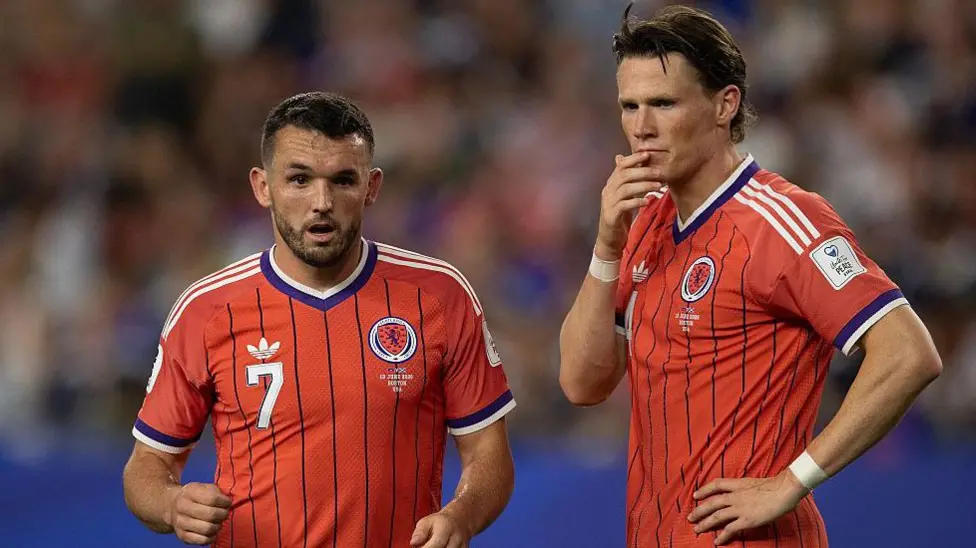
Scotland prepares for a decisive World Cup meeting against Brazil.
Scotland stands on the edge of history as Steve Clarke’s side prepares to face Brazil in a decisive World Cup group-stage match with knockout qualification still within reach.
The meeting carries historical weight. Scotland first faced Brazil in 1966 against a team featuring some of the sport’s greatest names and earned a 1-1 draw. Since then, Scotland has never defeated the five-time world champions in World Cup or friendly encounters.
Now, nearly three decades after their last World Cup meeting, Scotland returns to face the Selecao with a chance to achieve something the national team has never managed before — reaching the knockout stage of a World Cup.
England Tactics: Why Ghana’s Defensive Plan Stopped Tuchel’s Team
The equation remains unusual.
Scotland’s objective is simple: secure a positive result. But qualification scenarios mean even defeat may not automatically end hopes depending on results elsewhere and goal difference calculations.
Despite those possibilities, captain Andy Robertson insisted the team’s focus remains firmly on producing a performance rather than relying on permutations.
Scotland enters the match aware that improvement in attack is essential.
Across two matches in the tournament, Clarke’s side has struggled to convert effort into clear chances and has produced limited shots on target.
The coaching staff and players have openly acknowledged the need to become more dangerous in the final third.
Clarke now faces the challenge of balancing caution with ambition.
Brazil possesses game-changing quality through players such as Vinicius Junior and could also welcome Neymar back into action after a lengthy absence.
Yet Brazil has not looked untouchable.
Qualification for the tournament proved inconsistent, and recent performances have raised questions about whether this generation can restore the country to the summit of international football after a 24-year wait for another World Cup title.
For Scotland, selection decisions remain significant.
Questions continue over who starts at right-back to contain Brazil’s attacking threat, while Clarke must also decide how to structure his forward line to ensure the team offers more than defensive resistance.
Players such as Scott McTominay, John McGinn and Ben Gannon-Doak may hold the key if Scotland hopes to unsettle Brazil and create opportunities.
Scotland’s identity under Clarke has centred on organisation, resilience and intensity.
But to take the next step and reach uncharted territory, those qualities alone may not be enough.
The team’s leading players must produce moments of quality, remain composed under pressure and seize opportunities whenever they arrive.
For Scotland, this is more than another group match.
It is a chance to rewrite history against one of football’s most decorated nations and turn years of near-misses into a defining moment on the world stage.