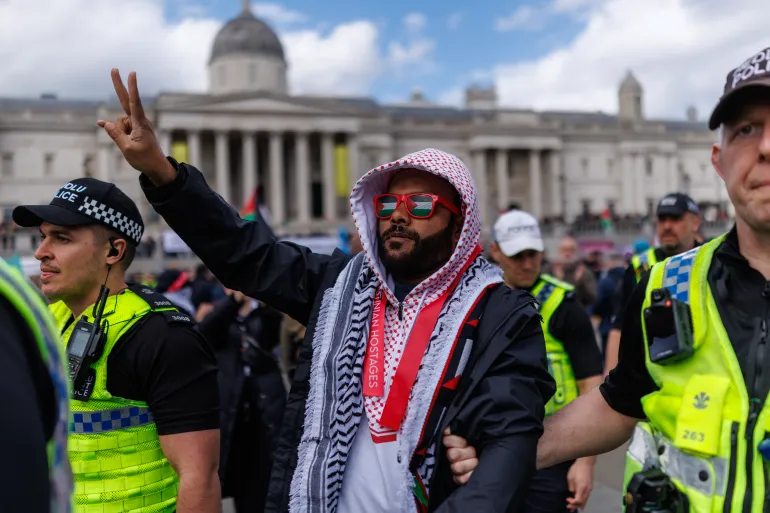
UK Court of Appeal prepares to rule on Palestine Action proscription case.
The Palestine Action case has reached a critical stage as the UK Court of Appeal prepares to decide whether the government was correct to label the group as a terrorist organisation. The ruling is expected on Monday and could reshape how protest movements are treated under UK law.
The Palestine Action dispute matters because it raises major questions about terrorism law and the limits of protest. The decision follows earlier rulings that challenged the legality and proportionality of the government’s proscription order. The group was formally banned last July, but legal challenges have continued.
United States and Iran Near Iran Peace Deal Amid Timeline Dispute
United Kingdom Terror Proscription Dispute
The Palestine Action proscription was previously upheld by Parliament, placing the group in the same legal category as organisations such as ISIL. However, critics argue the classification is disproportionate because the group has not carried out violent attacks.
The High Court ruled earlier this year that the ban was unlawful and disproportionate. Despite that, the government appealed the decision, keeping the proscription in place until the Court of Appeal delivers its judgment.
According to court documents, the case centers on whether disruptive protest actions involving property damage can legally justify a terrorism designation.
Shabana Mahmood Government Appeal Case
Home Secretary Shabana Mahmood defended the government’s position, stating she disagrees with the High Court’s ruling. She confirmed that the government intends to continue defending the proscription in the Court of Appeal.
Officials argue that Palestine Action’s activities caused significant criminal damage at facilities linked to defence manufacturing. Police reports claim damages reached millions of pounds across multiple incidents.
Supporters of the ban say strong legal measures are necessary to protect critical infrastructure and national security interests.
Huda Ammori Legal Challenge High Court
Palestine Action co-founder Huda Ammori led the legal challenge against the proscription. The High Court previously heard arguments that the ban violated proportionality principles in UK law.
In its February ruling, the court found the government’s decision to proscribe the group unlawful. However, the legal status remained unchanged while the appeal process continued.
Ammori and supporters argue the case sets a dangerous precedent for protest rights and civil liberties.
Elbit Systems Protest Cases Britain
A key focus of the Palestine Action case involves protests targeting companies such as Elbit Systems. Activists reportedly carried out break-ins and property damage at defence-linked facilities across the UK.
Court records cite incidents in Leicester, Glasgow, and Bristol where significant damage was reported. Authorities argue these actions justify terrorism classification under current legislation.
However, human rights groups including Amnesty International have criticized the sentencing and classification. They argue that criminal damage during protests should not be treated as terrorism.
Amnesty International Terror Law Debate UK
Amnesty International described recent sentencing decisions as “completely disproportionate.” The organisation warned that applying terrorism laws to protest cases could undermine civil liberties.
Legal experts and academics have also raised concerns in an open letter signed by dozens of professionals. They argue that historically, protest movements involving property damage were not treated as terrorism.
The Court of Appeal ruling will therefore be closely watched across legal, political, and human rights communities. It may influence future interpretations of protest law in the United Kingdom.