William Ruto Defends Ebola Facility as Kenya Protests Intensify
Web Desk June 9, 2026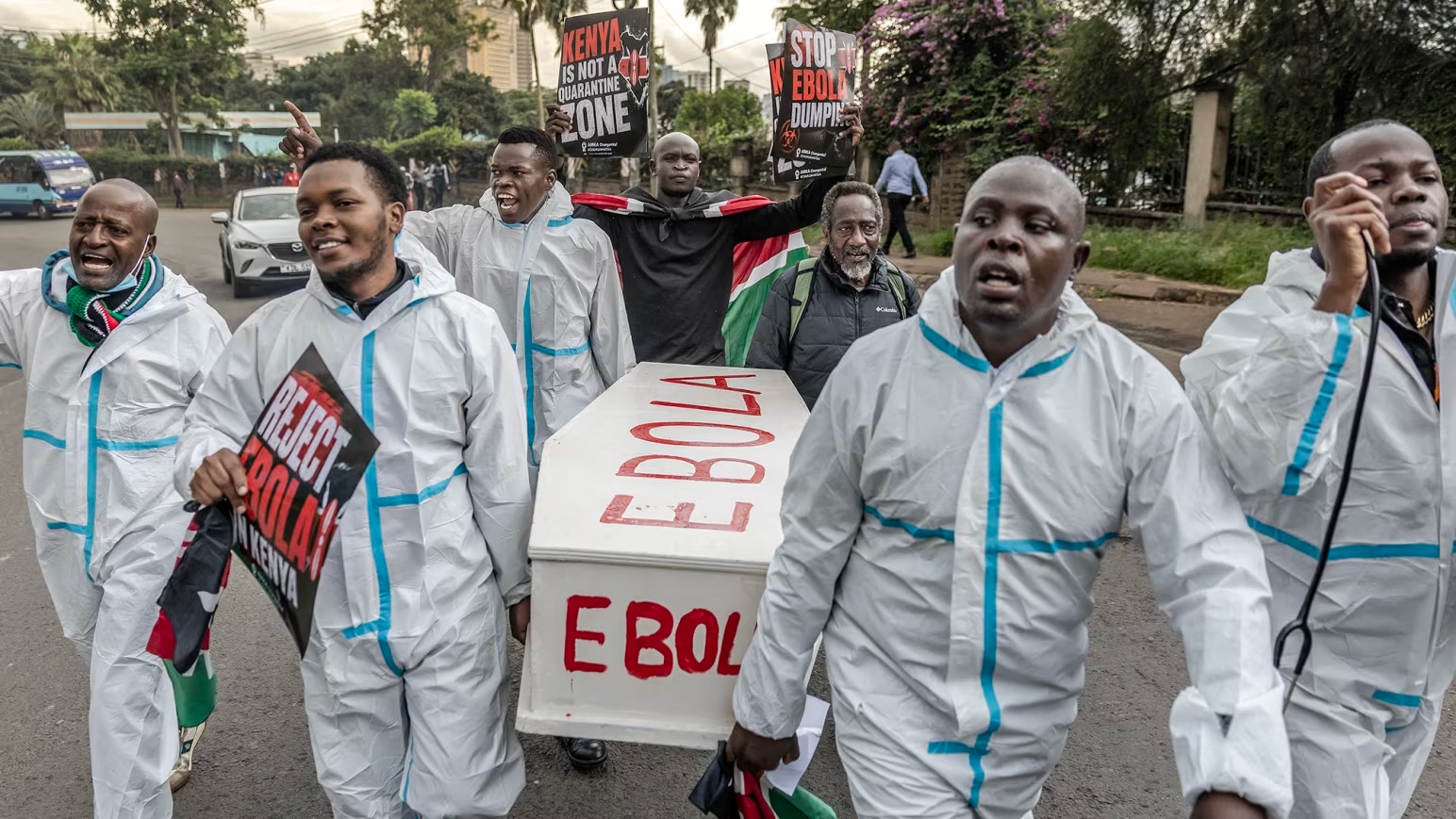
Protesters gather in Nairobi to oppose a proposed Ebola isolation facility. PHOTO BY CNN
The Kenya Ebola Facility controversy has triggered protests across Kenya and raised broader questions about the future of US-Africa partnerships. Demonstrators have voiced concerns over a proposed US-funded isolation ward intended for Americans exposed to Ebola abroad.
Moreover, the debate extends beyond public health. Critics argue the project reflects a changing US approach to Africa, where aid is increasingly tied to strategic agreements and national interests.
William Ruto Defends Kenya Ebola Facility
Kenyan President William Ruto has defended the proposed Kenya Ebola Facility, despite growing public opposition and legal challenges. Protesters fear the facility could expose Kenya to unnecessary health risks, even though the country has never recorded an Ebola case.
Furthermore, a court order temporarily halted construction while legal proceedings continue. However, government officials have continued supporting the project, arguing it reflects Kenya’s longstanding cooperation with the United States.
Ruto stated that rejecting the facility after years of receiving American assistance would be “very inhuman.” His remarks have fueled debate among political leaders and civil society groups.
Rigathi Gachagua Criticizes Kenya Ebola Facility
Former Deputy President Rigathi Gachagua strongly opposed the proposal. According to an interview with CNN, he argued that the arrangement reflects a double standard.
He stated that if Americans consider treating exposed patients risky at home, Kenya should not be expected to accept those risks instead. As a result, his comments resonated with many protesters who have questioned the fairness of the agreement.
Additionally, Gachagua reportedly described the deal as insensitive and claimed it prioritizes US interests over Kenyan concerns.
Donald Trump Health Strategy Faces Scrutiny
The controversy arrives amid major changes in US foreign policy under President Donald Trump. Since returning to office, Trump has reduced traditional foreign aid programs and promoted direct agreements with partner countries.
For decades, US assistance supported healthcare programs targeting HIV/AIDS, malaria, and tuberculosis across Africa. However, Washington now emphasizes its “America First Global Health Strategy,” which focuses on bilateral partnerships and mutual benefits.
Consequently, many African governments have begun examining the terms of new agreements more closely. Critics argue that some proposals place significant obligations on recipient countries.
Zambia and Ghana Question Health Agreements
The debate surrounding the Kenya Ebola Facility mirrors concerns emerging elsewhere across Africa. Zambia recently expressed reservations about a proposed health package reportedly linked to broader economic conditions.
According to Zambia’s Foreign Minister Mulambo Haimbe, the proposal included provisions involving US companies and data-sharing requirements. Therefore, officials questioned whether the arrangement adequately protected national interests.
Similarly, Ghana has voiced concerns about health agreements that involve sharing sensitive information. Ghanaian Health Minister Kwabena Mintah Akandoh stated that partnerships should proceed without restrictive conditions.
Meanwhile, Zimbabwean officials have also raised objections regarding biological data-sharing provisions and long-term access to national resources.
Félix Tshisekedi and DRC Resource Concerns
Questions about US intentions have also surfaced in the Democratic Republic of Congo. The country possesses significant deposits of critical minerals used in modern technology, including coltan.
Last year, Donald Trump hosted DRC President Félix Tshisekedi and Rwandan President Paul Kagame during the signing of a peace agreement aimed at reducing conflict in eastern Congo.
However, some activists and analysts have questioned whether resource interests influence international engagement in the region. Critics allege that strategic minerals play an important role in diplomatic efforts, although US officials maintain that regional security remains the primary objective.
African Leaders Push for New Partnership Terms
Analysts say the disputes in Kenya, Zambia, Ghana, Zimbabwe, and the DRC reflect a broader shift in Africa’s relationship with global powers.
According to policy experts, African governments are increasingly willing to challenge agreements they believe do not adequately serve national interests. As a result, negotiations are becoming more focused on transparency, reciprocity, and long-term benefits.
Moreover, development specialists argue that countries across the continent seek partnerships that strengthen local capacity rather than create dependency. The discussion is no longer simply about receiving aid. Instead, it centers on the terms under which cooperation takes place.
Kenya Ebola Facility Highlights Changing US-Africa Dynamics
The Kenya Ebola Facility dispute has evolved into more than a public health controversy. It now serves as a symbol of wider debates about aid, sovereignty, data protection, and strategic resources.
While Kenyan authorities continue to support the project, public resistance remains strong. Meanwhile, similar concerns across Africa suggest that governments are increasingly evaluating international agreements through the lens of national interests and equal partnership.
As negotiations continue, the outcome of the Kenya Ebola Facility debate may influence how future US-Africa health and development agreements are structured across the continent.