Iran Says US Must Accept “Rights of Iranian People” as Nuclear Talks Collapse Amid Escalating War Tensions
Web Desk May 12, 2026TEHRAN: Iranian Parliament Speaker Mohammad Bagher Ghalibaf has said that the United States has no option but to accept what he described as “the rights of the Iranian people” as outlined in Tehran’s 14-point proposal, as diplomatic efforts to end the ongoing conflict continue to unravel.
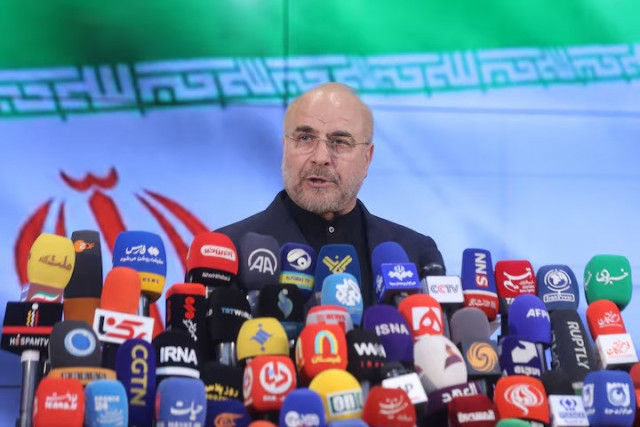
TEHRAN: Iranian Parliament Speaker Mohammad Bagher Ghalibaf has said that the United States has no option but to accept what he described as “the rights of the Iranian people” as outlined in Tehran’s 14-point proposal, as diplomatic efforts to end the ongoing conflict continue to unravel.
In strong remarks, Ghalibaf warned that delays in negotiations would only increase costs for the United States. “The longer they drag their feet, the more American taxpayers will pay for it,” he said, signaling Tehran’s hardened stance amid rising regional tensions.
He further stated that Iran’s armed forces are fully prepared to respond to any aggression. “We are prepared for all options; they will be surprised,” he added, reinforcing Iran’s military posture as tensions escalate.
Diplomatic Breakdown and Rising Hostilities
The comments come as hopes for a ceasefire deal fade following reports that a proposed US peace framework was rejected by Tehran. Former US President Donald Trump reportedly dismissed Iran’s counterproposal as “garbage” and said the fragile ceasefire was “on life support.”
Iran has insisted that any settlement must include a full end to hostilities across multiple fronts, including Lebanon, where Israel continues operations against Hezbollah, an Iran-backed group. Tehran has also demanded recognition of its sovereignty over the Strait of Hormuz, compensation for war damages, and an end to US naval restrictions.
The dispute has sharply impacted global energy markets. Brent crude prices surged above $104.50 per barrel as shipping through the Strait of Hormuz—one of the world’s most critical oil routes—has dropped significantly due to ongoing tensions and security risks.
Strategic Strait Becomes Flashpoint
Before the conflict, the Strait of Hormuz carried nearly one-fifth of global oil and LNG shipments. However, shipping activity has now fallen dramatically, with tankers rerouting or turning off tracking systems to avoid potential attacks.
Reports indicate limited coordination involving Iran and Pakistan to allow restricted passage for certain cargo vessels, though the situation remains highly unstable.
Global Diplomatic Efforts Intensify
The United States has imposed new sanctions targeting individuals and companies accused of helping Iran export oil to China, aiming to restrict funding for Tehran’s military programs.
At the same time, international diplomatic engagement continues, with Turkey, Qatar, and mediator Pakistan playing roles in behind-the-scenes negotiations aimed at preventing further escalation.
However, with both sides hardening their positions and no breakthrough in sight, fears are growing that the conflict could deepen further, putting global energy security and regional stability at serious risk.