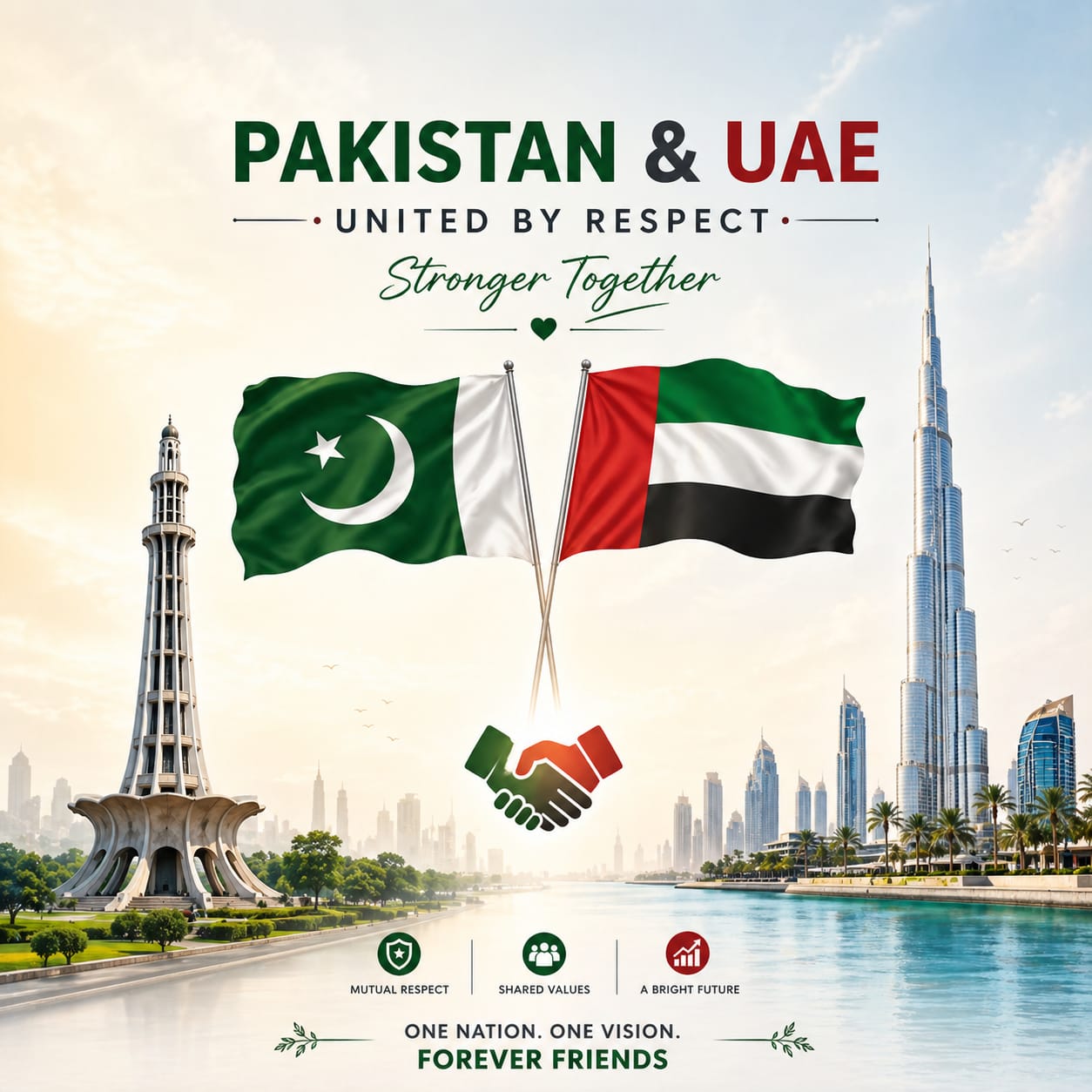
Karachi: The economic relationship between Pakistan and the United Arab Emirates (UAE) has evolved into a “strategic and structured partnership,” driven by decades of diplomatic trust and expanding trade cooperation, according to Diwan Fakhruddin, Chairman of the Pak-UAE Business Council under the Federation of Pakistan Chambers of Commerce and Industry (FPCCI).
CAP Hosts 9th Consumers Road Safety Conference 2026 in Karachi, Calls for Stronger Traffic Law Enforcement
In a press statement, he said the bilateral relationship, rooted in close ties established in 1972, has matured beyond traditional diplomacy into a modern economic alliance focused on trade expansion, investment flows, and private-sector collaboration.
He noted that the UAE continues to play a vital role in supporting Pakistan during economic challenges, while also serving as a key gateway for Pakistan’s integration into global supply chains through Dubai’s position as an international trade hub.
According to him, bilateral trade is not only increasing in volume but also diversifying into high-value sectors, strengthening long-term economic resilience and private-sector engagement between the two countries.
A major pillar of the relationship, he said, is the Pakistani diaspora in the UAE, which contributes significantly through remittances that support Pakistan’s macroeconomic stability. He described overseas Pakistanis as a “human bridge” linking both economies and cultures.
Fakhruddin emphasized that Pakistani businesses must adopt greater transparency and compliance with international standards to succeed in the UAE’s highly regulated commercial environment. He stressed that professional integrity is essential for maintaining Pakistan’s global business reputation.
He also highlighted the recent establishment of the Dubai International Chamber’s representative office in Karachi, calling it a major institutional development expected to facilitate business-to-business connectivity and reduce barriers for investment flows.
Key sectors identified for future cooperation include agriculture, textiles, fintech, logistics, and the halal economy. He said targeted reforms and policy stability would be essential to converting these opportunities into sustainable economic growth.
Concluding his remarks, he stated that the Pakistan–UAE relationship is entering a new phase of economic integration and must now focus on institutional continuity, regulatory discipline, and long-term strategic planning to ensure shared prosperity.