Islamabad Red Zone Remains Sealed as Security Tightened Ahead of Uncertain US–Iran Diplomatic Engagements
Web Desk April 22, 2026Islamabad: Security measures remained heightened across the twin cities of Islamabad and Rawalpindi on Wednesday, with partial easing of restrictions in some areas, while the federal capital’s high-security Red Zone continued to remain sealed for a third consecutive day amid uncertainty surrounding the arrival of American and Iranian delegations.
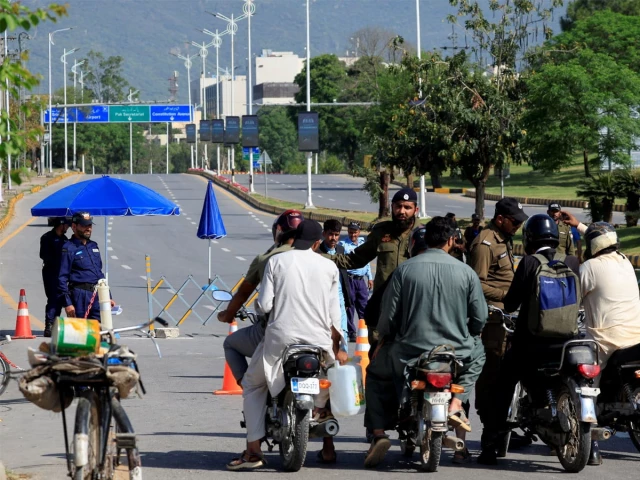
Islamabad: Security measures remained heightened across the twin cities of Islamabad and Rawalpindi on Wednesday, with partial easing of restrictions in some areas, while the federal capital’s high-security Red Zone continued to remain sealed for a third consecutive day amid uncertainty surrounding the arrival of American and Iranian delegations.
Authorities had earlier locked down entry points to the Red Zone as part of precautionary arrangements linked to sensitive diplomatic activity in the capital. Government and private offices located within the restricted zone were instructed to shift to online operations, while schools and administrative functions were also moved to remote work setups.
According to Islamabad Deputy Commissioner Irfan Nawaz Memon, all major entry points to the Red Zone remain closed, with law enforcement agencies maintaining strict security checkpoints across key arteries. Srinagar Highway towards Serena Hotel was closed from Zero Point, while Kashmir Chowk was also shut for general traffic movement.
In addition, bus terminals at Faizabad and Karachi Company remained non-operational, and the metro bus service across Islamabad continued to be suspended. However, authorities confirmed that the bus terminal at 26 Number Chungi had been reopened for public use.
Commercial activity in key business hubs, including Islamabad’s Blue Area, remained largely suspended, with Jinnah Avenue—stretching from Khayaban-e-Suharwardy to Parliament House—also closed to vehicular traffic. Despite this, several markets outside the restricted zone remained open and operational, and educational institutions in the capital continued normal academic activities.
In Rawalpindi, security forces were deployed at sensitive locations including the old Benazir Bhutto International Airport area and along the Islamabad Expressway service roads. Markets, wedding halls, and commercial centers in nearby Faizabad and Murree Road remained closed, while police maintained a strong presence and continued routine checking operations. Other parts of the city and cantonment areas, however, saw normal business activity and traffic flow on major routes such as the Grand Trunk Road.
Authorities emphasized that no major highways in Rawalpindi were fully shut, though enhanced security screening remained in place across key points.
The security tightening comes amid ongoing diplomatic sensitivity following Pakistan’s recent role in facilitating a 14-day ceasefire between the United States and Iran. The truce was followed by high-level talks in Islamabad earlier this month involving senior delegations from both countries. Although those discussions did not produce a final breakthrough, the ceasefire has held, with continued efforts underway to establish longer-term confidence-building measures.
In a recent development, U.S. President Donald Trump announced an extension of the ceasefire, citing a request from Pakistan’s leadership, including Prime Minister Shehbaz Sharif and Chief of Army Staff and Chief of Defence Forces Field Marshal Asim Munir. The extension reportedly allows additional time for Iran to present a comprehensive proposal before further negotiations.
Despite expectations of a second round of talks in Islamabad, no official date has yet been confirmed, leaving the diplomatic process in a state of uncertainty while security preparations remain on alert across the capital.