PHEVs Gain Edge Over EVs in Pakistan’s Emerging Auto Market
While global markets accelerate toward electric vehicles, plug-in hybrid electric vehicles (PHEVs) are emerging as the more practical choice across emerging economies like Pakistan, driven by infrastructure constraints and cost considerations.
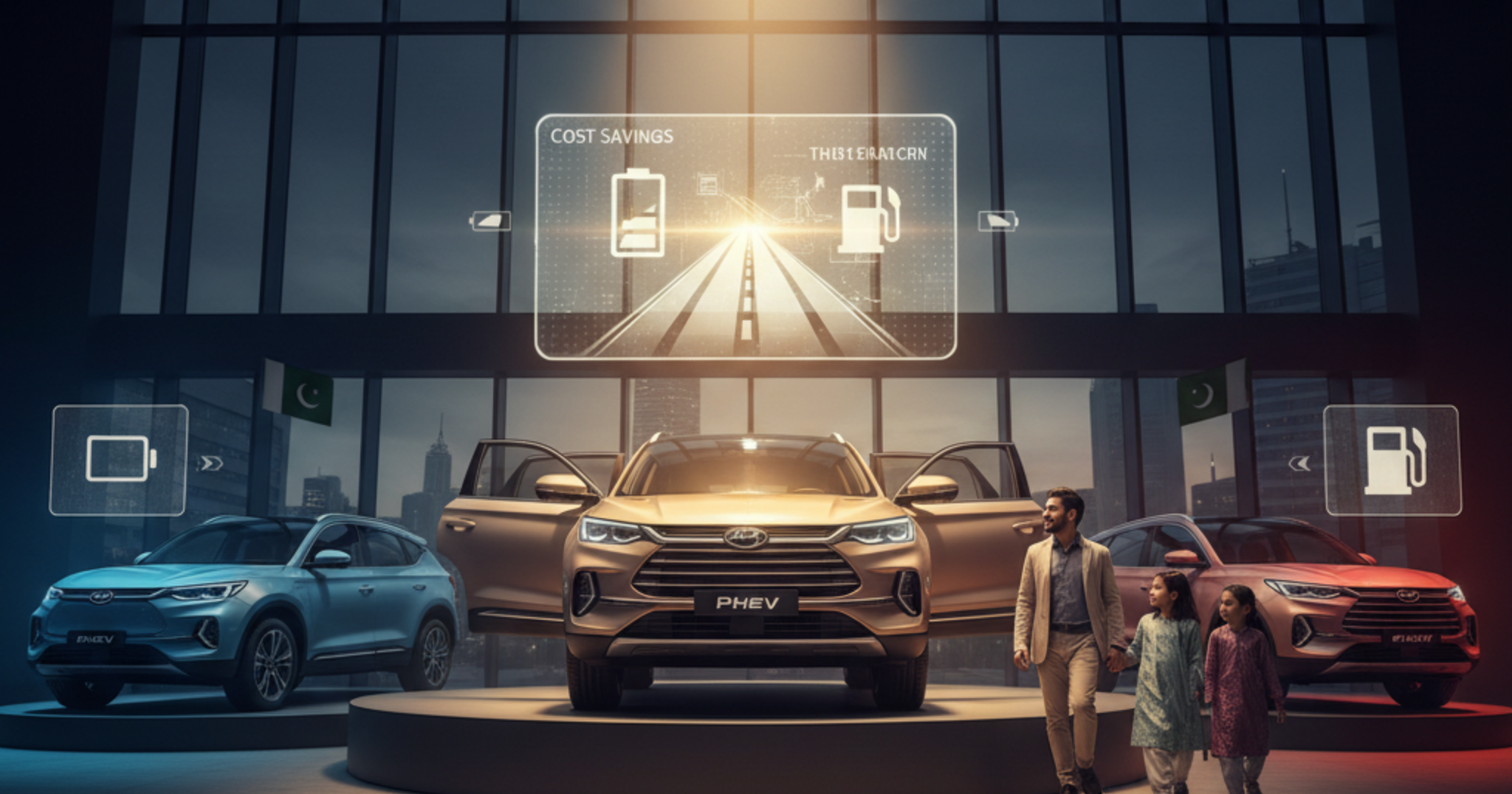
While global markets accelerate toward electric vehicles, plug-in hybrid electric vehicles (PHEVs) are emerging as the more practical choice across emerging economies like Pakistan, driven by infrastructure constraints and cost considerations.
Dr Tee SKH Conducts Free Workshop on Advanced Aesthetic Treatments in Karachi
Industry trends show that China has overtaken traditional leaders to become the world’s largest car exporter, largely due to its dominance in new energy vehicles, including EVs and hybrids. However, in markets with limited charging infrastructure, PHEVs are gaining traction as a transitional solution.
In Pakistan, rising fuel prices and fluctuating energy costs are reshaping consumer preferences, with buyers increasingly focusing on running costs rather than upfront vehicle prices. Compared to conventional petrol vehicles, hybrids and PHEVs offer significantly lower per-kilometer expenses, particularly in urban driving conditions.
At the same time, full EV adoption faces key challenges, including underdeveloped charging networks and concerns over range and grid reliability, especially outside major cities.
This gap has created strong demand for PHEVs, which combine electric driving capability for daily use with traditional fuel engines for longer distances, offering both efficiency and flexibility.
Automakers are already responding to this shift. Chery has entered the Pakistani market with its Tiggo PHEV lineup, including the Tiggo 7, Tiggo 8, and Tiggo 9, which have reportedly seen strong early demand across multiple consumer segments.
Analysts note that PHEVs are increasingly being viewed globally as a “bridge technology,” particularly in regions where EV ecosystems are still developing. China’s export strategy reflects this approach, focusing on scalable hybrid solutions suited to diverse markets.
For Pakistan, this signals a phased transition toward electrification, with plug-in hybrids likely to dominate in the near term before a broader shift to fully electric vehicles becomes viable.
As the market evolves, consumer behavior — shaped by affordability, fuel savings, and practicality — is expected to play a decisive role in determining the country’s mobility future.