World Culture Festival Karachi Celebrates Global Arts on 21st Day with International Performances
Georgian puppet theatre, Russian dance workshops, Czech music sessions and international theatre productions highlight the festival, while former Maldivian president visits Arts Council.
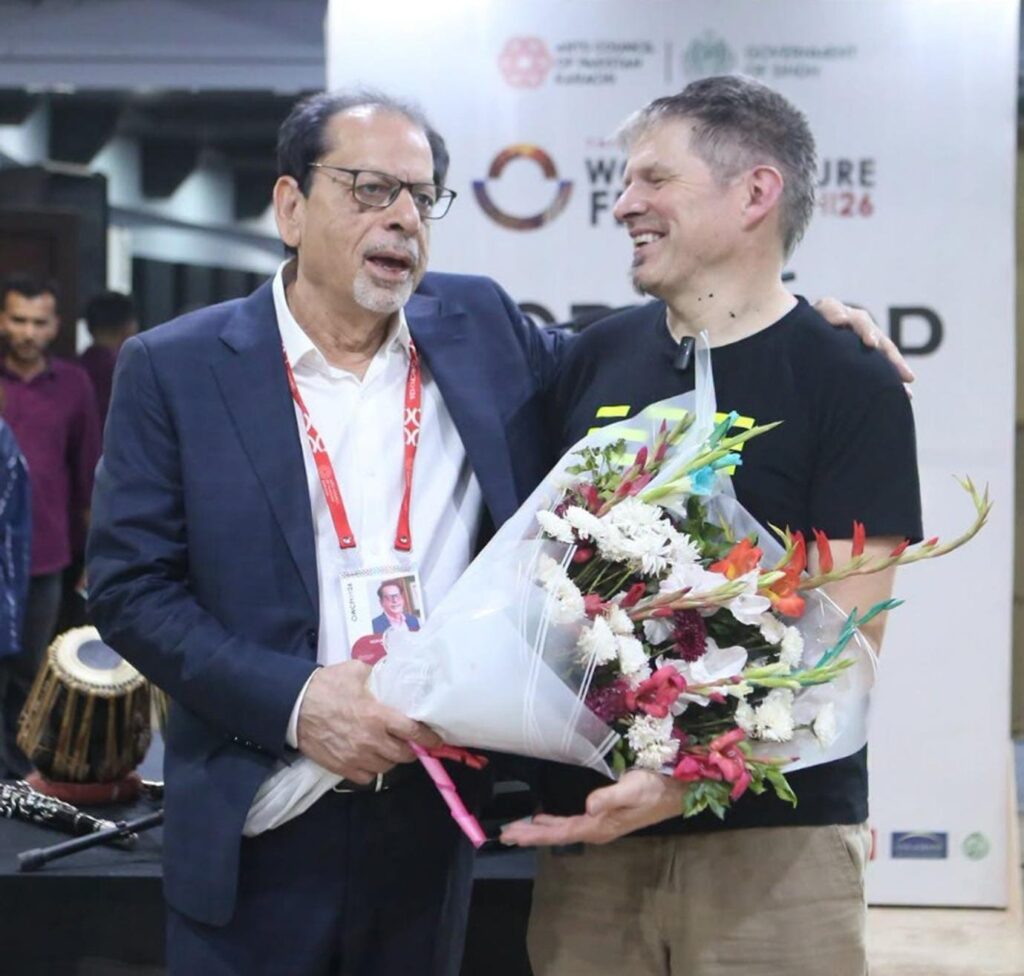
World Culture Festival: International artists present theatre, dance, music and cultural performances at the Arts Council Karachi.
KARACHI: The 21st day of the 25-day 3rd World Culture Festival Karachi 2026 featured a vibrant programme of international performances, workshops and cultural activities at the Arts Council of Pakistan Karachi.
Organised by the Arts Council, the day included a Georgian puppet theatre performance for children, three Russian dance workshops, a music workshop by Czech artist Tomáš Reindl, a Georgian film programme and international theatre performances by artists from Georgia, South Africa and Morocco.
Former President of the Maldives Dr. Mohamed Waheed Hassan also visited the Arts Council. He explored its cultural activities and appreciated the creative contributions of international artists.
Georgian Puppet Theatre Delights Children
The day’s programme opened with Charlie Chaplin, a dialogue-free puppet theatre performance by Georgia’s GRTN theatre group.
Using a miniature tabletop stage and puppets, the performers brought the legendary silent-film character to life. The production portrayed Chaplin’s early years of poverty and his journey to international fame.
Fly Jinnah to Launch Five Weekly Islamabad–Abu Dhabi Flights on December 1
Through expressive gestures, movements and puppetry, the artists told the story without spoken dialogue. The performance entertained children and adults alike.
Arts Council President Muhammad Ahmed Shah interacted with the young audience and encouraged them to continue visiting the institution.
He said the Arts Council would work with school administrations to develop a strategy for children’s participation in cultural activities without disrupting their education.
Shah added that the institution planned to organise children’s theatre programmes throughout the year, except during Ramadan and Muharram.
He also thanked the Georgian artists for travelling to Pakistan and presenting the performance. Later, he joined the children in chanting “Pakistan Zindabad” and posed for photographs with them.
Former Maldives President Visits Arts Council
Former Maldivian president Dr. Mohamed Waheed Hassan visited different sections, indoor halls and departments of the Arts Council.
President Muhammad Ahmed Shah welcomed him and briefed him on the festival’s ongoing activities and creative projects involving international artists.
During the visit, Dr. Hassan viewed collages created by international artists on the Arts Council’s exterior walls. He also met an international mural artist and appreciated the artist’s creative work.
He expressed particular interest in the institution’s efforts to promote performing and visual arts through international cultural exchanges.
The former president praised the artworks by artists from different countries, describing them as a reflection of cultural harmony and the meeting of diverse artistic expressions.
Russian Artists Conduct Three Dance Workshops
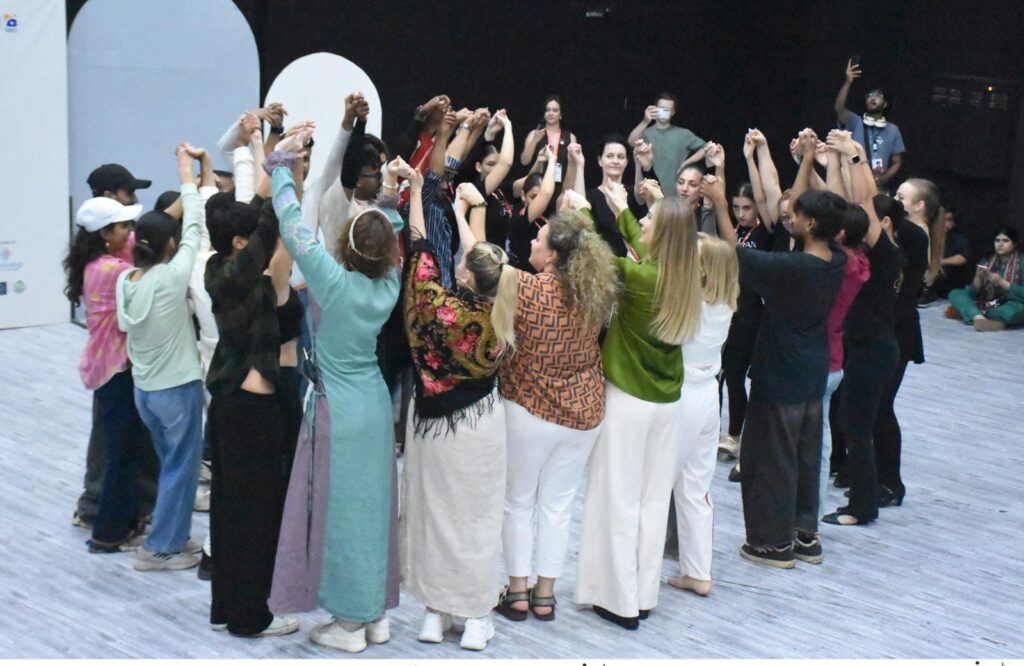
Russian artists conducted three special workshops titled The Power of the Khorovod, Russian Dance Step by Step and Ethnic Dances.
The sessions introduced participants to Russian dance traditions, techniques and cultural expressions.
Renowned Russian artist Kristina Vekker led The Power of the Khorovod, demonstrating traditional Russian folk dance techniques.
Khorovod is an ancient folk dance performed in a circle, with participants holding hands and moving together. During the workshop, Vekker explained its cultural significance and taught participants different steps, including movements using handkerchiefs.
Addressing the gathering, Muhammad Ahmed Shah welcomed the participation of Olympic champion Irina and the artists accompanying her.
He said their efforts had introduced audiences to Russian culture and artists from Armenia, Belarus and different Russian regions. He also appreciated the participation of a singer from Belarus.
“There is no discrimination or distinction of any kind here; we treat all cultures and artists with equal respect,” Shah said.
He also shared his admiration for Russian literature, which he said he had read since childhood. Describing it as literature centred on ordinary people, he praised its portrayal of their lives and struggles.
Addressing Irina, Shah said she represented a great nation and that the Arts Council respected and took pride in her participation.
He added that her efforts had helped bring Russian artists and cultural traditions from different regions to the festival.
Czech Artist Leads Music Workshop
The festival also featured a music workshop titled Electronic Sounds and Acoustic Instruments, conducted by renowned Czech artist Tomáš Reindl.
Students from the Arts Council’s Music Academy and several universities attended the session.
Reindl introduced participants to his music, which draws inspiration from different cultures. He explained how electronic sounds and acoustic instruments can work together in musical compositions.
He also shared his creative experiences and discussed his approach to music-making.
Georgian Films and International Theatre Performances
A Georgian film programme was presented in collaboration with Georgian artists. The screenings highlighted the country’s cinema and cultural heritage.
The theatre programme also brought international productions to Karachi audiences. These included Hamlet by Georgia’s Movement Independent Theatre and Hitiste by Moroccan theatre artists.
The Georgian production of Hamlet used physical theatre to communicate the story through body movements, facial expressions and physical storytelling rather than dialogue.
The 40-minute performance held the audience’s attention through expressive movements and powerful acting.
Meanwhile, Moroccan artists presented Hitiste, a 35-minute production combining dance and theatre. The non-verbal performance relied on movement, dance and artistic expression to communicate its story.
Together, the performances showcased different theatrical traditions and approaches to storytelling.
The 21st day of the World Culture Festival continued the event’s celebration of international arts and cultural exchange, bringing artists and audiences together through theatre, music, dance and cinema.