Where Old Stairs Still Breathe: ‘Crones’ Challenges Ageism at Theakada
Joshinder Chaggar’s Crones: A Celebration explores ageing, visibility and the ambitions of older women at its Pakistan premiere at Theakada, Karachi.
By Sobia Ali
Karachi rarely pauses. The city moves relentlessly forward, with little time to look back. Yet, along a few old roads, time seems to slow down. Historic buildings, arched windows and weathered stone preserve stories of generations past. Beneath the shade of old trees, the city’s heritage continues to breathe.
Follow one of these quiet streets, and an unassuming doorway leads to a flight of old stairs. Climb them, and a small, old-fashioned door opens onto a room filled with books, art and the spirit of free thought. This is Theakada.
In an age of hurried scrolling and shrinking attention spans, Theakada offers something increasingly rare: a place to sit together, watch an entire film and discuss its ideas. Here, people can slow down, put their phones away and engage in thoughtful conversation.
Theakada is the creation of Kulsoom Aftab, a Pakistani dramatist, poet, actor, director, academic and social activist with more than two decades of experience in the performing arts. She served at the National Academy of Performing Arts (NAPA) for 20 years, led two departments and established Pakistan’s first theatre masterclass. She also translated Konstantin Stanislavski’s An Actor Prepares into Urdu, voiced a character in Pakistan’s first animated feature, 3 Bahadur, and directed the award-winning documentary Our Jacob.
Malaysian Consulate Celebrates National Sports Day 2026 in Karachi
Her work centres on original content and empowerment. Theakada reflects both values. It describes itself as Pakistan’s only woman-led film and theatre academy with a combined, practice-based curriculum. Small groups learn through practical experience, while the community takes an active role in the creative process.
Its latest initiative, Theakada Film Screenings, brings independent films to audiences seeking stories beyond the mainstream. But the venue itself may be just as significant. In a climate where people can feel pressured to keep their opinions to themselves, Theakada provides a welcoming space for open discussion. Its intimate rooms and historic setting offer a quiet refuge from the noise outside.
‘Crones: A Celebration’ Makes Its Pakistan Premiere
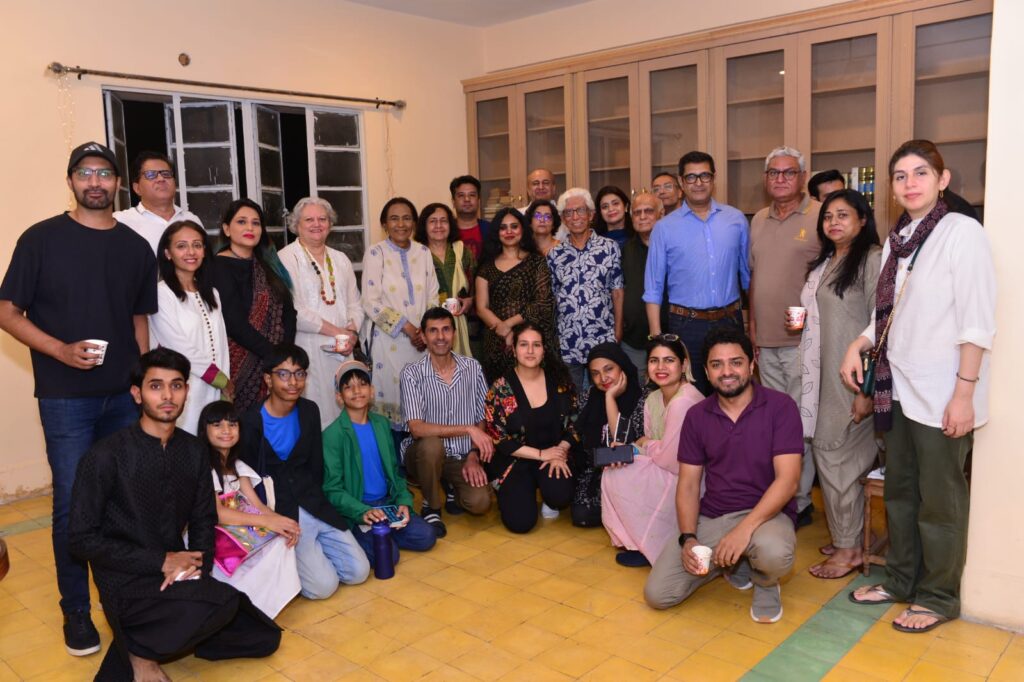
On Sunday evening, Theakada’s old stairs led audiences to the Pakistan premiere of Crones: A Celebration, a feature documentary by Joshinder Chaggar.
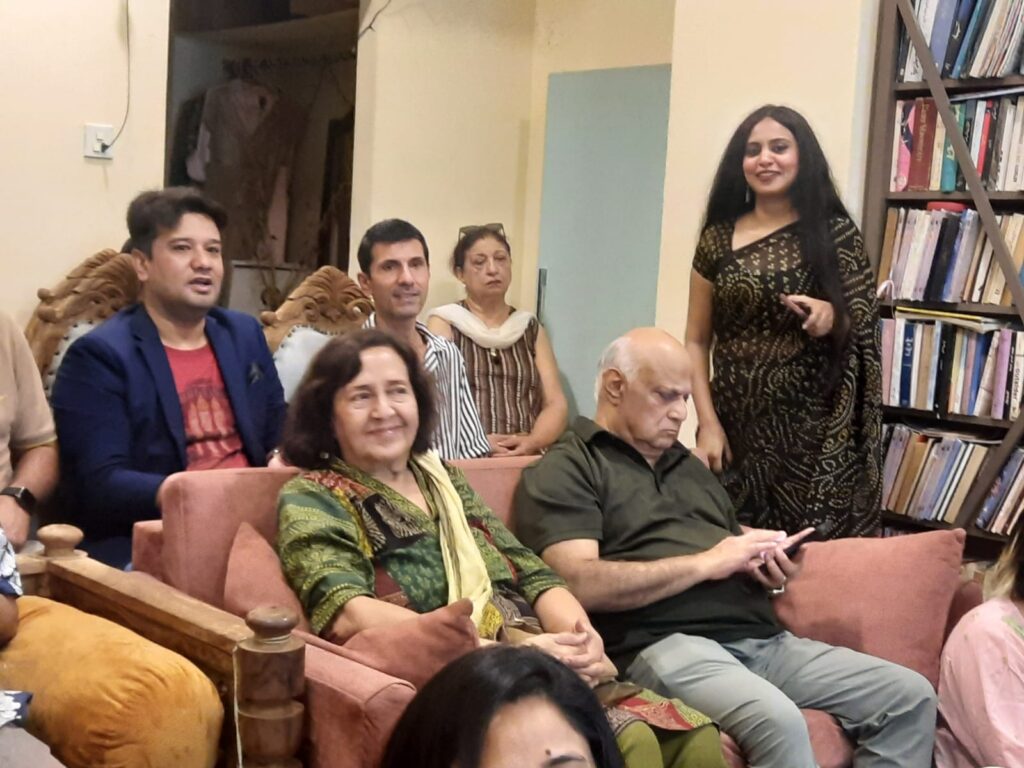
Among those attending were Mahnaz Rahman, veteran journalist and women’s rights activist who led the Aurat Foundation in Sindh, and Ameena Saiyid, former managing director of Oxford University Press Pakistan, director of the Adab Festival and founder of Lightstone Publishers.
The audience also included figures from the arts and film communities, among them Jami, Saima Saleem, Mahera Omar, Aquila Rehman, Niilofer Farrukh, Ajmal Kamal, Talha Ahmed, Maria Rubab and Sobia Ali.
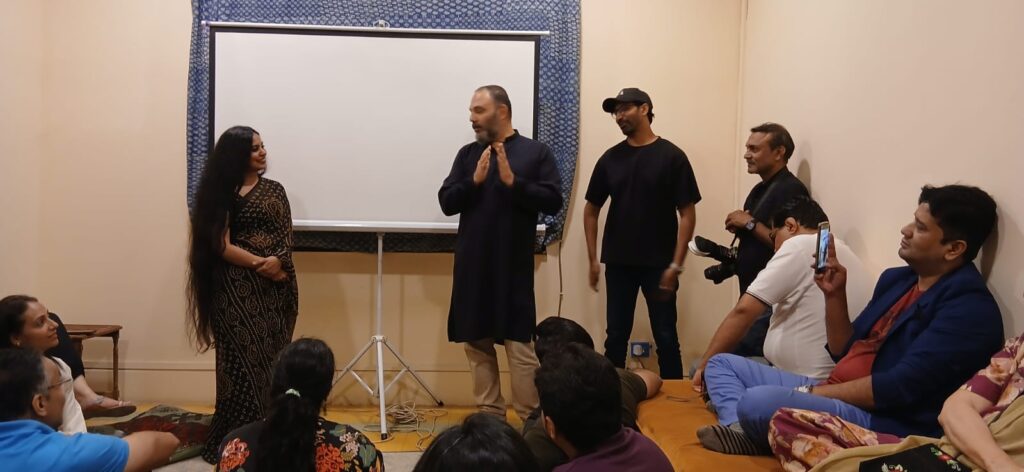
The film challenges one of society’s most persistent assumptions: that women have an age limit on their ambitions. Once they reach a certain stage of life, women are often expected to step back, stay at home and stop pursuing new dreams. Their bodies are judged, their ambitions dismissed and their presence in public life gradually overlooked.
Crones rejects this idea. Its makers describe the film as “a joyful and defiant celebration of ageing and visibility.”
Reclaiming the Word ‘Crone’
The film’s title is itself an act of reclamation. Today, “crone” is often used as an insult, evoking the wicked old woman of fairy tales. Yet the word has also carried associations with wisdom, experience and power. The older woman was once a figure whose knowledge and judgement could guide her community. Over time, prejudice turned that image into a source of ridicule.
Crones seeks to reclaim the word and restore the dignity behind it.
The film examines ageism, a form of prejudice that affects people across societies. The World Health Organization’s Global Report on Ageism, published in 2021 with other United Nations bodies, reported that one in every two people worldwide holds ageist attitudes.
For women, ageism can intersect with gender discrimination. Grey hair may lend a man an air of distinction, while an older woman can be judged as less relevant or less desirable. In Pakistan, as in other parts of South Asia, older women may receive respect as elders while still facing limited recognition of their personal ambitions.
The film also explores a quieter form of prejudice: the one women internalise. The thought “I am too old for this” can discourage them from pursuing a dream long before anyone else questions their ability.
Three Women, Three Stories of Defiance
Filmed over five years, beginning in March 2020, the 67-minute documentary takes an observational approach. Against the colourful backdrop of Bollywood dance and Melbourne’s independent theatre scene, it follows three women as their lives unfold. Their experiences show how one woman’s decision to pursue a dream can inspire others to reconsider their own limits.
Karin Kuusk, 72, is an amateur Bollywood dancer who has carried one ambition since childhood: to visit the Taj Mahal. When the film introduces her, the dream seems distant. However, weekly dance classes bring friendship, renewed energy and a stronger sense of possibility.
In October 2023, while in her seventies, Kuusk finally travels to India. Her journey provides some of the film’s most moving moments. It captures the setbacks and joys along the way, illustrating what the filmmakers describe as “the power of a dream, at any age.”
Natalie Gamsu, 62, brings a different experience. Born in Namibia and trained in drama at the University of Cape Town, she established herself in South Africa through solo cabaret performances. She later spent a decade in New York, singing at venues including the Oak Room and the Russian Tea Room. Her work earned her a Backstage Bistro Award and a MAC Award for Outstanding Female Vocalist.
In Australia, Gamsu has appeared in Mary Poppins, Barrie Kosky’s Women of Troy and Baz Luhrmann’s Strictly Ballroom. She also played Jan Barton in the television soap Neighbours and Fatima in the film Ali’s Wedding.
Despite that experience, acting opportunities become harder to find as she grows older. Rather than wait for roles, she writes and stages her own one-woman show. The film follows the production from its early ideas to opening night, capturing both her creative determination and her questions about identity and self-worth. With humour and flair, Gamsu challenges an industry that often sidelines older women.
A Dance Class That Builds Community
A lively supporting cast adds another dimension to the documentary: a Bollywood dance class for seniors in Melbourne. The women, many in their seventies, meet each week in colourful Indian costumes to dance, stay active and enjoy one another’s company.
Through unhurried conversations, they examine the word “crone” and make it their own. The camera observes them in class and backstage, revealing the friendships and small acts of care that hold the group together.
Their stories challenge familiar stereotypes. Older women are not necessarily frail, their ambitions do not automatically expire, and creative spaces need not belong exclusively to the young.
Joshinder Chaggar’s Own Story
The final strand of the documentary belongs to the filmmaker herself. In her late forties, Joshinder Chaggar pursued her long-held ambition to make a feature film. Her decision to tell these women’s stories therefore becomes part of the film’s central message: it is never too late to begin.
For Karachi audiences, Chaggar’s story carries a personal connection. Born in India and raised in Nigeria and Australia, she once lived and worked in Karachi. She taught movement at NAPA and choreographed television and music videos, including Zeb and Haniya’s Aitebar.
Chaggar has worked in dance and theatre for two decades and with older communities since 2018. She has described her interests as storytelling, empowering women, making people laugh and resisting labels. She also recently completed a PhD on intercultural identity and storytelling.
Her earlier short documentary, More Than Cute, focused on the same Bollywood dance class. It won Best Documentary at the Reel Sisters of the Diaspora Film Festival in New York in 2022 and was selected for festivals in Melbourne, London, Mumbai, Karachi, Lahore and Islamabad.
Crones is her first feature film. Chaggar directed, produced and filmed the documentary. The team also included executive producer Jan Allan, editor Lucy Paplinska, creative producer Erika M. Martinez, impact producer Jackie Turnure and music composer Thomas “Soup” Campbell. Pakistani documentary filmmaker Tazeen Bari served as consulting editor.
A Film That Leaves Its Message With the Audience
Film, art and theatre can reveal truths that society would rather ignore. Crones does so without turning its message into a lecture.
The documentary is rich in colour, music, movement and memorable personalities. Each woman brings a distinct story, and the film balances humour with moments of genuine emotion. Audiences can laugh, feel the characters’ struggles and recognise familiar assumptions in their experiences.
Through these intertwined stories, Chaggar challenges the invisible barrier that age can place over women’s lives. The film asks viewers to reconsider the social rules that limit older women’s ambitions and visibility.
As the audience descended Theakada’s old stairs and returned to Karachi’s restless streets, the message travelled with them: a woman’s dreams do not come with an expiry date. Her time does not end at a particular age.
It is simply, as Crones insists, her time.