West Bank Settlements: Israel Advances Plans for 1,024 New Housing Units
Palestinian commission says new settlement projects expand Israeli presence in the occupied West Bank as international concerns over annexation continue.
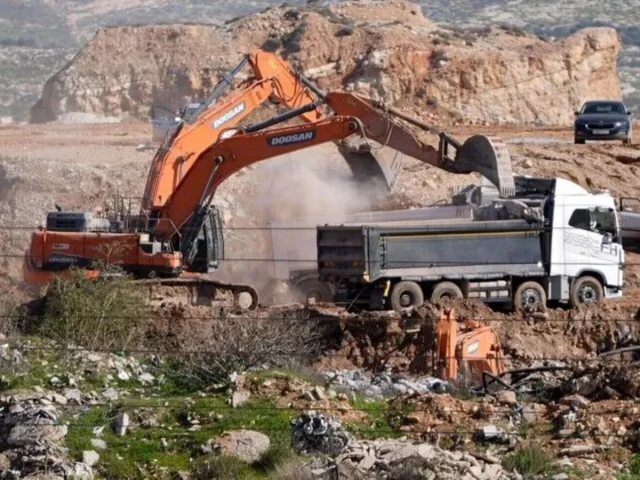
Israeli settlement housing overlooks parts of the occupied West Bank.
West Bank Settlements expanded further after Israeli authorities advanced plans to build 1,024 new housing units across the occupied West Bank, according to the Palestinian Colonisation and Wall Resistance Commission.
The commission said Israel is accelerating settlement expansion through projects that it claims aim to strengthen Israeli control and reinforce what it described as the de facto annexation of occupied Palestinian territory.
According to the commission, Israel’s Higher Planning Council, operating under the Civil Administration, reviewed nine settlement plans since the beginning of July. The projects have entered the approval and deposit stages of the planning process.
Stanley Tucci: Actor Urges Support for Children Affected by War
The proposals include 1,024 housing units, with authorities approving 455 units and placing another 569 units under additional planning procedures.
The commission said the plans focus on expanding existing settlements and increasing housing density rather than establishing entirely new settlements. It argued that Israel is using revised construction plans, zoning regulations and land-use changes to accommodate more settlers.
One approved project expands the Mevo Dotan settlement, which sits on land belonging to the Palestinian town of Arraba in the southern Jenin area. The plan adds 455 housing units across nearly 539 dunams of land.
Israeli authorities have also submitted proposals to expand the Beit Hagai and Asael settlements in the southern West Bank governorate of Hebron. Those projects would add 569 housing units across more than 519 dunams, the commission said.
The commission described settlement planning as part of a broader strategy to reshape the geography of the occupied West Bank by connecting settlements through Israeli infrastructure while limiting Palestinian urban development.
The United Nations has repeatedly stated that Israeli settlements in the occupied Palestinian territories violate international law and undermine efforts to achieve a two-state solution.
Palestinians seek East Jerusalem as the capital of a future independent state, citing international resolutions that do not recognise Israel’s occupation of the territory since 1967 or its 1980 annexation of the city. Israel disputes this interpretation and considers Jerusalem its undivided capital.