US Justice Department Launches National Fraud Center to Tackle Cross-Border Schemes
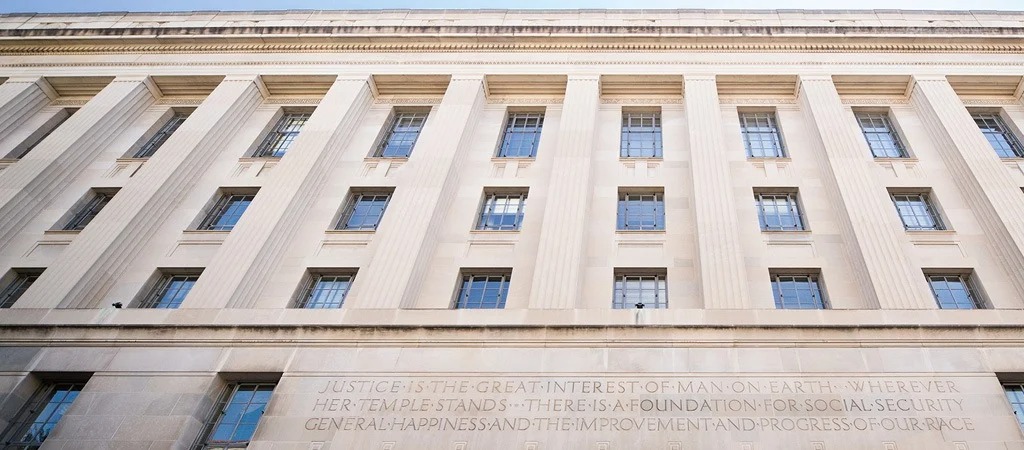
US Justice Department launches National Fraud Detection Center to combat fraud across government programs.
The U.S. Department of Justice has launched a National Fraud Detection Center (NFDC) to help federal and state agencies identify fraud across government programs and investigate organized schemes.
The center began operations in August under the Justice Department’s National Fraud Enforcement Division. It brings together the FBI, federal law enforcement agencies, Offices of Inspector General and state partners.
The initiative aims to address long-standing information gaps between agencies. Officials say fraud investigations often involve data held by multiple departments, making it difficult to identify links between suspects, cases and criminal networks.
Center Uses Cross-Agency Data and AI
The NFDC combines information from participating agencies with artificial intelligence tools. Investigators can use the system to identify patterns, connect seemingly separate cases and pursue larger criminal networks.
The initiative forms part of a broader “whole of government” approach established under Executive Order 14395, which created the White House Task Force to Eliminate Fraud.
Kaspersky Survey Finds Family IT Support Essential for Older Generations
Kevin Gallagher, head of the financial crimes section of the FBI’s Criminal Division, said the effort focuses on protecting taxpayer-funded programs.
These include Medicaid, Medicare, FAFSA student loans and Small Business Administration loans, among other federal programs.
“Fraudsters don’t work within borders, they don’t work on jurisdictions; they work on opportunities,” Gallagher said. He stressed the need for agencies to share data so investigators can identify broader trends and pursue major cases.
FBI, Federal Agencies and States Join Effort
The FBI serves as a founding partner and contributes Bureau data to the center. In return, the Bureau can access information shared by participating agencies.
The initial partners include the FBI, Homeland Security Investigations, IRS Criminal Investigation, FinCEN, the Pandemic Response Accountability Committee, the U.S. Treasury Department and numerous federal Inspectors General.
State officials also participate in the initiative.
Gallagher noted that states often manage the distribution of federal funds. Access to state-level data can therefore help investigators identify cases involving the misuse or theft of federal funding.
Student Loan Investigation Shows Potential
Officials have already used cross-agency data to uncover connections between seemingly separate investigations.
In one federal student loan investigation, authorities linked multiple local incidents to what they identified as a single foreign-directed scheme.
According to Gallagher, the FBI opened more than 40 cases across 27 field offices after identifying links to the same strategic threat and overseas group of actors.
Connecting smaller cases can help investigators uncover larger schemes that might otherwise receive limited federal attention.
Justice Department Creates Local Fraud Counsel Network
The National Fraud Enforcement Division has also established a Division Fraud Counsel (DFC) role in every U.S. Attorney’s Office.
These attorneys serve as direct links between local prosecutors and the national fraud center. They can receive streamlined investigative materials, including draft search warrant affidavits and complaint language.
Gallagher said some local offices handle cases involving losses below $1 million. Those cases can still form part of much larger schemes involving overseas criminal networks.
The structure allows federal authorities to coordinate investigations and enforcement actions across multiple jurisdictions.
Most Wanted Fraudsters List Expands Enforcement
The FBI and National Fraud Enforcement Division have also introduced a public “Most Wanted Fraudsters” list.
Launched in June, the list seeks to identify major fugitives accused of schemes that significantly affect government benefits and taxpayer funds.
The NFDC builds on existing models, including regional healthcare fraud task forces. Officials intend the new center to provide a permanent nationwide framework for intelligence sharing.
By combining federal and state data, the initiative aims to give investigators a broader view of fraud networks and strengthen efforts to protect taxpayer-funded programs.