US-Iran Talks Advance as Rubio Signals Progress on Strait of Hormuz Deal
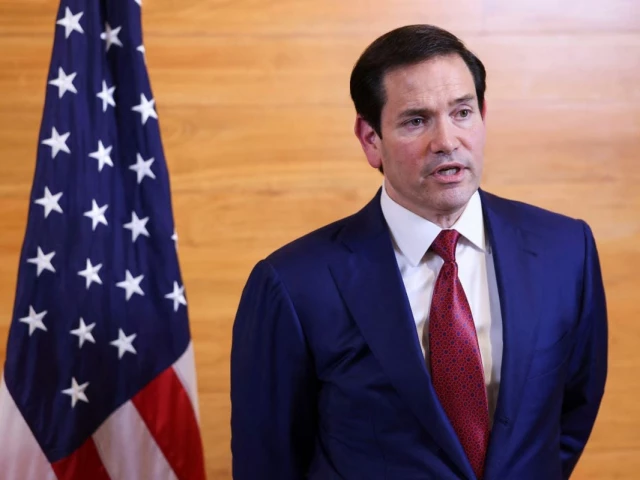
WASHINGTON/TEHRAN/ISLAMABAD: United States Secretary of State Marco Rubio said on Sunday that significant progress had been made on a proposed framework to reopen the Strait of Hormuz without tolls, though he stressed that the plan still required Iran’s full approval and compliance.
Washington/Tehran/Islamabad: United States President Donald Trump has claimed that a major agreement with Iran is “largely negotiated,” raising hopes for a possible breakthrough in the ongoing Middle East crisis and the reopening of the strategically vital Strait of Hormuz.
Security Forces Kill 11 Militants in North Waziristan Operation: ISPR
According to international media reports, the proposed agreement could include a 60-day ceasefire extension, the reopening of the Strait of Hormuz without toll charges, and limited sanctions relief for Iran in exchange for commitments related to its nuclear programme.
US Secretary of State Marco Rubio confirmed that “significant progress” had been made during indirect negotiations between Washington and Tehran, which are reportedly being mediated by Pakistan.
Strait of Hormuz at Center of Proposed Agreement
Under the reported draft memorandum of understanding, Iran would remove naval mines from the Strait of Hormuz and allow unrestricted international shipping through the crucial waterway. In return, the United States may ease restrictions on Iranian ports and permit limited oil exports during the negotiation period.
Rubio stressed that the Strait of Hormuz is an international waterway and said the US aims to ensure “open straits without tolls.” However, he added that the agreement still requires Iran’s full acceptance and compliance.
Iranian officials acknowledged ongoing negotiations but accused Washington of making contradictory statements and creating obstacles in finalizing the framework.
Pakistan Playing Central Diplomatic Role
Pakistan has emerged as a key diplomatic intermediary in the talks. Prime Minister Shehbaz Sharif praised Trump’s “extraordinary efforts to pursue peace” and expressed hope that Islamabad would host the next round of negotiations soon.
Deputy Prime Minister and Foreign Minister Ishaq Dar also welcomed the progress, emphasizing that dialogue and diplomacy must prevail over conflict in the region.
Reports indicate that Pakistan’s Chief of Defence Forces and Army Chief, Field Marshal Asim Munir, played a central role in facilitating communication between regional stakeholders and Iranian leadership during recent visits to Tehran.
Iran Insists on Sovereignty and Nuclear Rights
Iranian President Masoud Pezeshkian stated that no agreement would move forward without approval from Iran’s Supreme Leader. Tehran also reiterated that its nuclear programme remains peaceful and operates under international oversight.
Iranian officials maintained that any final agreement must protect the country’s sovereign rights and economic interests while ensuring relief from sanctions.
Global Markets Watching Closely
The Strait of Hormuz remains one of the world’s most important energy corridors. Any agreement to reopen the route and reduce tensions could stabilize global oil markets and ease economic uncertainty across the region.
International observers say the coming hours could prove critical as negotiators attempt to finalize remaining details of the proposed agreement.