United Russia Wins Large Majority in Russia’s Parliamentary Election
Russia’s ruling United Russia party leads the State Duma election as Ukraine launches drone strikes on Moscow.
Vladimir Putin’s ruling United Russia party secured a large majority in Russia’s parliamentary election, according to results reported by state media early Monday.
The election covered all 450 seats in the lower-house State Duma. It was the first parliamentary vote since Russia launched its full-scale invasion of Ukraine in 2022.
The election took place amid continuing war-related tensions. Ukrainian drone strikes targeted Moscow and surrounding areas on the final day of voting, while Russian officials reported cyberattacks against election infrastructure.
United Russia Leads Early Results
With slightly more than 71% of ballots counted, Russian news agencies reported that United Russia had received 57.5% of the vote.
The Communist Party followed with 14%, while the Liberal Democratic Party of Russia (LDPR) received 8.7%.
State news agency TASS projected that United Russia would retain its two-thirds majority in the 450-seat State Duma. Such a majority would allow the party to pass constitutional amendments.
Official results and final turnout figures were expected later on Monday.
A state-run pollster’s exit poll had earlier put United Russia at 49.4%, broadly similar to its share in the previous parliamentary election.
Anti-War Party Barred From Federal Ballot
The election took place without a major party openly campaigning against Russia’s war in Ukraine.
Imran Khan’s Sisters Uzma and Noreen Detained for 30 Days Ahead of PTI Protest
Russia’s Supreme Court barred the liberal Yabloko party from running its federal list before the election. Some of its candidates, however, remained on ballots in individual single-member constituencies.
Voting also took place in Ukrainian territories that Russia occupies and claims to have annexed. Ukraine and much of the international community reject Russia’s territorial claims.
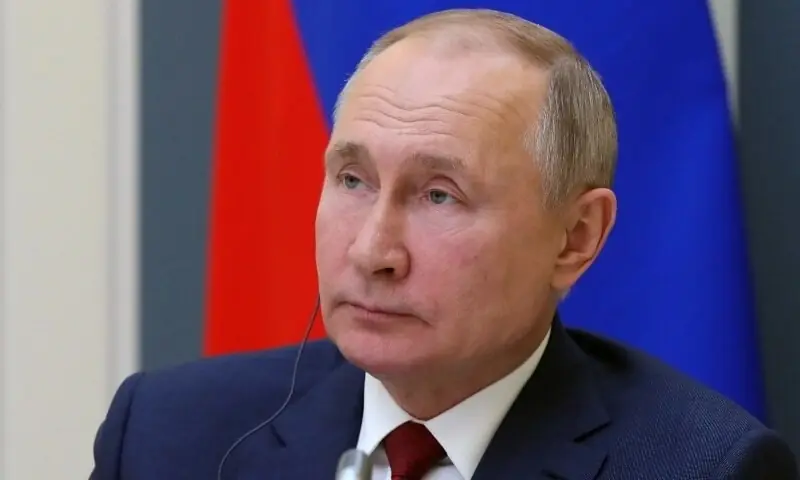
Russian President Vladimir Putin had urged citizens to participate in the election. He presented the vote as a demonstration of support for Russian troops and an answer to those seeking to weaken the country.
Several prominent Kremlin opponents have left Russia. Opposition leader Alexei Navalny died in an Arctic prison in 2024.
His widow, Yulia Navalnaya, called on anti-war Russians to gather at polling stations at noon on Sunday. The tactic had also been used during the 2024 presidential election.
In Berlin and London, opposition supporters gathered outside Russian embassy buildings to protest the election, according to AFP reporters.
Ukrainian Drone Strikes Hit Moscow Region
Ukraine launched waves of drones at Moscow and the surrounding region on Sunday, according to Russian officials.
Moscow Mayor Sergei Sobyanin said the attack involved around 1,600 drones, including about 450 aimed directly at the capital.
Officials reported two deaths. Moscow regional Governor Andrey Vorobyov identified the victims as a 44-year-old woman and an elderly man.
A drone crash also triggered a fire at a 21-storey residential building. Authorities evacuated about 400 people from the building, Vorobyov said.
Images circulated by officials and media showed damage to a multi-storey apartment building and smoke rising from an area identified as an oil refinery.
Ukrainian President Volodymyr Zelensky said Ukraine’s long-range strikes had a significant impact in the Moscow region.
Russia’s Defence Ministry said it would intensify strikes against military targets in Kyiv in response to what it described as Ukrainian attacks on civilian targets.
Ukraine has repeatedly targeted Russian infrastructure with drones during the war. Kyiv has described such attacks as responses to Russian strikes on Ukrainian cities and infrastructure.
Russia Reports Cyberattacks on Election Infrastructure
Russian election authorities also reported a series of cyberattacks during the final stages of voting.
Ella Pamfilova, chair of Russia’s Central Election Commission, said election-related infrastructure had faced more than 1,000 waves of distributed denial-of-service attacks.
Pamfilova did not identify those responsible. She said the attacks appeared to involve highly organised groups using artificial intelligence tools.
She also said communication lines had been cut in parts of Russia’s Far East. According to Pamfilova, the disruptions appeared designed to interfere with the voting process.
A DDoS attack floods a digital system with internet traffic. The aim is to disrupt normal access or operation.
The reported attacks added another layer of tension to an election held during Russia’s ongoing war with Ukraine.