Rs 8 Trillion in Interest Payments Signal Fiscal Crisis, Warns Khurram Ijaz

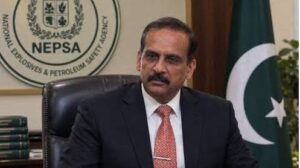
KARACHI: Khurram Ijaz, General Secretary of the Businessmen Panel Progressive (BMPP) and former Vice President of the Federation of Pakistan Chambers of Commerce and Industry (FPCCI), has sounded alarm over Pakistan’s fiscal trajectory, warning that debt servicing is swallowing more than half of the country’s tax revenue.
Citing budget documents, he noted that the government has earmarked Rs8.054 trillion for mark-up payments in FY2026–27, including Rs6.96 trillion on domestic debt and Rs1.07 trillion on foreign debt. With the Federal Board of Revenue (FBR) targeting Rs15.26 trillion in tax collection, he stressed that debt servicing alone will consume the majority of taxpayers’ contributions.
“How long can the economy sustain such fragile fiscal conditions?” he asked, urging policymakers to rethink borrowing-led strategies and instead strengthen indigenous economic capacity. “It is only mark-up. Just imagine the quantum of debt,” he remarked.
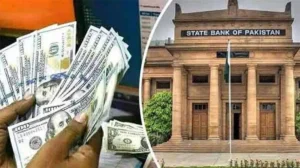
According to State Bank of Pakistan (SBP) data, total government debt surged to Rs81.93 trillion by April 2026, up from Rs74.94 trillion a year earlier—an increase of nearly Rs7 trillion in just twelve months.
He added that the government continues to finance its budget deficit through domestic borrowing from the banking system via Treasury Bills and Pakistan Investment Bonds. He noted that commercial banks prefer investing in government securities due to secure and high returns, rather than channeling funds into productive sectors that generate real economic growth.
Khurram Ijaz also warned that persistently high interest rates are compounding fiscal pressures on both the government and the general public. He called on the SBP to significantly reduce the policy rate to encourage investment in productive sectors.
“Keeping high interest rates only attracts people to park their money in banks and earn returns without contributing to the real economy,” he said.
He further observed that many industrialists are shifting capital away from manufacturing and into banking deposits due to high energy costs, labour expenses, and regulatory burdens that make industrial operations increasingly difficult.
He noted that while monetary policy had previously seen easing, bringing rates down to 10.5%, the trend has reversed, with the policy rate now rising to 11.5%.
Mr. Ijaz further stated that past restrictions on government borrowing from the SBP were intended to avoid excessive monetary expansion, and similar conditions have also been influenced by International Monetary Fund (IMF) requirements. As a result, borrowing pressure has shifted toward commercial banks, increasing the cost of fiscal management.
He added that if the government had continued borrowing from the central bank, a significant portion of domestic debt servicing would have instead been reflected as profit transferred back into the national account.
Khurram Ijaz concluded by urging the government to shift focus away from debt-driven financing and instead prioritize export-led growth and industrial expansion, warning that continued reliance on borrowing will only deepen the tax burden on citizens.