Rising Costs Threaten Pakistan’s GSP+ Advantage, Warns SITE Association President
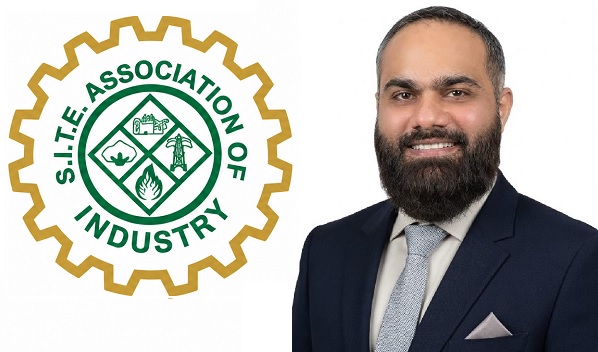
SITE Association President Abdul Hadi calls for policy stability and value addition to protect Pakistan’s GSP+ advantage.
SITE Association of Industry (SAI) President Abdul Hadi has urged the government to reduce industrial production costs, maintain consistent policies and expand market access for Pakistani products. He warned that rising input costs and shifting global trade arrangements are weakening Pakistan’s export competitiveness.
In a statement on the country’s industrial outlook, Hadi said Pakistan’s textile industry accounts for approximately 60% of national export earnings. However, high operating costs and intensifying international competition continue to challenge the sector.
He stressed that sustainable export growth requires investment in modern technology, higher productivity and a strategic shift towards value-added manufacturing.
Textile Exports Face Rising Cost Pressures
According to figures cited by the association, Pakistan’s textile and apparel exports reached $18 billion in FY2026, contributing approximately 8.5% to GDP and providing employment to nearly 40% of the industrial workforce.
Field Marshal Asim Munir Reviews Security Situation During Peshawar Corps Headquarters Visit
Exports also increased 5.26% year-on-year to $5.026 billion during the first quarter of FY2027. However, Hadi cautioned that rising production costs and competition from regional exporters could undermine this growth.
He noted that Pakistan remains heavily dependent on lower-value-added products, including yarn, fabric and basic home textiles. This dependence limits the country’s ability to secure higher returns in international markets.
To address this challenge, he called for greater investment in technical textiles, branded apparel and other higher-margin products. Such a shift, he said, would help Pakistani manufacturers strengthen their position in global supply chains.
Cotton Imports Add to Manufacturing Costs
Hadi also expressed concern over declining domestic cotton production and the textile industry’s growing reliance on imported raw materials.
Figures provided by the association indicate that the cotton import bill increased by 54.9% in FY2025, adding to manufacturers’ costs.
He urged the government to improve domestic cotton production and strengthen coordination between agriculture and industry. A reliable supply of quality cotton at competitive prices, he said, is essential for the long-term sustainability of textile manufacturing.
GSP+ Advantage Faces Growing Competition
The SITE chief warned that changing international trade arrangements and reduced relative advantages in preferential market access could place Pakistani exporters under further pressure.
He said preferential access to the European Union and the United Kingdom has supported Pakistan’s textile exports. However, improved access for competing countries could weaken Pakistan’s position in important export markets.
Hadi described Pakistan’s Generalised Scheme of Preferences Plus (GSP+) status with the European Union as an important pillar of its export performance. The arrangement provides preferential access for eligible Pakistani products, including textiles and apparel, to the European market.
He cautioned that evolving trade agreements involving competing economies, including India and the European Union, could intensify competition and affect Pakistan’s relative advantage. He called for stronger trade diplomacy, wider export-market diversification and practical measures to reduce the cost of doing business.
Policy Stability and Value Addition Key to Growth
Hadi emphasised that Pakistan cannot depend indefinitely on existing trade preferences. Instead, the country must improve productivity, product quality and industrial efficiency to maintain its international competitiveness.
He identified consistent industrial policies, reliable infrastructure, affordable energy and an investment-friendly business environment as essential conditions for expanding manufacturing and exports.
He also urged federal and provincial governments to work closely with industrial associations to remove structural barriers and encourage investment in modern production facilities.
Concluding his statement, Hadi called for a clear, long-term industrial strategy focused on value addition, policy continuity and market diversification. These measures, he said, are necessary to protect textile exports, strengthen foreign exchange earnings and realise Pakistan’s broader industrial potential.