Religions in South Asia Hinduism
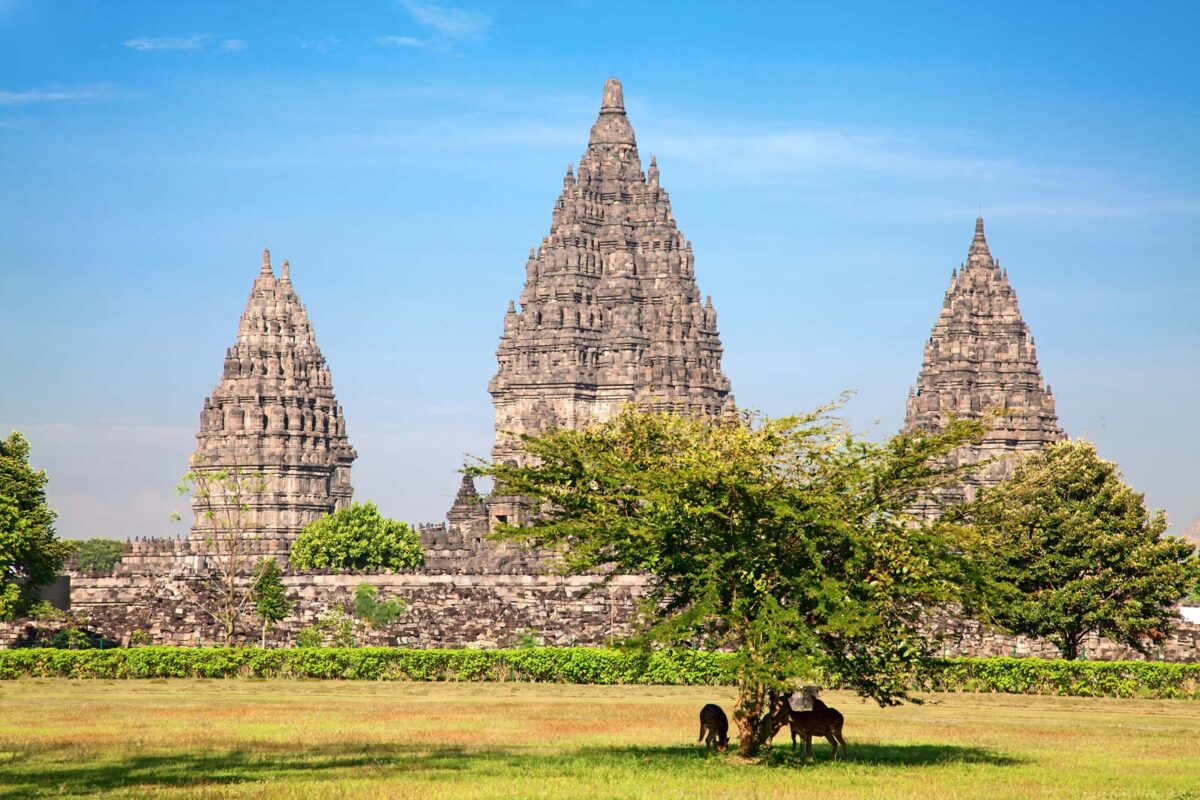
Hinduism which is also called Sanatana Dharma (eternal law), refers to the idea that its origins go back beyond time and space, has about one billion followers; they represent about 15% of the world population. After Christianity (31%) and Islam (23%), Hinduism is the third largest religion globally. Other than Islam and Christianity it is considered to be a polytheistic religion (worshipping more than one God) that is not revealed to anyone prophet and relies on a variety of sacred texts, among them the Vedas, Puranas, Bhagavadgita, and others. Having developed over almost four thousand years Hinduism is considered to be the oldest religion in the world.
92% of the Hindus live in India, forming 80% of the population. Hindus are a majority in Nepal as well (81%) and in Mauritius, they form 49% of the population. Smaller Hindu populations in South Asia are in Bhutan (25%), Sri Lanka (13%, all of them Tamils), Bangladesh (9%), and Pakistan (1.5%).
The term “Hindu” originates from the river Indus (in Persian) and Sindhu (Sanskrit). It started as a geographical term in the ancient Persian scriptures. When Alexander the Great came to India his chronicles called the river “Indoi” in Greek from which the European name Indian derived. With the advent of Muslims in Sindh in 711 AD the population was called “Hindu” and the country “al-Hind”. But for centuries the term kept a secular connotation and the idea of a religion called Hinduism was not born before the British entered the frame. Their scholarly purpose and their compulsion to name and categorize and bring some kind of “order” into the perceived religious chaos created the term Hinduism thus summarizing countless cults and belief systems of India under one heading so that it could be listed properly. In the beginning, the subtleties of the different believes were not known. The same happened to the caste system that had a mind-boggling variety of forms and names in different regions. The British tried to bring “order” and make it a “proper system” which made castes steadier and more continuous in Indian society. The difference between varna and jati also escaped attention for many years and is not understood until today by many in the west who use the terminology. Finally, Hinduism seems to be rather an umbrella term for many different streams and branches of believes that share only few common understandings about the character of gods, time, life and life in the hereafter, salvation and other important parts of the religious philosophy.
Over the almost four thousand years that this oldest of Indian religions has existed it has changed quite a bit. In Vedic times (named after the foundation of the Vedas) about 1500 BC to 500 BC after the Indus Valley culture had perished, the four Vedas that had been transmitted orally up to then were written down. Rigveda, Samaveda, Yajurveda and Atharvaveda consist of verses that are described believes and rituals and are accepted as of supra-natural origin by all branches of Hinduism. The ideas, believes and rituals described in the Vedas were introduced into India by nomadic Aryan tribes that came to India from the Central Asian steppes. They were cattle drovers and settled in northern Punjab first and from there spread out along the Ganges valley. At the end of the Vedic period the Upanishads were written down, philosophical texts that show the pre-eminence of the Brahma idea that comes closest to a monotheistic understanding and include the idea of reincarnation.
In later times this monotheistic idea of Brahma was substituted by combination with a variety of other deities. In the course of this development Brahma, a deity that lacked any characteristics, personal attributes and was beyond recognition by men was substituted by personalized gods. For unknown reasons by 200 BC the Vedic times came to an end and the Vedic rituals lost some importance. Though the Brahmans who alone were allowed to bring sacrifice and conduct the sacrificial rituals stayed in power two monastic branches of the religion came to prominence: Jainism and Buddhism. Both these branches were reform movements that were initiated by non-Aryan rajas in the Ganges valley. From the Vedic Upanishads only the teaching about reincarnation and karma were adopted by Jainism and Buddhism. While Buddhism became the ruling religion between 500 BC and 700 AD, Jainism coexisted but never ruled. Previous branches of Vedic Brahmanism and many popular cults continued throughout the Buddhist period. From 700 AD onwards with the retreat of Buddhism Brahmanism retakes its old position in a new form. Brahmans extend their influence, child marriage, widow burning (Sati) and untouchability come to the fore. A variety of local cults takes the lead and sectarianism spreads.
Modern Hinduism develops from the 19th century. onwards as a reaction to British/Western critique of Hindu rites such as caste system, untouchability, widow burning and child marriage. Brahmo Samaj (Rammohan Roy) and Arya Samaj take the lead in two different directions. Brahmo Samaj tries to restore the monotheist character of Hinduism while castigating the criticized by the British traditions as aberrations thus trying to “modernize” Hinduism. Arya Samaj, on the other hand insists on the traditions and tries to revive the vedic religion by declaring the Vedas sacrosanct and basis of a Vedic society that long before Europe knew airplanes and other symbols of technical progress. Arya Samaj was founded by Dayanand Saraswati in 1875. The latest wave of “modernization” came in the 1920s when in 1925 Hinduism was wedded with aggressive nationalism in the form of Hindu Mahasabha and Rashtriya Swayam Sevak Sangh (RSS). V. D. Savarkar laid the ideological foundation with his book “Hindutva: Who is a Hindu” that was published in 1923. These politicized forms of Hinduism that we are most aware of these days do not mean that Hinduism as such has become political. A vast variety of popular cults and even sects like the Ramakrishna Mission keep existing and by far not all Hindus are Hindutva-savvy. Since the end of British rule and attempts of the early Indian government to promote secularism especially in urban surroundings Hindus are distancing themselves from those traditions that they regard as preventing social progress. But the election and re-election of BJP also shows that politicized nationalistic Hinduism has many followers.
There has developed a discussion around the polytheism of Hinduism. If we look at the main spiritual branches there are three main deities in Hinduism: Brahma, Shiva and Vishnu. Brahma who is supposed to be the creator is the oldest deity. Brahma is prominently mentioned in creation legends of the Vedic period, he seems to be one of the oldest gods. After the 7th century he lost much of his significance. Today only few Hindus recognize and worship Brahma. The two other deities that form together with Brahma a trinity (Trimurti) are Vishnu and Shiva. Most modern branches of Hinduism and their deities are forms of either Vishnu or Shiva. While Vishnu is understood to be the sustainer and preserver of the world, Shiva represents the perfecting and destroying force.
There is a fourth branch as well the main force of which is Shakti, a female goddess. She represents the divine mother and motherhood, but at the same time she can be furious and destructive. Other female goddesses like Durga, Kali, Lakshmi and Sarasvati are all connected to Shakti.