

Pakistan’s Real Crisis Is Not a Lack of Resources — It Is Weak Governance
Pakistan faces a long list of challenges. Its economy remains under pressure, inflation continues to affect household purchasing power, and the education and healthcare sectors struggle to deliver the results citizens expect. Urban infrastructure is under strain, access to state services remains limited in many rural areas, and employment opportunities for young people are insufficient.
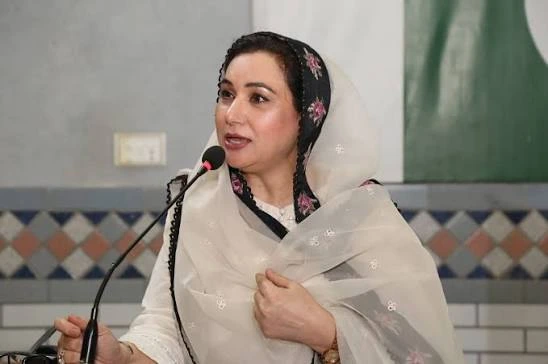
Pakistan's future depends on stronger governance and better public service delivery.
By MPA Dr Fauzia Hameed
Pakistan faces a long list of challenges. Its economy remains under pressure, inflation continues to affect household purchasing power, and the education and healthcare sectors struggle to deliver the results citizens expect. Urban infrastructure is under strain, access to state services remains limited in many rural areas, and employment opportunities for young people are insufficient.
Yet behind these challenges lies a deeper problem that receives far less attention: Pakistan’s real crisis is not simply a shortage of resources. It is a crisis of weak governance.
We frequently ask how much money the government has. We should ask with equal seriousness who controls the available resources, where they are spent, what priorities guide those decisions and who is held accountable for the results.
This is where many of Pakistan’s problems begin to connect.
A city may have access to water, yet residents may not receive it in their homes. A school building may exist, but students may still lack quality education. A hospital may operate without enough doctors, medicines or essential facilities. Roads may be constructed but deteriorate only a few years later. Billions may be allocated to development projects, while ordinary citizens see little meaningful improvement in their daily lives.
The question, therefore, is not simply whether projects were launched.
The real question is: why did they fail to deliver results?
One major reason lies in a governance structure where authority, responsibility, resources and accountability often do not exist in the same place.
IHC Seeks Report Sent to PM on Pims Fire as Questions Raised Over Accountability
An institution may have the authority to make decisions but lack the resources to implement them. Another institution may control resources without being directly accountable to citizens. Meanwhile, the elected representative whom citizens approach may not possess the authority needed to solve the problem.
The result is a deeply problematic system.
Authority remains at the top, responsibility moves downward and accountability disappears somewhere in between.
This problem is not limited to one province or city. From Karachi to Tharparkar, Lahore to southern Punjab, Peshawar to remote areas of Balochistan, the same fundamental question appears in different forms: how close is the state to its citizens?
Karachi provides one of the clearest examples. A city of millions faces persistent challenges involving water supply, drainage, waste management, traffic, public transport, roads, land use and urban planning. However, when authority over these issues is divided among multiple government institutions, citizens often struggle to understand who is responsible for making decisions and who should be held accountable when services fail.
The situation in interior Sindh is different, but the underlying issue remains the same. In many areas, state services are simply too far from citizens. Patients may have to travel long distances for treatment. Students may need to leave their hometowns to access quality education. Basic public services may also remain unavailable on a reliable basis.
This is not merely a question of resources.
It is a question of the state’s reach.
The reach of the state cannot improve simply by spending more money. Pakistan needs an administrative system capable of understanding local problems, identifying local priorities and making decisions closer to the communities affected by them.
For this reason, Pakistan must seriously reconsider the foundations of its governance system.
Not every problem can be solved from Islamabad or a provincial capital.
A decision should, wherever possible, be made at the level where it can be understood and implemented most effectively.
This is the fundamental principle behind meaningful decentralisation.
Article 140-A of Pakistan’s Constitution requires provincial governments to establish local government systems and devolve political, administrative and financial responsibility and authority to elected local representatives.
However, the real challenge lies not in constitutional language but in implementation.
If a local government is responsible for serving citizens but does not have genuine authority over water, sanitation, roads, planning, transport or other essential services, it becomes a government in name only.
Similarly, if elected representatives must repeatedly look upwards for resources and approval to address even the most basic needs of their communities, the most important purpose of democracy — direct accountability to citizens — becomes weaker.
Pakistan’s problem is not simply that government institutions are weak.
The problem is also that government power is often not located where it is most needed.
A country’s development does not depend only on how much tax it collects or how large its budget is. What matters most is how effectively the state converts available resources into better outcomes for citizens.
A project worth Rs1 billion that transforms the lives of thousands of people represents a successful investment.
However, if Rs1 billion is spent and citizens continue to face the same problems, the issue is not merely wasted money. It is a failure of governance.
Pakistan must therefore move away from the politics of expenditure and towards the politics of results.
Every public sector institution should have clear and measurable objectives.
In education, the question should not simply be how many schools were constructed. The more important question is how many children are receiving quality education.
In healthcare, the focus should not only be on the number of hospitals built. The real measure should be how many citizens receive timely and effective treatment.
In water management, the question should not be how many projects were approved. It should be how many households have reliable access to safe water.
Similarly, public safety should not be measured only by the number of police officers. Citizens should judge success by how quickly and effectively they receive protection when they need it.
The same principle should apply to development budgets.
The true measure of a development project should not be the amount allocated to it but the result it produces.
This transformation is not only administrative. It is also political.
For decades, Pakistan’s political culture has often treated large projects, major announcements and big budgets as symbols of success.
It is time to change that standard.
Instead of asking how many roads a government built, citizens should ask how much travel time was reduced.
Instead of focusing only on how many schools were constructed, the debate should examine whether educational outcomes improved.
Rather than counting hospitals, we should ask how far citizens still have to travel to receive medical treatment.
This change in thinking could help transform Pakistan from a state that merely launches projects into one that consistently delivers results.
Better governance, however, requires more than stronger local governments. In some areas, the current size and structure of administrative units also require serious reconsideration.
Where populations have grown significantly, geographical distances limit the state’s reach, economic activity has expanded beyond existing administrative structures or basic services consistently fail to meet public needs, administrative restructuring should become a serious policy option.
This does not necessarily mean creating new provinces.
In some areas, stronger local governments may provide the best solution. Other regions may require new districts. Some may benefit from changes to administrative boundaries, while new provinces could also be considered where evidence supports such a decision.
The central principle should remain simple: administrative structures should serve the needs of citizens, rather than forcing citizens to adapt to outdated administrative structures.
Data, not politics, should guide these decisions.
Population, geographical area, distance, economic activity, revenue generation, infrastructure, healthcare, education, water supply, public safety and access to government services should all be considered.
Policymakers should then determine which administrative structure can deliver better results at the lowest possible cost.
If the existing system can perform effectively, it should be strengthened.
If local governments can solve problems, they should receive genuine authority.
And if evidence shows that existing administrative boundaries have become a permanent obstacle to effective governance, Pakistan should not fear restructuring. It should consider reform through constitutional and democratic processes.
Maps exist to serve governments. Governments do not exist to serve maps.
Another major weakness in Pakistan is that we debate the distribution of resources far more than the distribution of results.
We often ask which province received more, which city received more or how large a district’s budget is.
We ask far less frequently what citizens received in return.
That single question could transform the entire direction of governance.
If a district receives substantial resources but continues to perform poorly in education, healthcare and water supply, the system deserves serious scrutiny.
If a district with fewer resources delivers better outcomes, Pakistan should study and learn from its methods.
Likewise, if a city generates enormous economic activity but continues to suffer from serious failures in basic urban services, the reasons behind that gap should be examined openly and transparently.
Pakistan now needs a governance system in which every rupee, every authority and every decision is connected to a clear public outcome.
That is the real reform agenda.
Whether Pakistan creates new provinces or not, establishes new districts or maintains its existing boundaries, genuine success will only come when citizens can feel the presence of the state in their daily lives.
Success means a child receiving quality education close to home.
It means a patient not having to travel for hours to receive basic medical treatment.
It means safe water reaching households.
It means roads that remain usable long after their inauguration ceremonies.
It means police institutions that protect citizens and remain accountable to them.
It means local representatives having the authority and resources required to solve public problems.
And it means governments explaining their decisions and accepting responsibility for their results.
Pakistan’s real problem is not that it lacks everything.
The country has land, a large population, young people, major cities, agriculture, industry, trade, natural resources and significant economic potential.
The real problem is that Pakistan has struggled to convert these strengths into effective governance.
That is why the country today needs something more important than one major project, another new scheme or a single administrative reform.
Pakistan needs to rebuild its entire understanding of governance around its citizens.
The centre of the state should not be the government itself.
It should be the citizen.
The purpose of a budget should not simply be to spend money.
It should be to deliver results.
The purpose of authority should not be to accumulate power.
It should be to solve problems.
And the purpose of an administrative unit should not simply be to draw a boundary on a map.
It should make the state more accessible to the citizen.
This is where the most important debate about Pakistan’s future truly begins.
Pakistan does not simply need a stronger government.
It needs a government that remains close to its people, uses public resources responsibly, makes transparent decisions and accepts accountability for results.
After all, nations do not develop simply because they possess resources.
They develop because they know how to organise those resources, use them effectively and convert them into meaningful improvements in the lives of their people.
For Pakistan, therefore, the most important question is not how many resources the country possesses.
The real question is:
How effectively can Pakistan use its resources to improve the lives of its citizens?