

$3 Billion Saudi Food Exports Could Transform Pakistan’s Agriculture
Pakistan eyes a major expansion in agricultural and food exports to Saudi Arabia.
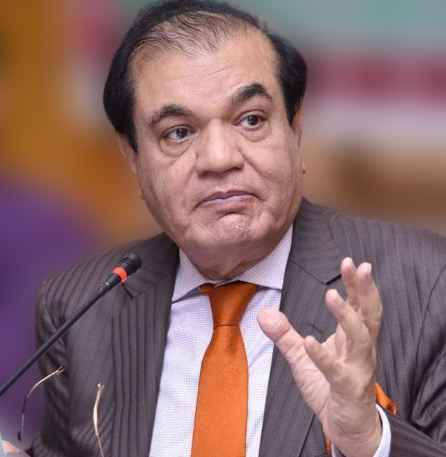
Pakistan’s plan to increase annual agricultural and food exports to Saudi Arabia to $3 billion within two years could open major opportunities for farmers and the wider rural economy, business leader Mian Zahid Hussain said on Monday.
The Saudi food market presents a significant opportunity for Pakistan, according to Hussain, President of the Pakistan Businessmen and Intellectuals Forum and All Karachi Industrial Alliance and Chairman of the National Business Group Pakistan.
He said the economic partnership should build on the strategic cooperation established between Pakistan and Saudi Arabia, with trade, investment and food security becoming key areas of future collaboration.
Defence cooperation opens economic opportunities
Hussain linked the latest trade ambitions to the Makkah Joint Defence Agreement involving Pakistan, Saudi Arabia and Türkiye, concluded on August 7.
Under the agreement, an armed attack on one country would be treated as an attack on all three. The pact also envisages greater cooperation in defence capabilities, technology and joint production.
Hussain said developments in agricultural and food trade following the agreement showed how strategic trust could translate into economic cooperation.
He credited Prime Minister Shehbaz Sharif’s efforts to make agriculture and food security important elements of Pakistan-Saudi economic relations.
A high-level Saudi delegation led by Saudi Minister for Environment, Water and Agriculture Engineer Abdulrahman Al-Fadley visited Islamabad from August 26 to 28.
The delegation identified rice, halal meat, fresh fruits, fruit concentrates, animal feed and water-efficient agricultural technologies as priority areas.
Pakistan faces a major export challenge
Hussain said the $3 billion target was ambitious because Pakistan’s total merchandise exports to Saudi Arabia stood at around $692 million in 2025.
Pakistan exported about 169,000 tonnes of rice worth $163 million to the Kingdom. It also supplied around 30,000 tonnes of halal meat valued at $167 million.
Reaching $3 billion annually would require Pakistan to expand its current export capacity more than fourfold.
He also pointed to a decline in Pakistan’s overall food exports. Food exports fell 29.49 per cent to $5.017 billion during FY2025-26, while rice exports dropped from $3.353 billion to $2.291 billion.
Meat exports, however, increased modestly from $495.1 million to about $530.2 million.
Hussain said deeper access to the Saudi market could help reverse the decline and create new opportunities for Pakistani food exporters.
Competition remains intense
Saudi Arabia imports about 70 per cent of its food requirements, while its food retail market is worth more than $50 billion, Hussain said.
Pakistan, however, faces competition from major agricultural exporters including India, Brazil, Australia and Thailand.
He warned that political and diplomatic ties alone would not guarantee success.
Pakistani exporters will need competitive prices, reliable supply, traceability, quality packaging and internationally recognised halal certification. They will also need to meet Saudi food-safety requirements consistently.
Business leader proposes export task force
Hussain proposed the creation of a Pakistan-Saudi Agri-Food Export Task Force to coordinate the initiative.
The proposed body would establish product-specific targets and publish monthly progress reports.
He also called for faster approval of Pakistani slaughterhouses, meat-processing facilities, fruit orchards and packaging units for the Saudi market.
High-Q Pharma CEO Atif Iqbal Honoured With Global Image Award in Riyadh
Investment in cold storage, refrigerated transportation and temperature-controlled containers should also become a priority, he said.
Reliable maritime connections with Jeddah and Dammam would further support exporters by reducing supply-chain challenges.
Focus on value-added food products
Hussain urged Pakistan to move beyond exporting raw agricultural commodities.
He recommended expanding exports of basmati rice, packaged halal meat, fruit pulp, juice concentrates, jams, jellies, marmalade, tomato ketchup, frozen foods and ready-to-eat products.
He also stressed the need to balance export ambitions with Pakistan’s domestic food and water requirements.
Green fodder and other water-intensive products, he said, should be linked with modern irrigation systems to prevent export growth from putting additional pressure on the country’s limited water resources.
$3 billion target could benefit farmers
Hussain said Pakistan should now connect the strategic relationship with Saudi Arabia to measurable economic outcomes.
Effective implementation of the export target could increase farmers’ incomes and create jobs across rural communities.
It could also encourage investment in agriculture, livestock, food processing and cold-chain infrastructure.
Hussain said stronger exports would generate additional foreign exchange and help expand Pakistan’s presence in one of the region’s most important food markets.
The proposed partnership, he added, could become a major opportunity for Pakistan’s agricultural economy if policymakers and exporters focus on quality, competitiveness and reliable long-term supply.