Pakistan Withstands Energy Price Shock, Says Finance Minister Aurangzeb
Muhammad Aurangzeb says Pakistan has secured energy supplies through November, but attacks on Gulf infrastructure could delay economic recovery and increase uncertainty
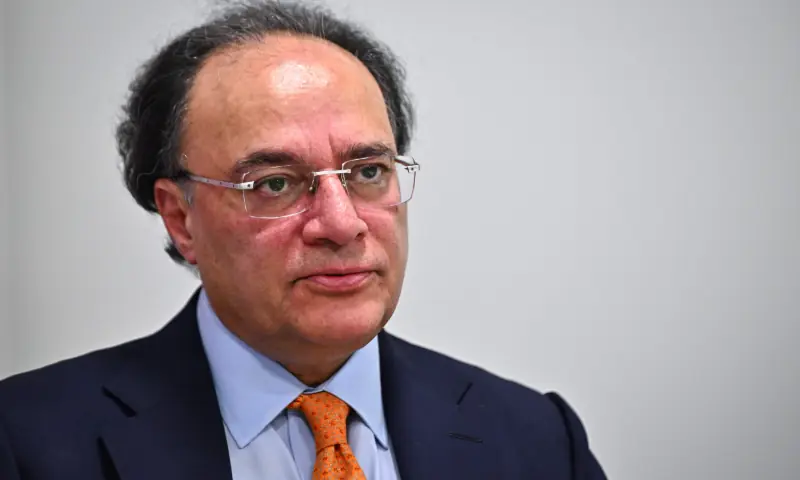
Finance Minister Muhammad Aurangzeb discusses Pakistan’s economic outlook amid global energy market uncertainty
ISLAMABAD: Finance Minister Muhammad Aurangzeb has said Pakistan has so far managed the impact of soaring global energy prices linked to the US-Israeli war on Iran, but warned that continued attacks on energy infrastructure in Saudi Arabia and other Gulf countries could threaten the country’s economic outlook.
Speaking to AFP on the sidelines of the International Monetary Fund (IMF)-World Bank Annual Meetings in Bangkok, Aurangzeb said Pakistan had secured sufficient energy supplies to meet its needs through November. The government is now planning for the winter season, when household energy consumption typically increases.
“The first-order impact has been negotiated well by Pakistan,” the finance minister said.
He added that the country had avoided fuel shortages, queues at petrol stations and related law-and-order problems experienced in some other countries.
Aurangzeb said the government would avoid purchasing liquefied natural gas (LNG) from the spot market unless absolutely necessary, as spot cargoes tend to cost significantly more than supplies secured under existing contracts.
Gulf Infrastructure Attacks Raise Concerns
Global energy prices have risen sharply amid the US-Israeli war on Iran, which began in February. Retaliatory actions and disruptions to oil and gas supplies have increased pressure on international energy markets.
Recent attacks on infrastructure in Saudi Arabia and other Gulf countries have added to concerns about the duration of the disruption. Renewed fighting involving Yemen’s Houthi movement has also heightened regional uncertainty.
Aurangzeb said attacks on energy infrastructure were particularly concerning because damage to critical facilities could delay the restoration of normal economic activity, even if hostilities eased.
He warned that continued damage to energy facilities could prolong the recovery of supply chains and energy markets.
Pakistan Faces Pressure to Continue Economic Reforms
Aurangzeb said Pakistan had been pursuing fiscal consolidation for some time, putting the country in a better position to manage external economic shocks.
The IMF has urged countries to maintain sound fiscal policies amid rising global debt and uncertainty linked to the Middle East conflict.
Pakistan has a long history of engagement with the IMF and is currently implementing its 25th programme with the lender since independence in 1947, according to the report.
The finance minister said tax revenues had increased significantly in recent years. However, he identified tax evasion by businesses as a continuing challenge, particularly where companies collect sales tax from consumers but fail to transfer the money to the government.
He said the practice involved billions of dollars and stressed that income tax collection also offered considerable scope for improvement.
Aurangzeb acknowledged that the government’s reform agenda had encountered resistance from industrial groups, lobbyists and vested interests.
“Every reform, everything that you try to do when you try to change the status quo, there is pushback,” he said.
Pakistan Engages Global Financial Institutions
Aurangzeb is leading Pakistan’s delegation at the IMF-World Bank Annual Meetings, where he is holding discussions with international financial institutions, finance ministers, policymakers and investors.
According to state-run Pakistan Television, the finance minister met World Bank Group President Ajay Banga at a dinner hosted by Thailand’s prime minister on the sidelines of the meetings.
Pakistan remains engaged with the IMF under a $7 billion Extended Fund Facility (EFF) and a $1.4 billion Resilience and Sustainability Facility (RSF).
Earlier this month, Pakistan and the IMF reached a staff-level agreement following the fourth review of the EFF and the third review of the RSF. The agreement qualified Pakistan to receive approximately $1.2 billion in additional financing, subject to the Fund’s applicable approval procedures.
The government’s immediate priorities include maintaining energy security, strengthening tax collection and continuing fiscal reforms as uncertainty in global energy markets persists.