Pakistan Economy: SBP Expects GDP Growth of Up to 4.75% in FY26
Central bank governor projects stronger economic growth, higher foreign exchange reserves and rising remittances despite regional challenges.
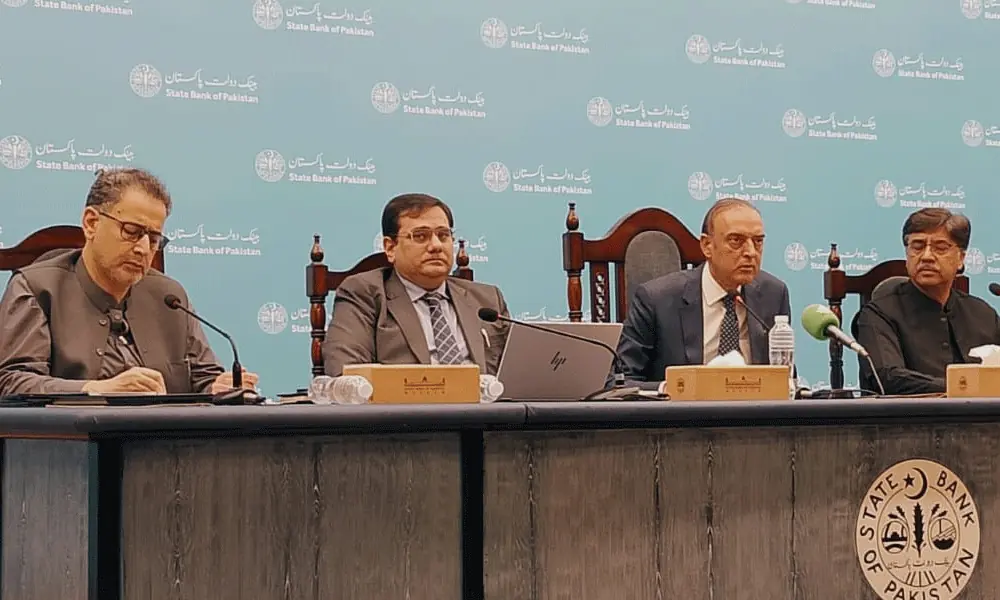
SBP Governor Jameel Ahmad outlines Pakistan’s economic outlook during a press conference.
Pakistan economy will likely grow faster than the government’s provisional estimate in FY26, according to Jameel Ahmad, Governor of the State Bank of Pakistan.
Speaking at a press conference on Friday, Ahmad said the economy could expand by 3.75% to 4.75% during FY26. The forecast exceeds the government’s provisional growth estimate of 3.7%.
He said the SBP had earlier expected growth to surpass 4%. However, the Middle East conflict weakened the outlook.
Ahmad said the central bank’s foreign exchange reserves rose to $18.4 billion in FY26 from $13 billion a year earlier. He added that the reserves increased even after Pakistan repaid $8 billion in external debt during June.
Sadequain Stamp: Pakistan Unveils World’s Longest Commemorative Postage Stamp
The SBP expects workers’ remittances to exceed $41.5 billion in FY26. Ahmad said preliminary figures show continued growth despite regional geopolitical tensions.
Workers sent $38.1 billion to Pakistan during July to May FY26. They had sent $34.9 billion during the same period a year earlier. Ahmad said the SBP expects remittances to reach $44 billion in FY27.
He estimated average inflation at 7.05% for FY26. The figure stands slightly above the government’s target range of 5% to 7%.
Ahmad said export earnings should recover in FY27 after declining in the previous fiscal year.
The Pakistan Bureau of Statistics reported that Pakistan’s trade deficit widened to $39.47 billion in FY26. The deficit increased by 21.57% compared with the previous fiscal year.
Ahmad also announced the end of the Sohni Dharti Remittance Program (SDRP) and the Telegraphic Transfer Charges Incentive Scheme (TTCIS).
He said commercial banks and exchange companies will continue offering incentives to encourage remittances. He added that the policy change should not affect future inflows.