Mian Zahid Hussain Warns Policy Rate Hike Could Pressure Industry and Exporters
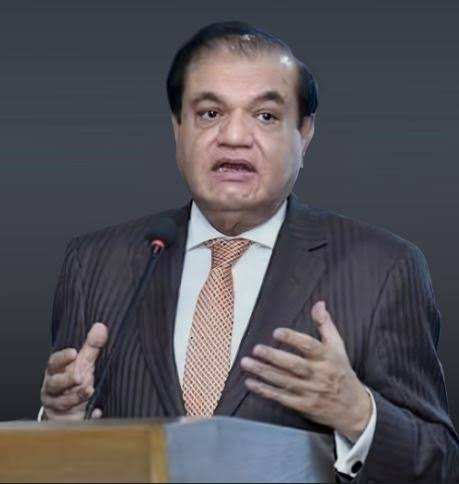
Policy Rate concerns rise as Mian Zahid Hussain warns of higher financing costs for Pakistan’s businesses.
Business leader Mian Zahid Hussain has expressed concern over the State Bank of Pakistan’s (SBP) decision to raise the policy rate by 50 basis points, from 11.5% to 12%. He warned that higher borrowing costs could put additional pressure on industry, exporters and small and medium-sized enterprises (SMEs).
Hussain, president of the Pakistan Businessmen and Intellectuals Forum (PBIF) and All Karachi Industrial Alliance, said businesses already faced rising electricity, raw-material and transportation costs. He acknowledged the importance of price stability but argued that monetary tightening should not undermine industrial activity and economic recovery.
He called for policies that control inflation while supporting investment, production and employment.
Inflation Requires Action on Supply Constraints
Hussain said annual inflation reached 10.3% in September 2026, while core inflation stood at approximately 8.4%. He noted that the SBP aims to bring inflation within its medium-term target range of 5–7%.
He said higher energy prices linked to the US–Iran conflict and disruptions in domestic wheat supplies had added to inflationary pressures. In his view, higher interest rates alone cannot resolve shortages or reduce the cost of electricity, gas and essential food supplies.
UBG Hosts Lunch to Promote Women’s Leadership in Trade and Industry
He warned that businesses could face a double burden if supply-side problems persist: higher production costs alongside more expensive commercial financing.
Trade Deficit Raises Concerns Over Export Competitiveness
Hussain cited trade figures showing that Pakistan’s merchandise exports increased by 11.13% to $8.445 billion during July–September 2026. Imports rose by 13.20% to $19.213 billion, leaving a quarterly trade deficit of $10.768 billion.
He also pointed to an 18.49% year-on-year increase in exports during September, describing the improvement as encouraging. However, he said export growth must become more sustainable to reduce pressure from rising imports.
Higher borrowing costs could weaken exporters’ ability to finance production, manage working capital and compete in international markets, he added.
Exporters Need Affordable Working Capital
Hussain said exporters using fixed-rate loans under the Export Refinance Scheme would not face a direct increase in the mark-up on those specific loans because of the latest policy-rate decision.
However, exporters without access to concessional financing could face higher costs. Businesses that rely on commercial loans beyond approved concessional limits may also see their financing expenses rise.
Exporters must often pay for raw materials, salaries, electricity, shipping and insurance before overseas buyers settle their invoices. Hussain warned that more expensive interim financing could reduce profit margins and limit businesses’ ability to accept new orders.
He urged the government to widen practical access to concessional financing, particularly for small and emerging exporters. He also called for the timely release of verified sales tax and income tax refunds to ease working-capital pressures.
SMEs and Investment Could Face Further Pressure
Hussain said small businesses were particularly vulnerable because they generally have less capital available to absorb higher financing costs.
More expensive credit could delay purchases of machinery, factory expansion, construction and recruitment. These delays could slow investment and weaken employment growth.
He also warned that higher interest expenses on new government borrowing, alongside the repricing of existing debt, could reduce the fiscal space available for development and social programmes.
He argued that sustainable economic stability requires more than lower inflation. It also depends on investment, production and the creation of decent jobs.
Business Leader Calls for Coordinated Economic Measures
Hussain urged the government to release verified tax refunds promptly and improve financing access for exporters and SMEs. He also called for clearer and more consistent policies on industrial electricity and gas tariffs.
He identified timely wheat supplies, better storage and transportation, lower electricity theft and reduced transmission and distribution losses as important measures to address supply-side inflation.
He further urged the government to control unnecessary expenditure and strengthen coordination among the government, the SBP and the Federation of Pakistan Chambers of Commerce and Industry (FPCCI).
Hussain said economic policy should contain inflationary expectations without compromising the recovery of industry, exports and employment.