
LPG Auction Delay Raises Questions Over Possible 15pc Price Increase
Petroleum Division holds back bidding results as legal challenges and government concerns grow over the impact of signature bonuses on consumers
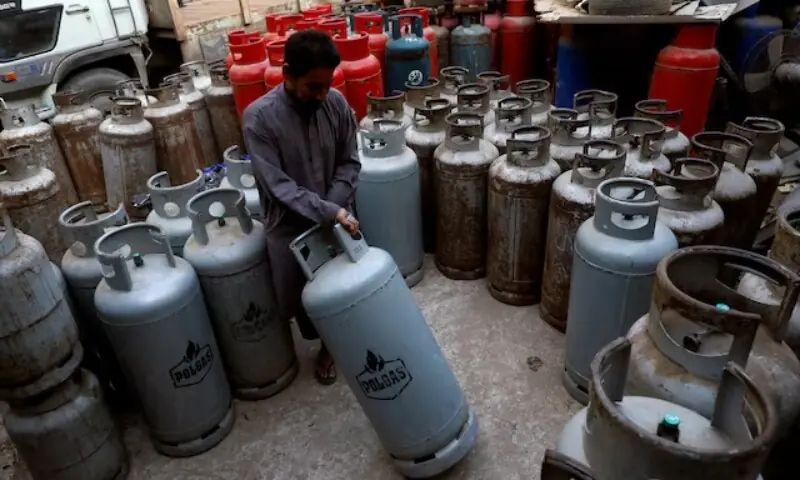
Pakistan delays LPG auction results amid concerns over higher consumer prices and legal challenges.
ISLAMABAD: The government has delayed announcing the results of an auction for locally produced liquefied petroleum gas (LPG), amid legal challenges and concerns that the bidding process could increase retail prices for the widely used household fuel.
The auction took place on August 10 and involved Pakistan’s three main public-sector LPG producers. The highest bid reportedly reached Rs205 million for a five-tonne-per-day lot over three years.
The potential cost has raised concerns because LPG remains an important fuel for households, particularly in areas where natural gas supplies are limited.
Existing LPG businesses have challenged the auction process in court. They argue that current policies and rules do not allow producers to sell LPG through the proposed bidding mechanism.
The Petroleum Division has reportedly held discussions with the Attorney General for Pakistan as officials seek a way forward.
The auction follows directions from Petroleum Minister Ali Pervaiz Malik to replace the existing quota-based system with a competitive bidding process.
Four public-sector entities — Oil and Gas Development Company Ltd (OGDCL), Pakistan Petroleum Limited (PPL), Pak-Arab Refinery Company (Parco) and Government Holdings (Pvt) Ltd (GHPL) — were asked to offer standardised lots of five tonnes per day on a pilot basis.
One tonne of LPG can fill around 85 domestic cylinders. A five-tonne lot could therefore supply about 425 cylinders a day.
At the highest reported bid, the signature bonus could add roughly Rs440 to the cost of each 11.8kg cylinder over the three-year period, before marketing companies add their own margins.
The additional cost has raised concerns about a possible LPG price increase of around 15 per cent if the auction costs eventually reach consumers.
The Oil and Gas Regulatory Authority (Ogra) has set the August LPG price at Rs254.32 per kilogram, up Rs12.89 from Rs241.43 in July. The notified price means an 11.8kg domestic cylinder costs about Rs3,000.93.
However, consumers often pay considerably more in the open market, with cylinders reportedly selling for around Rs3,600 or higher.
The proposed signature bonus could therefore place additional pressure on household budgets, particularly in smaller cities, rural areas and expanding settlements where LPG remains an important cooking fuel.
Government officials, however, have stressed that the additional auction cost should not be transferred to consumers.
Minutes of a July 20 meeting show that the petroleum minister directed officials to ensure that the burden of the signature bonus was not passed on to LPG consumers.
The government has considered using part of the additional revenue to support vulnerable households through the Benazir Income Support Programme (BISP).
Officials also discussed whether indigenous LPG should be reserved for vulnerable consumers at a separate price. The Petroleum Division reportedly warned that different prices for the same product could distort the market and prove difficult to enforce.
Instead, officials agreed in principle that LPG should be sold at a single competitive price, with support for vulnerable households provided through fiscal measures.
However, a mechanism for using the expected signature-bonus revenue has yet to be finalised.
The delay has also raised questions about how winning bidders would absorb the additional cost without recovering it through the market.
According to official records, PPL alone could generate an additional annual revenue of around Rs4 billion to Rs5 billion under the proposed competitive bidding model.
The highest reported bid of Rs205 million for a five-tonne-per-day lot over three years translates into about Rs68.34 million per year for a one-tonne-per-day lot.
The potential gains for state-owned producers have therefore attracted considerable attention.
But the legal position remains complicated.
Makkah Defence Pact Could Open New Economic Opportunities for Pakistan
Under the licences held by LPG producers, companies are reportedly prohibited from charging a premium over the price notified by Ogra.
The Ogra chairman has told the petroleum minister that a 2018 regulatory order restricting such arrangements had been suspended by the High Court. He therefore argued that there was currently no legal restriction preventing producers from adopting competitive bidding.
The regulator also described the decision to retain the previous system as a commercial choice for state-owned producers.
However, official records indicate that some producers had previously hesitated to introduce signature bonuses.
PPL’s former managing director faced contempt proceedings over an earlier tender that included a signature bonus. The company later returned to a queue-based allocation system.
Parco also raised concerns about the possibility of retrospective financial recovery if the 2018 Ogra decision against signature bonuses is ultimately upheld.
The dispute has left the government facing a difficult balance between increasing revenue for state-owned companies and protecting consumers from higher LPG costs.
A subsequent meeting on the issue failed to reach a final decision. The petroleum minister wanted new policy directions to be issued through the Economic Coordination Committee of the cabinet.
Other officials, however, warned that such directions could conflict with the existing policy approved by the Council of Common Interests.
The government must now resolve the legal and policy questions before it can announce the auction results.
Until then, the fate of the locally produced LPG bidding system — and its possible impact on household fuel prices — remains uncertain.