Iran Warns US Over Naval Blockade as Middle East Tensions Push Oil Prices Higher
Web Desk May 18, 2026Iran Warns US Over Naval Blockade as Middle East Tensions Push Oil Prices Higher
Iran on Sunday vowed to confront the United States over its naval blockade. A senior military adviser warned that the Sea of Oman could become a “graveyard” for US ships if tensions escalate further.
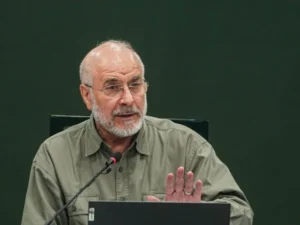
Maj. Gen. Mohsen Rezaei, a member of Iran’s Expediency Discernment Council, said Tehran would respond if Washington continued its pressure campaign. He argued that a naval blockade amounts to an act of war.
“My advice to the US militarily is to back off before the Gulf of Oman turns into a graveyard for your ships,” Rezaei said in remarks aired on Iranian state television.
He also said Iran’s restraint should not be viewed as weakness or acceptance of threats.
Meanwhile, Rezaei questioned the continued US military presence in the Gulf. He said Washington no longer had the same justifications it once used during the Cold War.
At the same time, he stressed that the Strait of Hormuz remains open for trade. However, he warned that Iran would oppose foreign military buildups in the region.
Regional tensions have surged since the US and Israel launched strikes on Iran on February 28. Tehran later carried out retaliatory attacks, increasing instability around the Strait of Hormuz.
Although a ceasefire took effect on April 8 through Pakistani mediation, talks in Islamabad failed to secure a permanent agreement. Later, US President Donald Trump extended the truce without announcing a deadline.
Since April 13, the US has enforced a naval blockade targeting Iranian maritime traffic in the strategic waterway.
Report claims Israel built covert bases in Iraq
Meanwhile, the New York Times reported that Israel secretly built two military sites in Iraq’s western desert to support operations against Iran.
According to Iraqi and regional officials, the facilities provided air support, refuelling, and medical services. The report said the sites later played a role during the 12-day war against Iran in June 2025.
The newspaper claimed one site was uncovered after Iraqi shepherd Awad al-Shammari spotted suspicious military activity near al-Nukhaib in March. He reportedly informed local authorities after seeing helicopters, tents, and a makeshift landing strip.
Later, al-Shammari disappeared and was found dead, the report added. Iraqi troops sent to investigate also came under fire, leaving one soldier dead and two wounded.
However, a senior Iraqi security official rejected claims of Israeli military activity in Iraq’s western desert. The official described the allegations as false.
Iraq rejects role in regional conflict
Separately, Iraq said it would not allow its territory to become a launchpad for attacks against other countries.
Military spokesman Sabah al-Numan said Baghdad’s policy focuses on avoiding regional conflicts and maintaining internal stability.
He also stressed that the Iraqi government wants all weapons to remain under state control. According to him, this policy is central to the country’s security strategy.
Prime Minister Ali Al-Zaidi recently pledged to place all weapons under state authority as part of a broader reform agenda.
Israeli media report military on high alert
Israeli media also reported that the military is preparing for possible renewed hostilities with Iran.
Public broadcaster Kan quoted an unnamed security official as saying Israel would join any future US strikes and target Iranian energy infrastructure.
The reports followed a phone call between Trump and Israeli Prime Minister Benjamin Netanyahu on Sunday. According to Channel 12, the conversation focused on preparations for potential renewed fighting.
The broadcaster added that Israel expects advance notice from the US before any strike, although officials do not know the timing of a possible operation.
Oil prices rise amid fears of escalation
Oil prices climbed sharply on Monday as fears of a wider regional conflict grew.
Brent crude rose 1.86 per cent to $111.29 per barrel after touching its highest level since May 5. Meanwhile, US West Texas Intermediate crude increased 2.19 per cent to $107.73 per barrel.
Analysts said concerns over attacks near the Strait of Hormuz and stalled diplomatic efforts pushed prices higher.
In addition, drone attacks on the UAE and Saudi Arabia increased fears of further escalation across the region.