ICMA and SPDC Sign Strategic MoU to Promote Evidence-Based Policy Research in Pakistan
Web Desk May 7, 2026KARACHI: Institute of Cost and Management Accountants of Pakistan and Social Policy Development Centre have signed a Memorandum of Understanding (MoU) aimed at strengthening collaboration in policy research and promoting evidence-based policymaking in Pakistan.
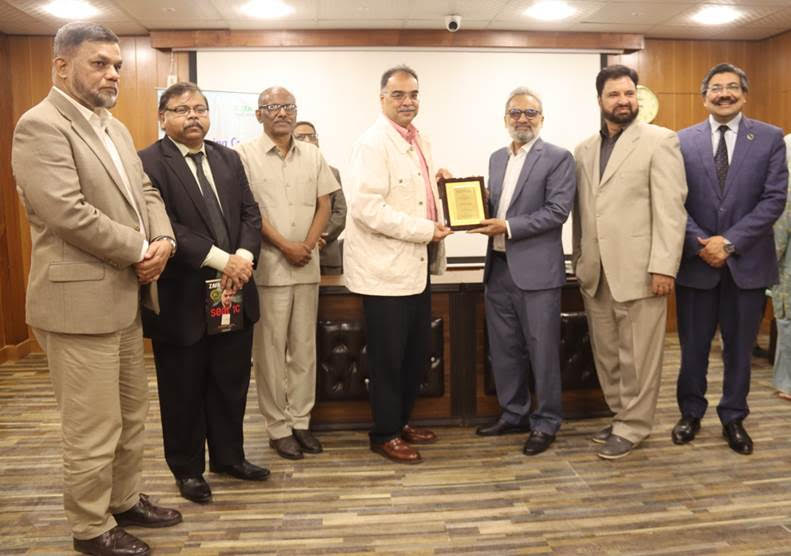
KARACHI: Institute of Cost and Management Accountants of Pakistan and Social Policy Development Centre have signed a Memorandum of Understanding (MoU) aimed at strengthening collaboration in policy research and promoting evidence-based policymaking in Pakistan.
IBA Karachi Hosts Panel Discussion on Wars, Crisis and Deterrence Stability in South and West Asia
The agreement establishes a structured framework for long-term cooperation between the two institutions to jointly conduct research, generate policy insights and support national development priorities through analytical and data-driven initiatives.
The MoU was signed by Azeem Hussain Siddiqui and Muhammad Asif Iqbal during a ceremony attended by senior officials and researchers from both organizations.
Among those present at the event were Muhammad Sabir, Aamir Ijaz Khan, Shahid Anwar and Farough Ali Naweed.
The ceremony was attended by Zafar Masud as the chief guest. He also delivered a keynote address under ICMA’s Thought Leadership Lecture Series titled “The Second Act: Redefining Purpose after Trauma.”
Under the partnership, ICMA and SPDC will collaborate on research projects focusing on macro-fiscal policy, taxation, governance reforms, public financial management, trade and industrial competitiveness, macroeconomic stability and broader social development issues.
The agreement also includes cooperation in areas such as poverty reduction, employment generation, inequality, public service delivery and institutional reforms.
Both organizations plan to organize joint seminars, policy dialogues, research publications and engagement sessions with development partners to encourage evidence-based policy interventions and informed decision-making.
The research findings produced under the collaboration will be shared with policymakers, public institutions and stakeholders to improve policy effectiveness and support sustainable economic and social development in Pakistan.
Officials from both institutions described the partnership as an important step toward strengthening research-led policymaking and enhancing collaboration between professional and policy research organizations.