
How Social Media Is Changing the Way Young Women Understand Their Menstrual Health
From cycle syncing to fertility, a new generation is speaking more openly about periods and hormones — but experts warn that online advice still needs careful scrutiny.
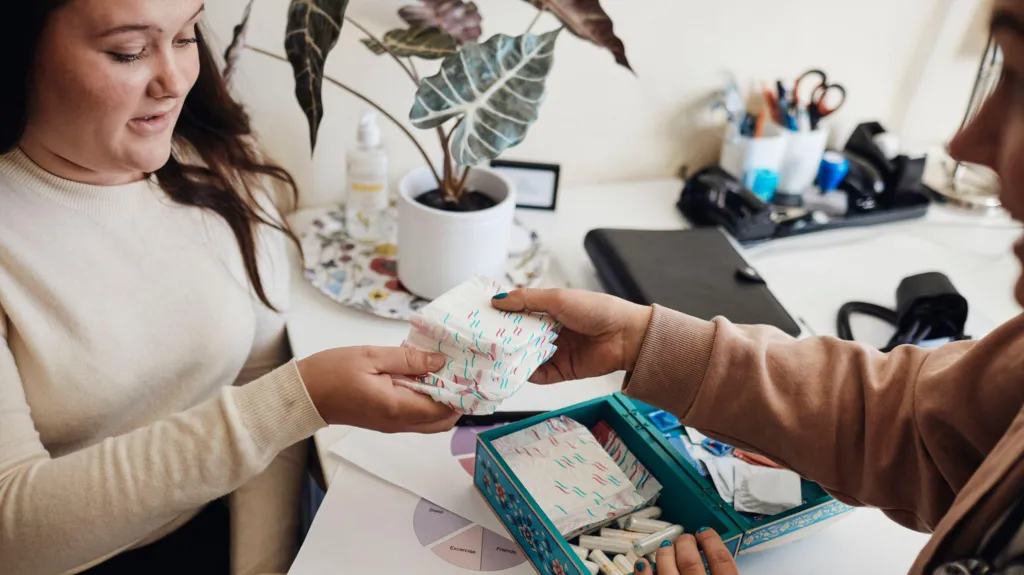
Young women are using social media to learn more about periods, hormones and menstrual health.
Terms such as “cycle syncing” and “going luteal” have become familiar to many young women. Social media has helped turn once-private conversations about periods, hormones and fertility into everyday discussions.
For many women, the change has brought greater confidence. They say they now feel more comfortable asking whether symptoms are normal and seeking information about their bodies.
But the rise in awareness has also raised concerns. Experts and campaigners say social media can spread useful information, but it can also promote claims that lack medical evidence.
The debate reflects a wider change in how women talk about menstrual health and understand their bodies.
A Generational Change
Iqra Wasim, from Fishponds in Bristol, has experienced symptoms linked to polycystic ovary syndrome (PCOS), including painful acne, since she was 11.
PCOS affects about one in eight women and can cause irregular periods, excess hair growth and weight gain. It can also affect fertility.
USS Lincoln Mental Health Concerns Grow After Record Deployment in Middle East
Wasim says asking doctors questions and using social media helped her understand the condition. She now shares that knowledge with her mother, who also has PCOS.
She said her mother once experienced heavy bleeding but had little knowledge about available treatment options.
For Wasim, the difference between generations is clear. She believes younger women are more willing to ask whether a symptom is normal rather than simply accepting it.
However, she also stresses that social media should not replace medical advice.
Social Media Opens the Conversation
Caroline Herman, who founded All Yours Period Box with her daughter, says Britain still has a major gap in menstrual education.
The organisation operates in Wiltshire and donates period products to food banks.
Herman says older generations often received little information about periods. She believes a culture of silence prevented many women from discussing their experiences openly.
She also welcomes the amount of information now available online.
But Herman says people should question the source of what they see on social media.
Is the information medically supported? Is it unbiased? Or has influencer culture shaped the message?
Those questions have become increasingly important as more young people use social platforms to learn about their bodies.
Herman also says some platforms make it harder to discuss medically correct terms. She believes schools and social media platforms should encourage accurate language about anatomy and reproductive health.
Boys Need Menstrual Education Too
Wellness influencer Beth Lauren believes conversations about menstruation should begin early.
Lauren, who has two sons, says children are often comfortable discussing subjects that adults treat as sensitive.
She wants boys to learn about menstruation as well as girls.
Lauren says she only learned about the different phases of the menstrual cycle after becoming a mother. Much of her own knowledge now comes from social media.
She believes people can use online information responsibly if they approach it with care and understand its limits.
The shift also reflects a wider change in attitudes towards women’s health.
From Periods to Body Literacy
Author Maisie Hill says periods are less taboo than they were in the past.
She believes many parents in their 30s and 40s now share information with their children that previous generations rarely discussed.
The conversation has also moved beyond simply managing periods.
Women increasingly want to understand how their menstrual cycles work and how hormones may affect their bodies.
Hill says better education could help people make informed decisions at school, work and in healthcare settings.
However, she warns against using the term “health anxiety” to dismiss genuine concerns.
She argues that women have historically faced dismissal when talking about pain and reproductive health. For her, greater knowledge should help people communicate their symptoms rather than discourage them from seeking answers.
Many Girls Learn Too Late
Research by Poppy Taylor, a PhD researcher at the University of Bristol, highlights another problem.
Her research examined the experiences of people aged 18 to 24 who went through the sex and relationships curriculum between 2000 and 2020.
The study found that up to one in five people did not receive menstrual education at school until after they had started their periods.
Some children now begin menstruating at around eight years old. That means school education may arrive too late for some pupils.
Taylor says education also needs to become more inclusive. Young people should understand what happens to their own bodies and know how to support their peers.
A New Era of Menstrual Health Awareness
The growing menopause movement has also helped change attitudes towards women’s health.
Experts say greater public discussion has encouraged more research and opened conversations about other reproductive health issues.
For many young women, social media has played a major role in that change.
It has made information easier to find and reduced some of the embarrassment around periods, fertility and hormones.
But greater access does not always mean better information.
The challenge now is to combine the openness of social media with reliable medical advice and better education in schools.
As conversations around menstrual health continue to grow, campaigners say the goal should not simply be more information. It should be accurate, inclusive and useful knowledge that helps people understand their bodies without creating unnecessary fear.