Hezbollah’s Fibre-Optic Drones Pose New Tactical Challenge for Israeli Forces in Southern Lebanon
Hezbollah’s Fibre-Optic Drones Pose New Tactical Challenge for Israeli Forces in Southern Lebanon
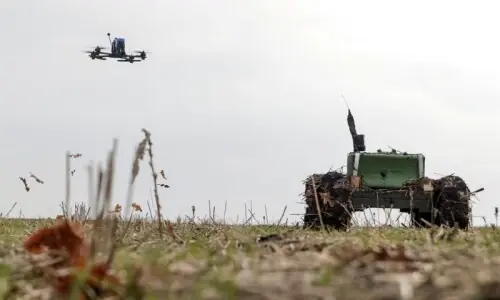
A new generation of low-cost, fibre-optic-controlled drones deployed by Hezbollah is presenting a serious and evolving challenge for Israel Defense Forces (IDF) operations in southern Lebanon, highlighting vulnerabilities in even the most advanced military systems.
Despite a ceasefire in place since mid-April, Israeli authorities have confirmed that two soldiers and one civilian contractor were killed in explosive drone attacks within a week, with several others injured. The incidents underscore the growing lethality of these unconventional devices.
Security experts say the drones are inexpensive, compact, and widely accessible. According to Orna Mizrahi, a senior researcher at Institute for National Security Studies (INSS), the Israeli military was not adequately prepared for such low-tech threats. She described the devices as resembling “children’s toys,” yet capable of delivering deadly payloads.
Unlike traditional drones that rely on GPS or radio signals—and can therefore be jammed—these fibre-optic drones are physically tethered to their operators via thin cables extending over long distances. This design allows operators to control them in real time using first-person view (FPV) systems, often through screens or virtual reality headsets, with minimal training required.
Arie Aviram, another expert affiliated with INSS, explained that because these drones do not emit radio signals, they evade electronic detection and cannot be disrupted by conventional electronic warfare systems. Their stealth, combined with speed and precision, enables them to strike targets with little warning.
The use of such drones reflects a broader shift toward asymmetrical warfare tactics. Hezbollah has increasingly relied on these devices in recent days, moving away from large-scale rocket barrages seen earlier in the conflict. Analysts estimate the cost of assembling these drones ranges from a few hundred dollars to approximately $4,000, with components often sourced from online marketplaces.
Hezbollah media official Youssef al Zein confirmed the group’s use of the drones, stating they are being manufactured domestically in Lebanon. He acknowledged Israel’s technological superiority but emphasized exploiting strategic weaknesses.
For Israel, countering these low-cost threats with high-end defense systems presents a financial and operational dilemma. Advanced solutions such as laser-based systems, including the Iron Beam, have been suggested as potential countermeasures, though they are not yet widely deployed.
The Israeli defense ministry has publicly called for new solutions to detect and neutralize fibre-optic drones, reflecting the urgency of the threat. Meanwhile, reports and unverified footage suggest Israeli forces have begun using improvised measures such as protective netting and physical barriers on military vehicles.
Military officials say the IDF is adapting by studying similar battlefield developments, particularly from the war in Ukraine, where fibre-optic drones have become increasingly common. However, they acknowledge that no fully effective defense currently exists.
The ongoing conflict continues to evolve as both sides adjust tactics, with fibre-optic drones emerging as a disruptive and hard-to-counter weapon in modern warfare.