Glacial Lakes: Suparco Warns of Rising GLOF Risk as Unfrozen Lakes Increase Rapidly
Web Desk July 8, 2026Satellite monitoring shows a sharp rise in unfrozen glacial lakes, with authorities urged to remain on high alert as climate change accelerates glacier melt across northern Pakistan.
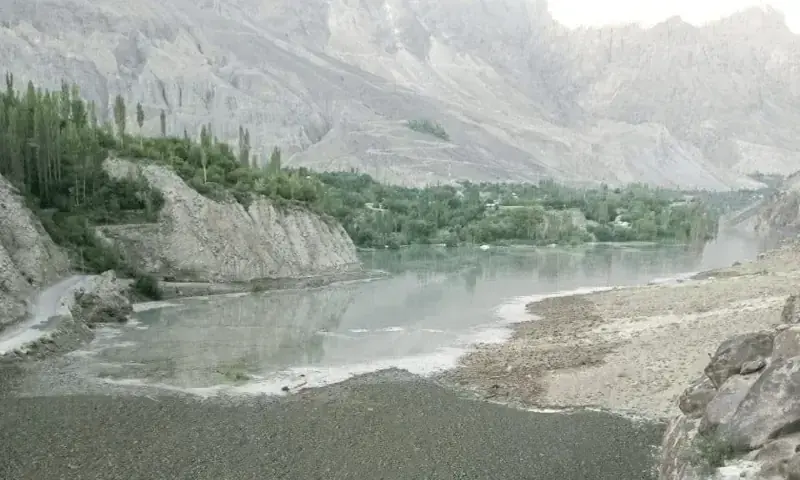
Satellite monitoring highlights increasing glacial lake risks in northern Pakistan during the monsoon season.
Glacial Lakes are becoming a growing threat in northern Pakistan, according to the Pakistan Space and Upper Atmosphere Research Commission (Suparco). As a result, authorities have intensified monitoring during the monsoon season.
Suparco warned that uncontrolled settlements near a glacial lake-fed stream close to Gilgit have increased flood risks. Consequently, lives, homes, livestock and businesses could face serious danger.
A glacial lake outburst flood (GLOF) or intense rainfall could trigger sudden flooding. In addition, it could cause debris flows and severe damage in downstream communities.
Satellite images comparing 2013 and 2023 show rapid urban expansion near the natural stream. Notably, the waterway is fed by upstream glacial lakes. This makes the area highly vulnerable to climate-related hazards.
Strait of Hormuz: US Launches Major Strikes on Iranian Targets After Tanker Attacks
Suparco said construction has spread across the stream’s natural floodplain and alluvial fan. As a result, the channel can no longer safely carry large volumes of water. Therefore, nearby homes and commercial buildings face greater flood risks.
The agency blamed weak enforcement of land-use laws and poor urban planning. Moreover, it said unchecked construction has significantly increased disaster risks.
Suparco continues to monitor rivers and glacial lakes using satellite technology. Meanwhile, the collected data supports early warning systems and disaster preparedness across vulnerable regions.
The latest assessment increased the number of potentially dangerous glacial lakes from 130 to 131. Furthermore, the findings have been shared with the Ministry of Climate Change’s Technical Committee on GLOF Monitoring.
The assessment was based on satellite images captured on 16 June. At present, 40 glacial lakes are unfrozen, compared with 24 recorded just two weeks earlier. This increase reflects faster seasonal melting caused by rising temperatures.
Suparco said most unfrozen lakes remain within their historic maximum size. However, lakes that expand beyond previous limits require close monitoring. This is because larger lakes place more pressure on natural moraine dams and increase the risk of a GLOF.
The agency urged disaster management authorities to remain on high alert. In particular, downstream valleys near dangerous glacial lakes should receive special attention throughout the monsoon season.
According to the EM-DAT international disaster database, Pakistan has experienced 89 flood events over the past 25 years. Meanwhile, flood impacts have become more severe because of expanding development in riverbeds and floodplains.
Mohammad Saleem Shaikh, spokesperson for the Ministry of Climate Change and Environmental Coordination, said rising temperatures are rapidly changing the Hindu Kush-Karakoram-Himalaya region. Consequently, glacier melt is increasing the risk of GLOFs, flash floods and landslides.
He said scientific evidence shows Pakistan’s mountain ecosystems are changing at an unprecedented pace. Therefore, downstream communities, farmland, public infrastructure and essential services face greater climate risks.
Shaikh added that a national glacier inventory completed in 2024 identified more than 13,000 glaciers across Pakistan. Overall, this represents one of the world’s largest glacier concentrations outside the polar regions.
He said the government is working with Suparco, the National Disaster Management Authority (NDMA), provincial governments and international partners. Together, they are strengthening satellite monitoring, hazard mapping, early warning systems and community-based climate adaptation.