
ECO Trade: FPCCI Chief Calls for Action to Unlock Region’s Economic Potential
Atif Ikram Sheikh urges ECO members to improve connectivity, remove trade barriers and build stronger private-sector partnerships.
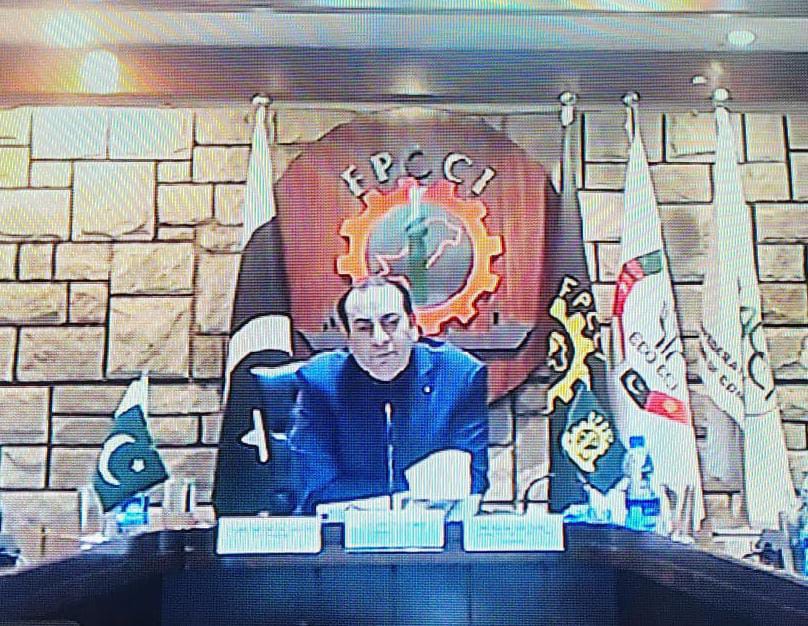
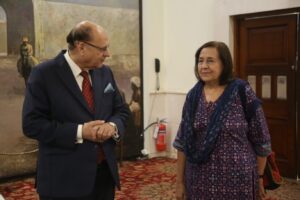
tif Ikram Sheikh addresses ECO-CCI meeting on trade and investment opportunities
KARACHI, August 19, 2026: Federation of Pakistan Chambers of Commerce and Industry (FPCCI) President Atif Ikram Sheikh has called for stronger regional cooperation to turn the Economic Cooperation Organization’s vast economic potential into tangible trade and investment opportunities.
Speaking at a high-level meeting of the ECO Chamber of Commerce and Industry (ECO-CCI), Sheikh said the region needs greater connectivity, easier trade procedures and stronger cooperation among private-sector businesses.
Representatives from national chambers across ECO member states attended the meeting. Despite the region’s strategic position, natural resources and market of more than 500 million people, Sheikh said intra-regional trade remains below its potential.
ECO Trade Needs Practical Action
Sheikh urged member countries to move beyond dialogue and focus on practical measures. He called for the removal of trade bottlenecks and the simplification of customs procedures.
He also highlighted the need to improve business mobility and revive regional road and rail links. The ECO Train initiative, he said, could play an important role in improving connectivity.
PMN CEO Visits SBC Group to Discuss Pakistan’s Microfinance Growth
Moreover, Sheikh proposed an ECO-CCI Action Agenda for 2026–27. The plan would include specific initiatives and mechanisms to monitor progress through participating chambers.
More than 100 words into the report, ECO trade emerged as a central focus of the discussions, with participants stressing the need to convert regional cooperation into measurable business activity.
Focus on Regional Value Chains
Sheikh also called for a shift from conventional trade towards joint production and regional value chains.
He identified agriculture and food processing, textiles, minerals, energy, engineering, pharmaceuticals and information technology as key sectors for cooperation.
In addition, he urged ECO members to support small and medium-sized enterprises. He also called for greater investment facilitation, women’s entrepreneurship and tourism development.
Regular ECO trade exhibitions and business-to-business forums could further connect companies across member states, he said.
ECO Secretary General Highlights Trade Barriers
ECO Secretary General Ambassador Asad Majeed Khan also addressed the meeting. He highlighted the region’s significant economic potential but noted that trade remains restricted by several challenges.
These include tariff and non-tariff barriers, customs delays, logistical constraints and limited business-to-business engagement. Payment-related difficulties also continue to affect regional trade.
Khan briefed participants on recent ECO initiatives involving trade facilitation, ECOTA, customs cooperation, transportation and business mobility.
He also stressed the role of ECO-CCI and national chambers in building commercial links. Furthermore, he encouraged the organisation to consider a major ECO Trade Fair or Expo.
Chambers Call for Stronger Business Links
Representatives from Afghanistan, Azerbaijan, Iran, Kazakhstan, Kyrgyz Republic, Pakistan, Tajikistan, Türkiye, Turkmenistan and Uzbekistan shared their recommendations.
They called for regular regional exhibitions and sector-specific B2B meetings. They also supported stronger trade and investment promotion.
Improved transportation and visa facilitation featured prominently in the discussions. Participants further stressed the need for closer interaction between business communities across the ECO region.
The meeting concluded with a broader call for practical cooperation. By improving connectivity and removing trade barriers, ECO members could create stronger regional value chains and expand opportunities for businesses and investors.