

CPEC’s Afghan Expansion Faces a Test at Torkham Border
Pakistan’s plan to extend CPEC into Afghanistan faces growing pressure as repeated Torkham closures threaten regional trade and connectivity.
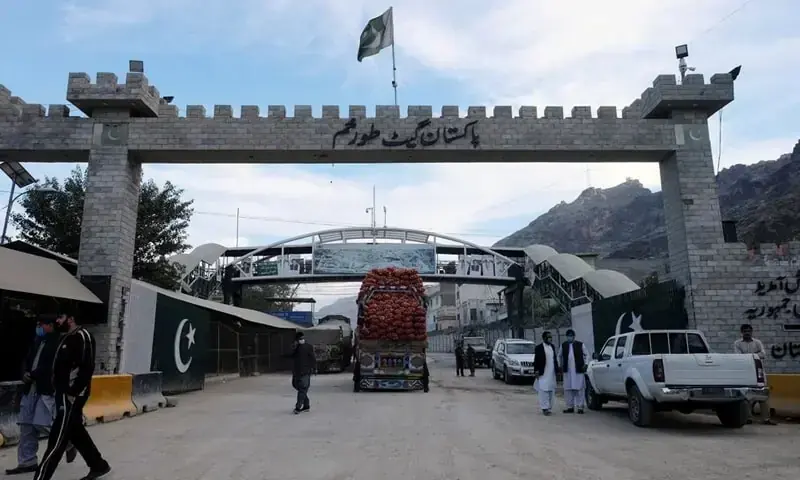
Torkham border faces growing pressure as Pakistan seeks to expand CPEC trade links with Afghanistan and Central Asia.
ISLAMABAD: CPEC planners face a critical test at the Torkham border, where repeated closures and rising delays are raising questions about Pakistan’s ability to provide a reliable trade route to Afghanistan and Central Asia.
In May 2025, China, Pakistan and Afghanistan agreed to formally include Afghanistan in the China-Pakistan Economic Corridor. Four months later, the 14th Joint Cooperation Committee approved an Action Plan extending through 2029. The expanded framework, known as CPEC 2.0, focuses on industrial zones, the ML-1 railway upgrade and road links connecting Torkham with Kabul and Chaman with Spin Boldak.
The plan marked a major expansion of the corridor. However, developments at the border have exposed serious challenges to its implementation.
In October 2025, clashes between Pakistani and Afghan forces led to the closure of Torkham. The shutdown continued for more than three months and severely disrupted bilateral trade. Thousands of containers were reportedly stranded during the crisis.
The closure also highlighted a wider problem. Pakistan has limited alternatives for transporting goods between its ports and Central Asia.
Regional transport data shows that Afghanistan remains a key transit route for Pakistan’s trade with Central Asian markets. When Torkham closes, cargo faces delays or must seek alternative routes through Iran or northern rail connections.
This trend is already influencing regional trade patterns. Afghanistan’s exports to Central Asia reportedly increased from around $122 million in 2024 to $216 million in 2025.
The figures suggest that traders are increasingly exploring routes that reduce their dependence on Pakistan’s western border crossings.
Torkham was also facing efficiency problems before the latest shutdown. Regional monitoring data showed that Pakistan’s average border-clearance time increased by 15 per cent in one year, reaching about 38 hours.
Khawaja Asif India Comparison Video Declared Fake by Information Ministry
The crossing, part of the CAREC Corridor 5, was identified as the slowest-performing among six major regional routes. That means the challenge extends beyond security concerns. Customs procedures, delays and higher costs have also weakened the corridor’s competitiveness.
China’s involvement could provide a stronger platform for Pakistan and Afghanistan to manage disputes. Beijing has already supported trilateral discussions and the CPEC framework involving Afghanistan.
However, diplomacy alone cannot guarantee uninterrupted trade. The Torkham closures demonstrated how quickly political and security tensions can disrupt infrastructure ambitions.
Policy experts have therefore called for stronger safeguards before Pakistan commits further investment to the Afghan extension. These could include protocols for keeping pre-cleared commercial cargo moving during political disputes.
They have also recommended fully digital customs procedures and additional crossing capacity at Chaman and other border points. Such measures could prevent a single dispute from bringing the entire western trade corridor to a standstill.
Pakistan’s ports at Karachi and Gwadar remain geographically attractive for landlocked Central Asian countries. Yet geography alone may not be enough to win long-term business.
For traders in Kabul, Tashkent and Almaty, reliability matters as much as distance. Repeated border closures could encourage them to develop alternative routes that bypass Pakistan.
CPEC 2.0 therefore faces a challenge beyond building roads, railways and industrial zones. Its success will depend on whether Pakistan can make regional connectivity dependable.
Torkham may ultimately become the real test of whether CPEC 2.0 can turn infrastructure plans into a reliable regional trade network.