AI Tool Predicts Cancer Patients’ Survival Chances from a Facial Photograph
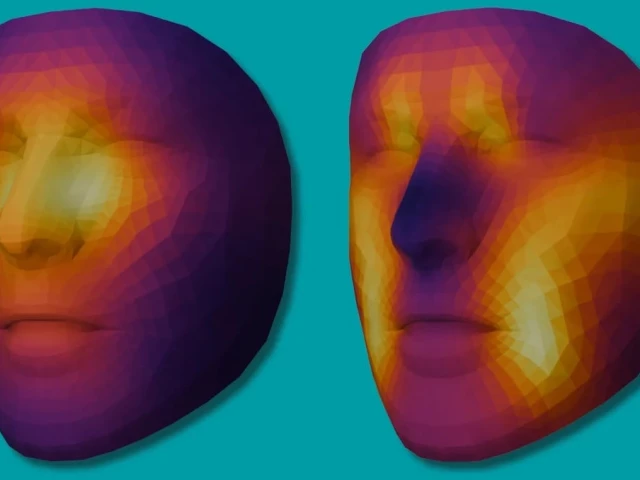
Researchers explore how AI facial analysis could help estimate cancer patients’ survival risk.
Researchers in the United States have developed an artificial intelligence (AI) tool that predicts cancer patients’ survival chances from a single facial photograph. The study appeared on Monday in The Lancet Digital Health.
Researchers at Mass General Brigham in Massachusetts developed the system, called FAHR-Face. It analyses facial features to estimate biological age and assess mortality risk. Doctors could eventually use these predictions to support treatment decisions.
The research team created two tools from the model. FAHR-FaceAge estimates biological age from facial images, while FAHR-FaceSurvival predicts cancer patients’ survival directly from their photographs without relying on age estimates.
AI Models Identify Different Facial Patterns
The researchers trained the broader model using more than 40 million facial photographs. They trained the cancer survival model on images from 34,363 patients and tested it on another 3,820 patients.
OpenAI Says AI Agents Weakened Internal Safety Monitoring Systems
The team also validated its findings using data from 4,892 cancer patients in the Netherlands.
The study found that FAHR-FaceSurvival focused mainly on areas beneath the eyes and around the nose. Meanwhile, FAHR-FaceAge examined features around the mouth and temples. These differences suggest that the models detect distinct patterns associated with health and mortality risk.
Higher-Risk Patients Face Greater Mortality Risk
Patients in the highest-risk group had more than three times the mortality risk of those in the lowest-risk group. This association remained even after researchers accounted for clinical factors.
The study also linked estimated facial age with mortality outcomes.
Patients whose faces appeared at least five years older than their actual age had a 21% higher mortality risk. In contrast, those whose faces appeared at least five years younger had a 17% lower risk.
Combining both models further improved the accuracy of survival predictions, according to the researchers.
AI Could Support Cancer Treatment Decisions
The findings suggest that facial-image analysis could give doctors another source of information when assessing cancer patients. Further research could establish whether the technology helps clinicians identify patients who need closer monitoring or additional assessment.
However, researchers still need to validate the system before hospitals can widely use it in clinical practice.
FAHR-Face does not replace established medical assessments or provide a definitive survival prediction. The study identifies associations between facial features and mortality outcomes; it does not prove that facial appearance causes differences in survival.
Researchers must also examine how reliably the model performs across different patient populations, cancer types and clinical settings before doctors can confidently incorporate it into routine care.