
The new automated blood analysis system cost more than a million Dollars.

Karachi: Dow University of Health Sciences introduced Hematology Automation System. This automated blood analysis system has been installed for the first time in Pakistan at Dow University, at a cost of over one million Dollars. Earlier blood analysis was done through manual system which was time consuming and prone to error due to human intervention, the newly installed system will give digital results in less than a minute.
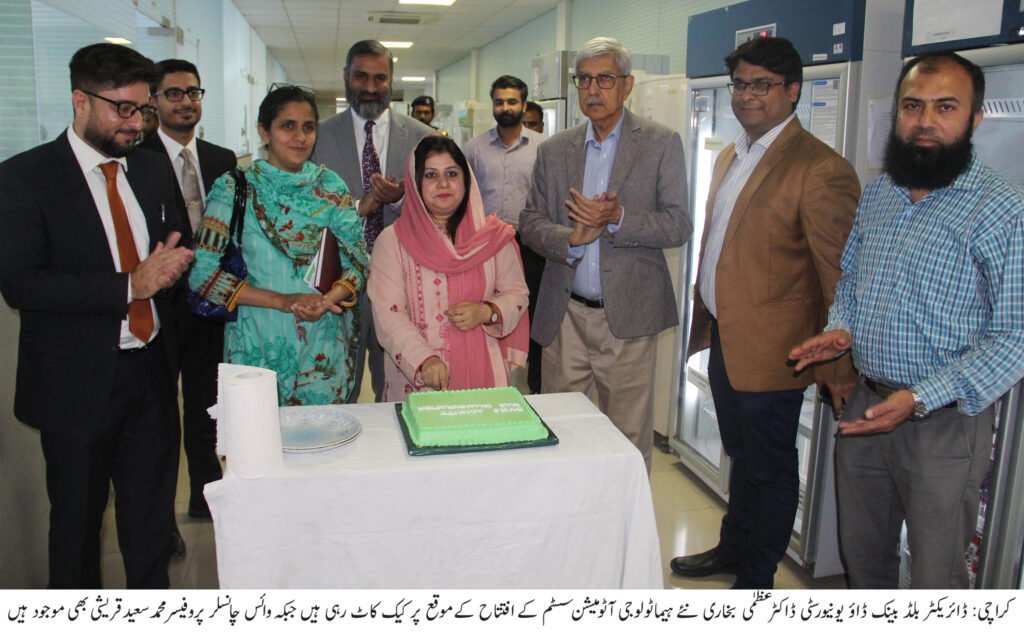
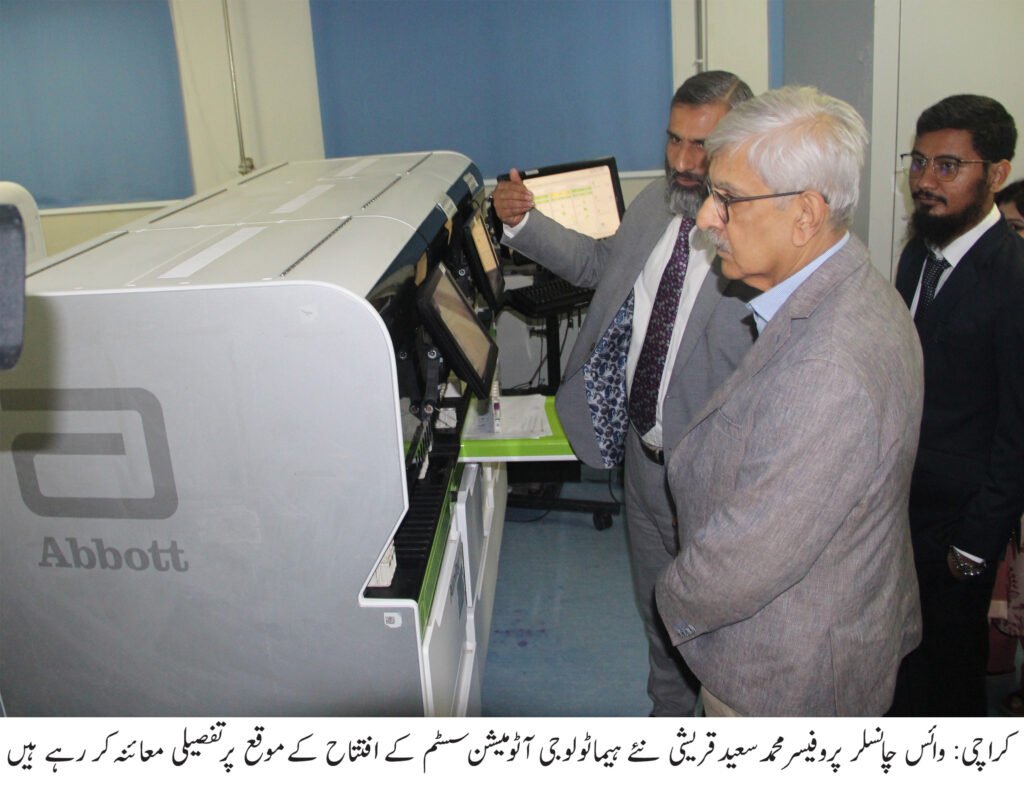
Dow University’s Vice Chancellor, Professor Muhammad Saeed Quraishy cut the ribbon and inaugurated the new Hematology Automation System. On the occasion, Professor Muhammad Saeed Quraishy said that Dow University is making an effort to bring the world’s latest treatment methods and technology to Pakistan for the treatment of diseases. This is the backdrop behind the introduction of new Hematology Automation System at DUHS. Professor Muhammad Saeed Quraishy also inspected the new automated system. Later, Director Blood Bank,
Dr. Uzma Bukhari also cut the cake. The health experts said that the installation of the automated system will allow immediate observation of white and red cell count and other changes in the blood of patients with dengue ITP and other diseases. The new system will be able to analyze more than 600 blood samples in an hour and human intervention is limited to placing the sample in the machine, whereas the current system requires human assistance at every step. Dr. Uzma Bukhari said that, once the blood sample placed in the machine of the new system, the results will start appearing on the machine automatically. Health Experts while sharing their thoughts, said that the Hematology Automation System (HAS) is the first system to be installed in Pakistan which has the capacity of automatic sample storage of 15000 samples. Designed for high capacity, adaptability and reliability in unexpected situations. This system has the following unique technical benefits:
· Innovative Optical Technology with Advanced MAPSST.
· Optical WBC and 6-part Differential
· Optical RBC & Platelet (PLT) Analysis
· Fluorescent Reticulated Cell Analysis
· First Pass Fluorescent NRBC Analysis
· Single Mode of Operation.