FPCCI Warns FBR Tax Administration Split Could Expand Informal Economy
The business federation says separating sales tax and income tax collection may increase compliance costs and place additional pressure on documented businesses.
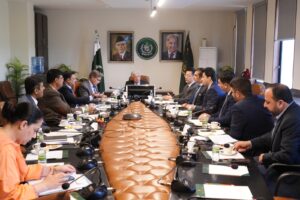
FPCCI President Atif Ikram Sheikh raises concerns over the FBR’s proposed administrative split.
The Federation of Pakistan Chambers of Commerce and Industry (FPCCI) has expressed concern over the Federal Board of Revenue’s (FBR) decision to separate sales tax and income tax administration.
FPCCI President Atif Ikram Sheikh warned that reversing the unified Inland Revenue administration could weaken efforts to prevent tax evasion. He said the move could also expand Pakistan’s undocumented economy and burden compliant businesses.
Sheikh explained that unified tax administration provides an important cross-verification mechanism. Businesses concealing turnover to evade sales tax may also understate their actual income. Therefore, integrated oversight helps authorities identify discrepancies through shared information.
He said dismantling the integration framework introduced in 2009 could undermine years of institutional reforms. It could also hinder efforts to improve Pakistan’s domestic tax-to-GDP ratio.
According to Sheikh, the ratio currently stands at 10.3 percent. This remains below the government’s target of 15 percent.
FPCCI Warns of Higher Compliance Costs
FPCCI Senior Vice President Saquib Fayyaz Magoon said the administrative split could place additional pressure on registered businesses.
He warned that compliant manufacturers, importers and distributors could face oversight from two separate tax administrations. They may also receive separate notices and encounter conflicting interpretations of the same commercial transactions.
Chery Master Pakistan Wins Global Aftersales Excellence Award 2026
Magoon said the government should focus on bringing unregistered sectors into the tax net. Instead, the proposed arrangement could increase the burden on businesses already complying with tax requirements.
Business Leaders Call for Reconsideration
Abdul Mohamin Khan, FPCCI Vice President and Regional Chairman for Sindh, urged the Ministry of Finance and FBR to reconsider the proposed separation.
He called for stronger institutional capacity, shared transaction records and integrated data analytics. He said these measures would improve tax administration without creating unnecessary structural divisions.
Khan warned that duplicating administrative layers could increase compliance costs for documented businesses across the provinces. It could also expose them to additional administrative pressure while leaving the informal sector largely unchecked.
He urged the authorities to consult the business community before introducing changes. Such consultation, he said, was essential to protect the ease of doing business and industrial competitiveness.
Domestic Tax Collection Remains a Concern
FPCCI Vice President Asif Sakhi highlighted the contrasting trends in sales tax collection.
He pointed to a 1.7 percent decline in domestic sales tax collection against a 17 percent increase in collections at the import stage.
Sakhi said these figures indicated that the existing tax machinery was placing greater pressure on documented trade at borders and ports. Meanwhile, efforts to broaden the domestic tax base remained inadequate.
FPCCI maintained that Pakistan needed stronger tax enforcement and wider documentation. However, it warned that separating tax administration could increase pressure on compliant businesses without addressing the underlying challenge of expanding the tax net.