IHC Questions Acquittal in Rs40bn EOBI Corruption Case, Summons Former Chairman
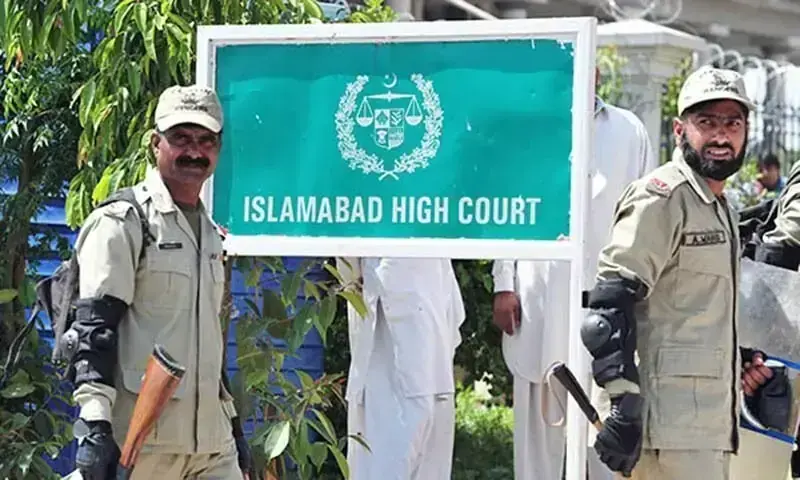
Islamabad High Court hears EOBI's appeal challenging acquittal in the alleged Rs40 billion corruption case.
The Islamabad High Court (IHC) has questioned the acquittal of the former chairman of the Employees Old-Age Benefits Institution (EOBI) in a corruption case involving alleged financial irregularities worth billions of rupees.
Justice Shahrukh Arjumand directed the former chairman and other accused to appear before the court in person on November 20. The order came during the hearing of an appeal filed by EOBI against their acquittal.
The court issued notices to all respondents after hearing arguments challenging the trial court’s decision.
EOBI Challenges Trial Court’s Acquittal
The appeal challenges a judgment delivered on April 17, 2025, by the Special Judge Central-II, Islamabad.
The trial court had acquitted the former chairman and other accused under Section 265-K of the Code of Criminal Procedure. The case originated from FIR No. 03/2014, registered by the FIA’s Special Investigation Unit in Islamabad.
During the November 2 hearing, EOBI counsel Aftab Alam Yasir argued that the trial court had acquitted the accused without properly considering the allegations of serious financial irregularities involving the institution’s investments.
Alleged Violations in DHA Property Transactions
The counsel said EOBI purchased plots and villas under an agreement with the Defence Housing Authority (DHA), dated March 15, 2013.
Federal Cabinet Approves Pakistan-Kuwait Defence Pact, LPG Reforms and New Currency Designs
He argued that the institution had not conducted an independent and transparent procurement process before entering into the agreement.
According to the appellant, EOBI neither advertised the transaction nor invited competitive bids. The counsel alleged that this violated Public Procurement Regulatory Authority (PPRA) Rules and caused a loss of Rs6.82 billion to the national exchequer.
He maintained that EOBI, as a public-sector institution operating under the government’s Rules of Business, 1973, had to follow the applicable procurement requirements.
Legal Opinion Could Not Override Procurement Rules
The counsel further argued that the Investment Committee’s subsequent approval and an opinion from the institution’s former legal adviser could not override statutory requirements or rectify alleged violations.
He referred to a Supreme Court judgment in Federation of Pakistan through Secretary, Ministry of Petroleum and Natural Resources versus Dewan Petroleum.
Citing the ruling, he argued that a legal opinion alone could not bind the government or justify non-compliance with statutory provisions.
The appellant also challenged the defence’s reliance on decisions by EOBI’s Investment Committee and Board of Trustees. It argued that the former chairman could not avoid individual accountability simply by referring to decisions made by institutional bodies.
Court Hears Challenge to Property Valuation
The EOBI counsel also questioned the reliance on a subsequent property valuation conducted by NESPAK on the Supreme Court’s directions.
He argued that the properties’ potential value should have been assessed at the time of the transactions rather than through a later valuation.
After hearing the arguments, Justice Shahrukh Arjumand ordered notices to the respondents and directed the former chairman and other accused to appear personally before the court on November 20.
The high court will take up EOBI’s challenge to the acquittal at the next hearing.