Federal Government Says It Tried for a Month to Avert Emergency in K-P
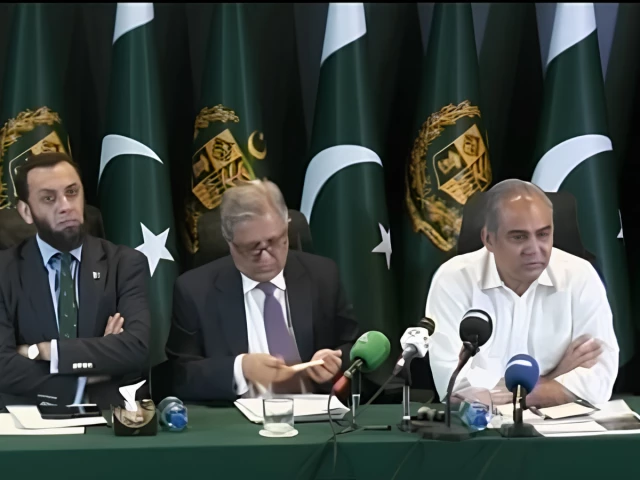
Federal ministers explain the decision to impose emergency measures in Khyber-Pakhtunkhwa amid security concerns.
The federal government said on Sunday it had spent a month trying to secure cooperation from the Khyber-Pakhtunkhwa (K-P) government before imposing emergency measures in the province.
Interior Minister Mohsin Naqvi said the government had made repeated attempts to reach an understanding with provincial officials and opposition leaders. However, the discussions failed to produce an agreement.
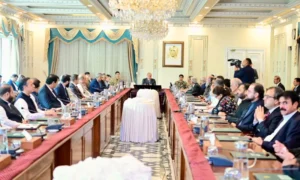
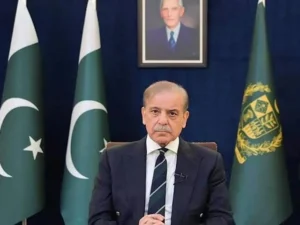
President Asif Ali Zardari approved Prime Minister Shehbaz Sharif’s recommendation to impose emergency measures amid worsening security concerns, according to reports.
Speaking at a press conference, Law Minister Azam Nazeer Tarar said the president had invoked Articles 232(1) and 234(1) of the Constitution. Information Minister Attaullah Tarar and other officials also attended the briefing.
Naqvi Details Month-Long Negotiations
Naqvi said the government had remained in contact with the K-P administration over the preceding month. He added that he had personally participated in efforts to resolve the dispute.
The talks covered security concerns, a planned long march and other political matters. According to Naqvi, the government also planned to form a committee and arrange a meeting with the opposition on September 15 or 16.
Larkana Girls’ Basketball Series Named After Late Engineer Najmuddin Sheikh
However, he said, the government received no response to that proposal. Despite the setback, officials continued their attempts to establish contact.
Naqvi said a meeting between the president and prime minister followed. During that meeting, he suggested bringing the K-P government on board.
The draft proposal then went through four revisions the following day. However, Naqvi said a new draft arrived when officials believed they had nearly finalised an agreement.
He added that the final contact with Pakistan Tehreek-e-Insaf (PTI) leaders took place at 11:45pm on Saturday night. He said he had urged them to reach an understanding, but received no response.
Interior Minister Says Terrorism Was the Main Concern
Naqvi rejected the suggestion that the federal government’s primary objective was to stop PTI’s planned sit-in. He said the central concern was the worsening threat of terrorism.
“Our issue was only terrorism,” he said.
He also clarified that the proposal to postpone the sit-in had come from the Pakistan Peoples Party (PPP), not his ministry. Meanwhile, Jamiat Ulema-e-Islam-Fazl (JUI-F) chief Maulana Fazlur Rehman had also met Prime Minister Shehbaz Sharif, Naqvi said.
The interior minister described the security situation in K-P as increasingly serious. He said residents in some districts were unable to venture outdoors after sunset.
He also cited the reported death of an Election Commission official the previous day as evidence of the province’s security challenges.
Naqvi Offers Federal Support for Police
Naqvi said he had held several meetings with K-P Chief Minister Sohail Afridi. According to him, terrorism and police capacity were key subjects during those discussions.
He said he had asked Afridi about plans to strengthen police forces in affected districts. The chief minister reportedly cited a lack of funds.
Naqvi said the federal government had offered to provide the necessary resources. He further claimed that provincial representatives had agreed during negotiations that emergency measures should be introduced in certain districts.
The minister said the federal government could not continue losing security personnel while the provincial administration failed to take responsibility for counterterrorism efforts.
“Terrorism cannot be fought alone under any circumstances; it requires a collective effort,” he said.
Naqvi described the emergency decision as difficult but necessary after repeated attempts to reach an agreement. He also claimed that 518 police personnel had been killed over the preceding 18 months.
Law Minister Defends Constitutional Measures
Law Minister Azam Nazeer Tarar said Prime Minister Shehbaz Sharif had briefed President Zardari on the circumstances behind the decision.
He added that the K-P governor had submitted a report to the federal government as part of his constitutional responsibilities.
Azam claimed that terrorist incidents in the province had increased by 196 per cent over the preceding two to two-and-a-half years. He also cited rising casualties, damage to vehicles and attacks on security forces, police personnel and religious leaders.
The law minister defended the president’s decision, arguing that the Constitution allowed federal intervention when the law and order situation warranted it.
He said the emergency measures had rendered the provincial government inactive and directed the governor to exercise his constitutional powers.
According to Azam, an 11-member advisory committee had been formed. A secretariat had also been established for 12 districts, with reports to be sent directly to the federal government.
He added that a council had been established under the supervision of the additional chief secretary. Officials holding relevant positions had been rendered inactive, while military deployment had been ordered under Article 245 of the Constitution.
Information Minister Accuses K-P Government of Links to Militants
Information Minister Attaullah Tarar accused the K-P government of maintaining an alliance with terrorists. He alleged that the provincial administration had empowered individuals responsible for attacks on civilians and Pakistan’s armed forces.
Attaullah said intelligence agencies and law enforcement bodies had reported a grave security situation in the province. He also claimed that political leaders from different parties had been targeted in attacks.
Furthermore, he alleged that militants were receiving safe passage because of their links with the provincial government.
Recounting a visit to a hospital in Kohat, the information minister said he had met injured people who appealed for protection from militants. He accused those responsible for provincial security of cooperating with terrorists rather than confronting them.
The allegations against the K-P government were presented by federal ministers at the press conference. The account provided does not include a response from the provincial administration or PTI to those accusations.