Shehbaz Sharif Condemns Houthi Attacks on Saudi Arabia, Demands Immediate Halt
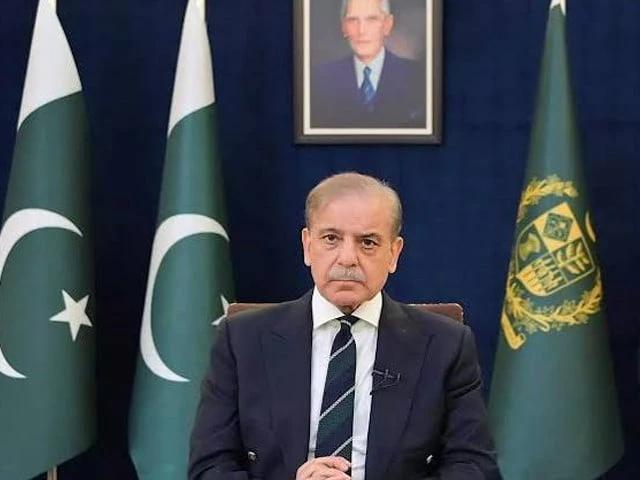
Prime Minister Shehbaz Sharif reaffirms Pakistan’s support for Saudi Arabia after reported Houthi attacks.
Prime Minister Shehbaz Sharif has condemned the repeated Houthi attacks on Saudi Arabia and called on the group to halt its strikes immediately. He reaffirmed Pakistan’s support for the kingdom’s sovereignty, security and territorial integrity.
In a statement on social media platform X, the prime minister condemned attacks targeting King Khalid International Airport in Riyadh and Abha International Airport. He said the strikes had caused civilian deaths and injuries.
Shehbaz praised the Saudi armed forces and coalition forces for intercepting ballistic missiles. He also commended their efforts to protect civilians and critical infrastructure.
“Pakistan stands in unwavering solidarity with the leadership and people of our brotherly kingdom of Saudi Arabia,” the prime minister said. He added that Pakistan’s commitment to the kingdom’s security remained firm under the Makkah Joint Defence Agreement and decisions made by the Strategic Political and Defence Committee.
The prime minister also supported Saudi Arabia’s right to defend its people, cities and vital infrastructure. He pledged that Pakistan would continue to stand alongside the kingdom in the face of security threats.
Saudi Coalition Reports Missile Interceptions
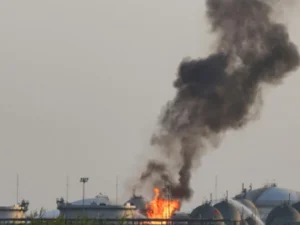
The latest condemnation follows a series of missile and drone attacks targeting Saudi territory. Saudi authorities reported that strikes on Riyadh and Abha airports on October 6 and 7 killed three people and injured 36 others, including a Pakistani national.
Pakistan Accounts for 48% of Extreme Poverty in MENAAP Region, Says Mian Zahid Hussain
The Saudi-led coalition said it intercepted three ballistic missiles aimed at Riyadh and Khamis Mushait in the southwestern Asir region. Coalition spokesman Major General Turki al-Maliki said two missiles targeted the Saudi capital, while another headed towards Khamis Mushait.
Houthi military spokesman Yahya Saree claimed responsibility for targeting King Khalid International Airport. He said the attack disrupted air traffic and warned workers at Saudi oil facilities and airlines operating in Saudi airspace about locations the group considered military targets.
In response, the Saudi-led coalition said it had struck more than 80 Houthi military sites across Saada, Hodeidah, Jawf and Marib in Yemen. The coalition warned that attacks on Saudi Arabia would not go unanswered.
Pakistan, Saudi Arabia and Türkiye Reinforce Defence Cooperation
Pakistan, Saudi Arabia and Türkiye agreed on October 5 to implement their collective defence commitments and arrange the rapid deployment of agreed military forces and capabilities to Saudi Arabia.
The decision followed an emergency meeting of the Strategic Political and Defence Committee of the Makkah Alliance for Defence in Riyadh. The committee said the measures would strengthen military readiness, integration and the three countries’ ability to respond to threats.
Inter-Services Public Relations Director General Lieutenant General Ahmed Sharif Chaudhry later confirmed that Pakistani troops were present in Saudi Arabia in multiple capacities. Pakistan’s Ministry of Information and Broadcasting said operational details remained confidential.
The three countries formalised their wider defence cooperation through the Makkah Joint Defence Agreement in August 2026. The framework aims to strengthen collective deterrence, expand military cooperation and support regional security.
History of Houthi Attacks on Saudi Infrastructure
The Houthis have launched repeated missile and drone attacks against Saudi Arabia since the Yemen conflict escalated in 2015. Previous targets have included military installations, airports, oil facilities and other critical infrastructure.
In September 2019, the group claimed responsibility for attacks on Saudi Aramco’s Abqaiq processing facility and Khurais oil field. The strikes temporarily disrupted a substantial share of Saudi crude oil production.
The group has continued to claim attacks on Saudi military and strategic targets in subsequent years. Recent incidents have renewed concerns over the security of Saudi cities, airports and economic infrastructure.
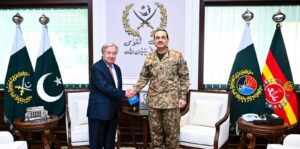
Pakistan, Saudi Arabia and Türkiye have also condemned attacks threatening the kingdom and reaffirmed their commitment to collective defence. Saudi Defence Minister Prince Khalid bin Salman discussed joint efforts to address security threats with Field Marshal Asim Munir, Pakistan’s chief of defence forces and army chief.
Pakistan’s Defence Minister Khawaja Asif has also reiterated Islamabad’s commitment to the Makkah agreement, saying Pakistan and Türkiye would support Saudi Arabia diplomatically and practically in the event of aggression.
Makkah Defence Pact Gains Importance
The Makkah Joint Defence Agreement builds on longstanding security ties between Pakistan and Saudi Arabia, as well as the trilateral cooperation involving Türkiye. Its stated purpose is to strengthen collective deterrence and coordinate responses to security threats.
The agreement follows the Strategic Mutual Defence Agreement signed by Pakistan and Saudi Arabia in September 2025. That pact stated that aggression against either country would be treated as aggression against both.
The latest escalation highlights the importance of regional security cooperation as attacks threaten civilian lives, aviation and critical infrastructure. Prime Minister Shehbaz Sharif’s statement undersc